



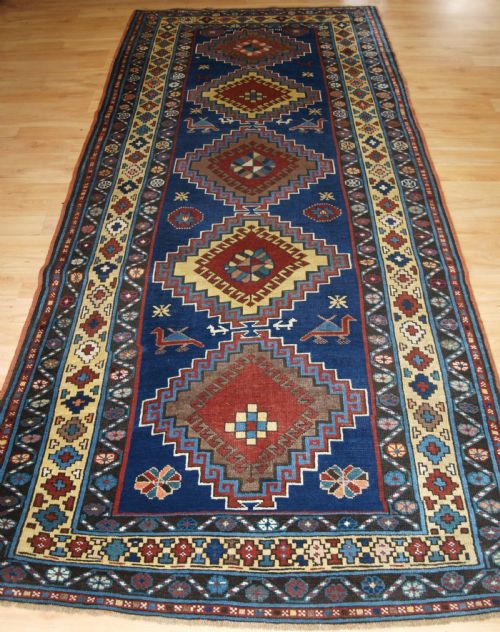


Antique Caucasian Kazak Runner
An antique caucasian kazak runner brings bold tribal geometry and saturated natural dyes straight from the Caucasus into a room.
Antique Caucasian Kazak Runner
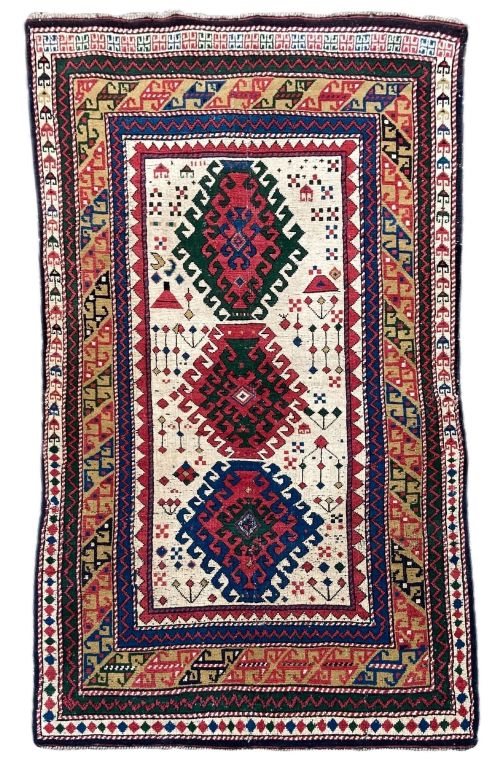
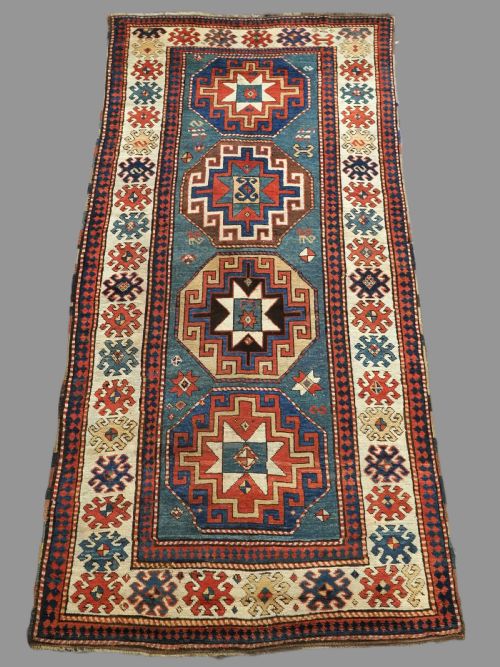
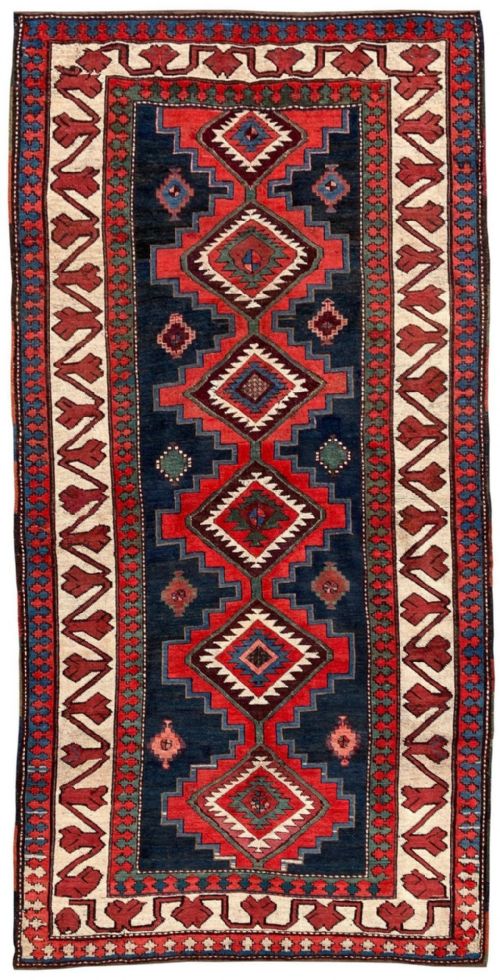
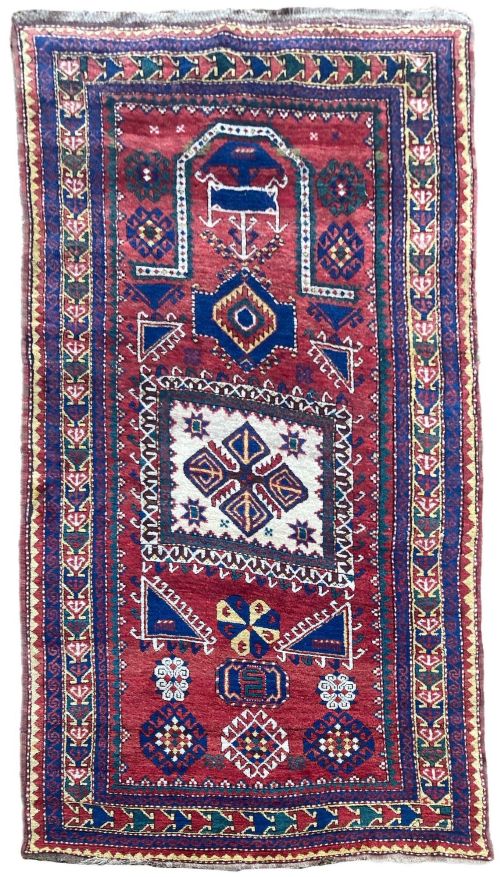
When you search for an antique caucasian kazak runner, you encounter hand-knotted tribal floor coverings originating from the Caucasus region during the nineteenth and early twentieth centuries. These textiles typically take the form of elongated runners, long rugs, and prayer rugs woven by regional tribal groups.
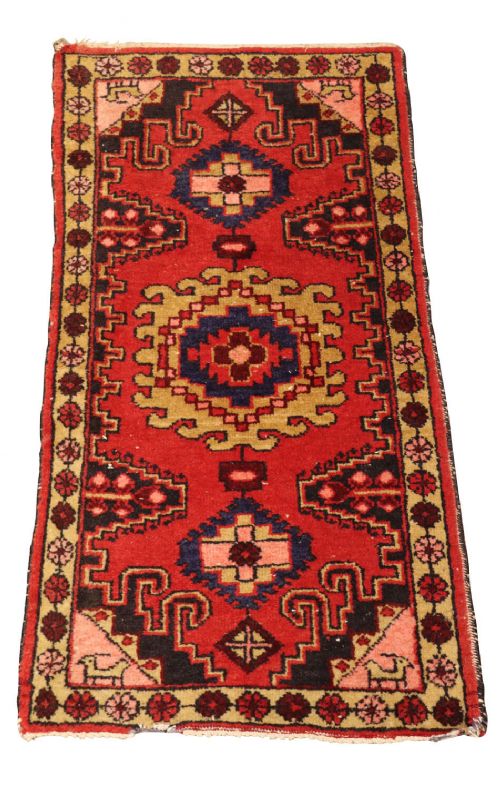
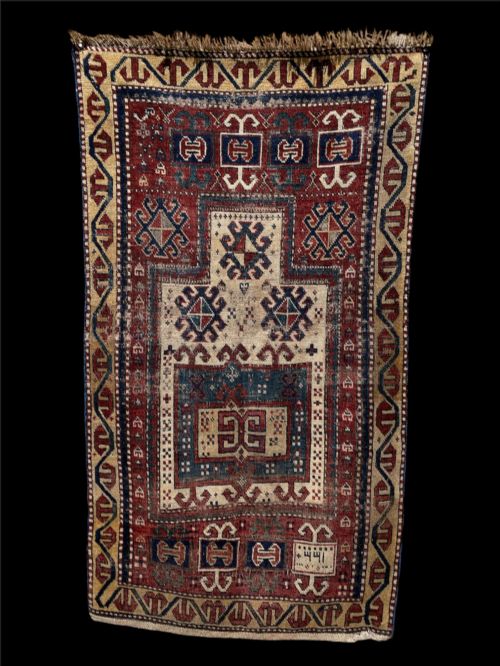
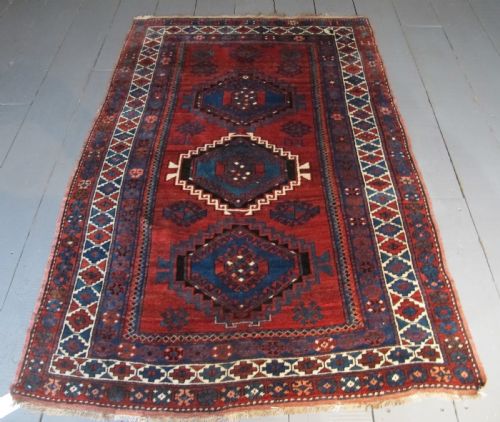
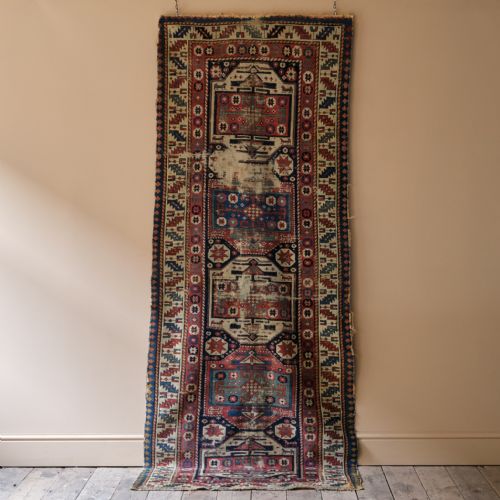
The designs on these pieces display geometric medallions, hooked motifs, and figurative elements such as animals and people. Regional variations include pieces from the Gendje, Moghan, and Chelaberd districts, alongside specific types like Fachralo and Eagle Kazak rugs.
Most examples found in this category date from the 1860s through to the 1930s. They function as robust floor coverings that bring strong colour palettes and folk art character to interiors.
How they were made
Weavers constructed these textiles using hand-spun wool for the pile and foundation, often combined with cotton elements. Natural dyes provide the intense colour palette, yielding deep greens, blues, yellows, and reds that mature gracefully over time.
The technique relies on hand-knotting wool onto a supportive warp and weft foundation. This traditional method produces a dense, durable pile capable of withstanding generations of daily use.
Antique Caucasian Kazak Runner Retail Price Guide 2026
Typical asking prices for caucasian kazak runner among the pieces listed under this phrase on Sellingantiques today, from the lower quarter to the upper quarter. They describe what is for sale here now, not the wider market.
Folk art charm shines through in whimsical details, including woven horses, human figures, and delightfully crooked borders.
What varies in quality
The standard of a piece depends heavily on the purity and depth of its natural dyes, which dictate the vibrancy of the field and borders. Exceptional examples display harmonious colour saturation and clear, crisp geometric drawing without muddy transitions.
Structural integrity and wool quality also separate standard items from superior ones. Finely spun hand-spun wool and tight knotting ensure the pile retains its resilience and definition across decades of wear.
The Antique Caucasian Kazak Runner Glossary
- Kazak
- A designation for rugs woven in the southern Caucasus region, known for bold geometric designs and primary colour schemes.
- Latch hook
- A geometric hook motif commonly projecting from medallion edges in tribal weaving.
- Boteh
- An almond or pear-shaped motif of Persian origin filled with floral or abstract patterns.
- Memling gul
- An octagonal guls design featuring hooked appendages, named after the fifteenth-century painter who depicted similar carpets.
- Prayer rug
- A small rug featuring a mihrab or niche design used historically for ritual devotion.
- Natural dye
- Colour extracted from plant and insect sources prior to the widespread adoption of synthetic aniline dyes.
Antique Caucasian Kazak Runner: Frequently Asked Questions
How do I clean an antique runner?
Professional specialist cleaning is essential for antique wool textiles to protect fragile hand-spun fibres and natural dye settings.
Avoid household washing methods or aggressive mechanical scrubbing, which damage the historic foundation.
Where were these rugs made?
These pieces originate from the Caucasus region, spanning modern-day Armenia, Azerbaijan, and Georgia.
Specific weaving groups worked across districts like Gendje, Moghan, and Karabagh.
Are these runners durable?
The thick hand-knotted wool pile provides natural resilience against heavy foot traffic in hallways and living spaces.
Using a quality underlay prevents slipping and cushions the foundation fibres from premature wear.
How do I date a piece?
Dating relies on assessing the wool quality, dye palette composition, and stylistic execution against documented nineteenth and early twentieth-century examples.
Earlier pieces typically show more refined hand-spun wool and complex natural dye variations.