




Antique Cattle Wall Art
Antique cattle wall art brings the rural pastoral tradition into a room through oil and watercolour paintings.
Antique Cattle Wall Art
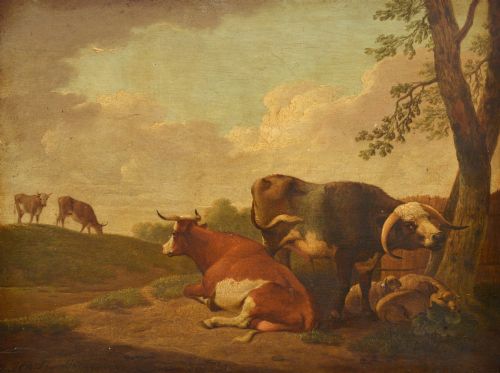
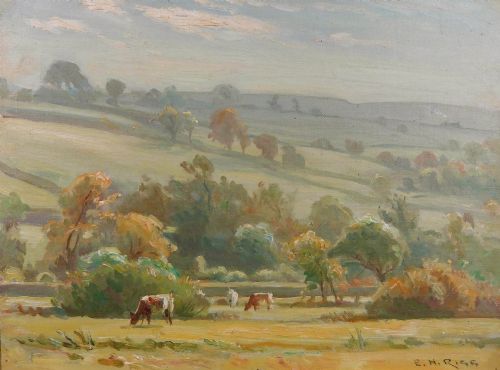
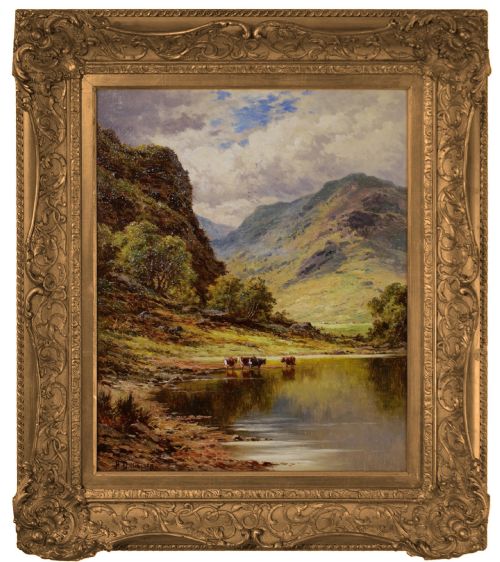
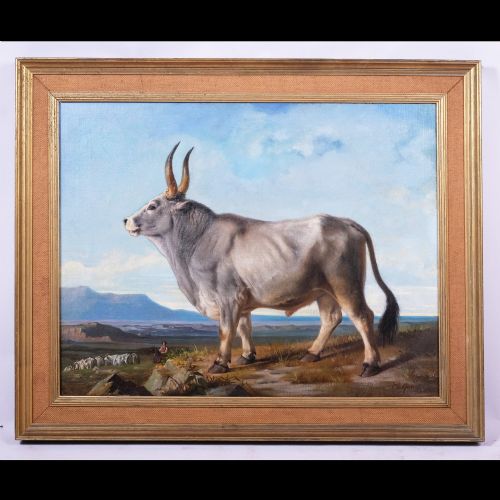
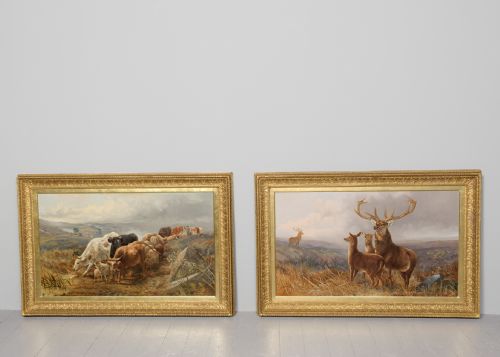
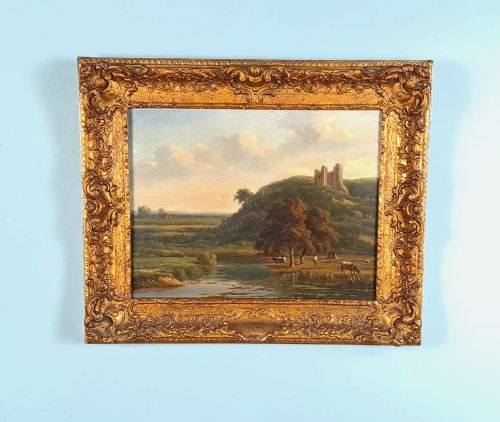
When you search for antique cattle wall art, you find pastoral scenes rendered in oil and watercolour across the eighteenth, nineteenth, and early twentieth centuries. These works range from small studies of animals in stables to large landscape paintings featuring herds by rivers, in Scottish highlands, or across English farmland. The most common examples on this page are Victorian oil paintings on canvas, often housed in heavy giltwood frames.
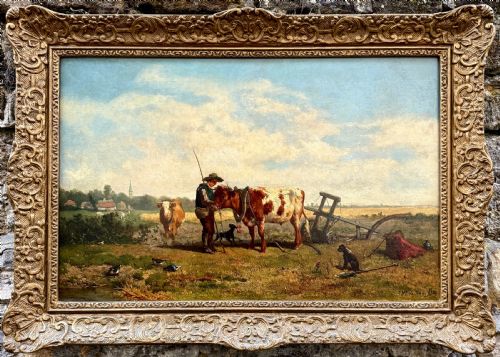
The subjects extend beyond single beasts to include drovers, sheep, and farmyard workers integrated into British, Welsh, and Scottish landscapes. Works span Georgian beginnings through to Edwardian realism and British impressionism, reflecting changing artistic approaches to rural life. Collectors encounter both signed pieces by listed painters and atmospheric works by followers of prominent animal artists.
Materials and technique
Artists painted primarily with oil on canvas or board, though watercolours on paper also appear frequently. Canvases were stretched over wooden frames and often secured with gesso and gold leaf applied to decorative giltwood surrounds. Painters built depth through layered oil paint, using fine brushwork to render animal coats, water reflections, and atmospheric skies.
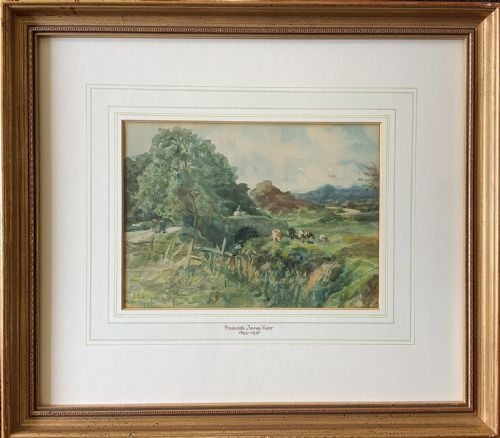
Support structures varied from sturdy wood panels to woven canvas, with many works retaining original stretchers and historic inscriptions. Watercolours employed pigments on heavy paper, protected behind glass within period frames. Gesso ornamentation on frames utilised moulded plaster compositions finished in gold leaf.
Victorian and Edwardian pastoral scenes form the majority of available British landscape art.
What separates the tiers
Quality rests upon the artist's ability to capture the anatomical accuracy and individual character of the animals rather than treating them as generic shapes. Superior works demonstrate confident handling of light across the landscape and integration of cattle within their environment. Weaker examples lean towards stiff repetition and flat backgrounds.
The integrity of the original surface and the framing matter significantly. Surviving pieces with untouched oil paint surfaces, minimal historic restoration, and matching period giltwood frames sit firmly at the upper end. Re-lined canvases and later replacement frames alter the original presentation.
Hendrik Willem Schweickhardt·David Bates·Frederick James Kerr·Henry H Parker·Robert Cleminson·T C Hofland·Johannes de Haas·Thomas Sidney Cooper·Ernest Pile Bucknall·William Sydney Cooper·Sidney Richard Percy·Robert Thorne Waite·James de Rijk·Eugene Verboeckhoven·Alfred Grey·Thomas Baker·Sidney Yates Johnson·Arthur Charles Dodd·William Traies·Alfred de Breanski Snr·W A Clark·Henry Brittan Willis·John R K Duff·Henry Cheadle·Frederick William Jackson
The Antique Cattle Wall Art Glossary
- Giltwood
- Wood carved and coated with gold leaf, frequently used for Victorian picture frames. This finish provides a reflective border that complements dark oil paintings.
- Gesso
- A plaster mix applied to wooden frames before gilding. It creates a smooth base for intricate moulded decorations.
- Stretcher
- The wooden frame inside a canvas that keeps the fabric taut. Historic stretchers often bear artist inscriptions or dealer marks.
- Watercolour
- A painting method using water-soluble pigments on paper. These works require framing under glass to protect the paper from moisture.
- Realism
- An artistic movement focusing on everyday subjects without idealisation. In these pieces, animals and farm workers appear in natural working environments.
Antique Cattle Wall Art: Frequently Asked Questions
How do I date an antique cattle painting?
Dating relies on stylistic clues, clothing styles of any figures present, framing methods, and stretcher construction. Artists' signatures and dated inscriptions on the reverse offer the most direct evidence.
Period framing styles and canvas types also help narrow down the decade of production. Comparative examination of a painter's known working years secures the timeline.
What is the difference between oil and watercolour cattle art?
Oil paintings utilise suspended pigments in oil on canvas or wood boards, allowing for rich texture and deep colour layering. Watercolours use transparent pigments on paper, creating a lighter, more fluid effect.
Oils generally hung without glass protection, whereas watercolours require framing behind glass to prevent environmental degradation.
Who were the notable cattle painters of the nineteenth century?
Thomas Sidney Cooper stands out as a dominant figure in Victorian animal painting, inspiring numerous followers and circle members. Other skilled practitioners include Eugene Verboeckhoven and Robert Cleminson.
These artists focused on realistic portrayals of livestock in British and European landscapes.
Where should I hang a large antique landscape painting?
Large pastoral scenes suit prominent wall spaces with stable environmental conditions away from direct sunlight and heat sources. Heavy giltwood frames require secure wall fixings anchored into studs or masonry.
Rooms with moderate humidity prevent the canvas and wooden stretcher from warping over time.