




Antique Catholic Jewellery
These pieces of antique catholic jewellery span the late nineteenth century to the mid twentieth century, offering devotional gold pendants and medals for personal wear.
Antique Catholic Jewellery
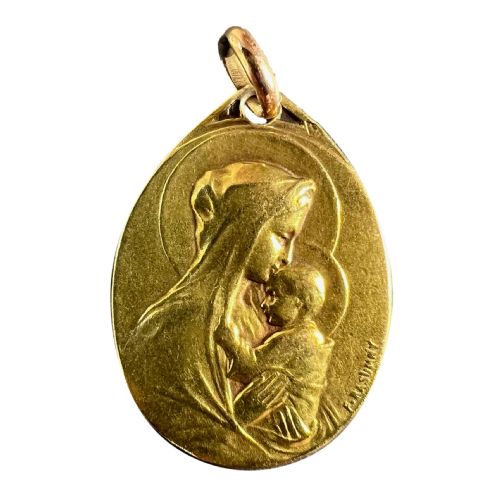
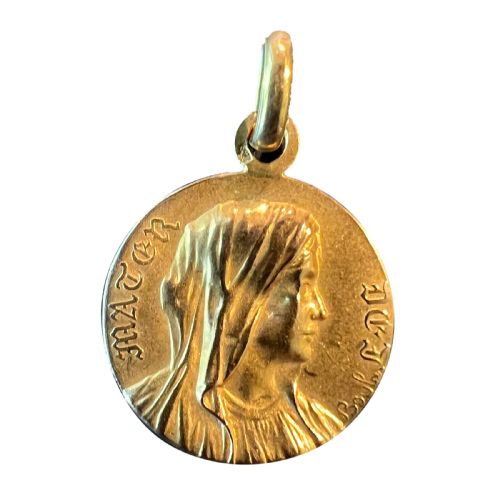
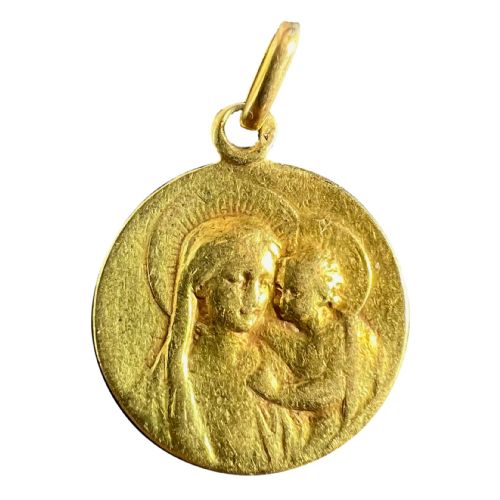
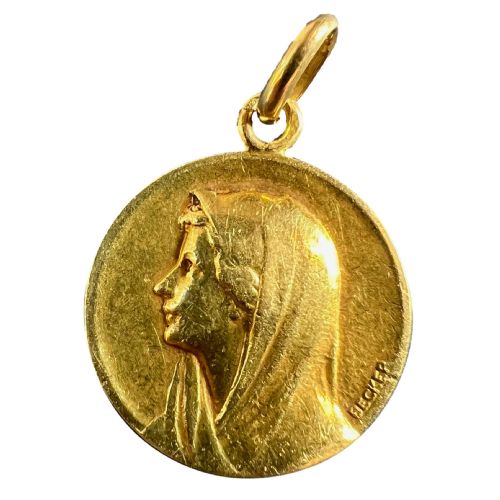
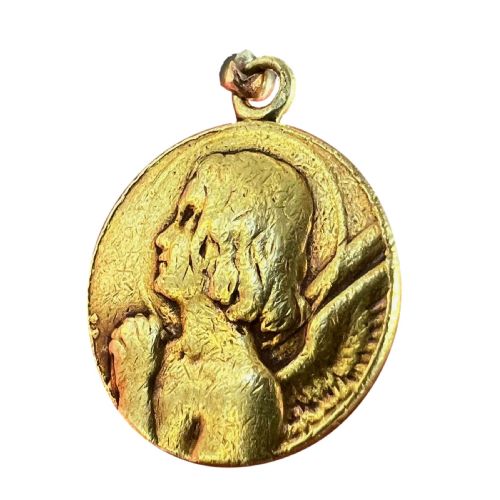
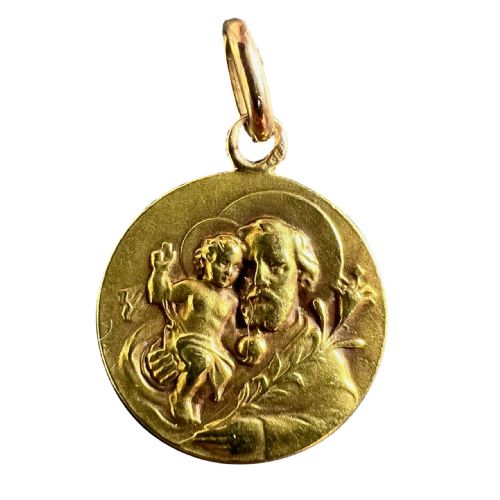
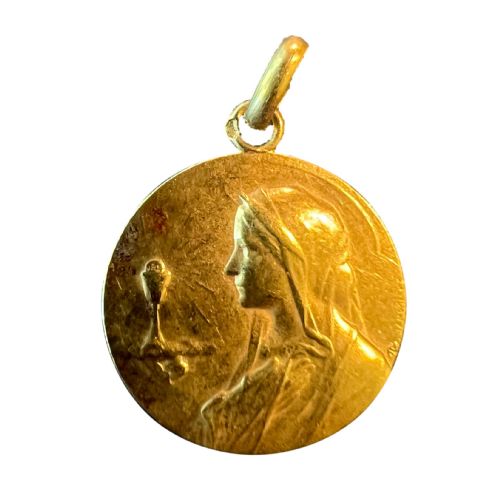
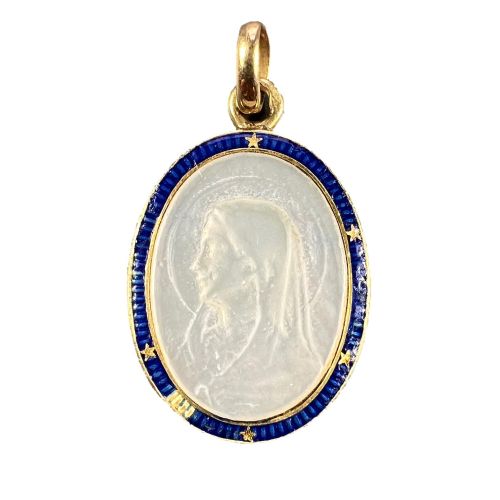
When you search for antique catholic jewellery, you encounter devotional items created primarily as pendants and medals. These pieces predominantly take the form of French religious medals dedicated to figures such as the Virgin Mary, Saint Joseph, and the Madonna and Child.
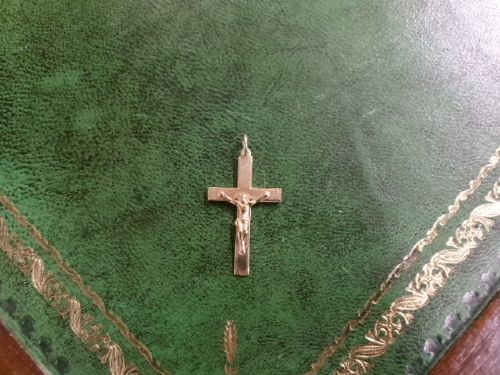
The selections on this page centre on gold pendants produced between the late nineteenth century and the mid twentieth century. Most examples function as wearable charms and necklaces bearing traditional ecclesiastical iconography.
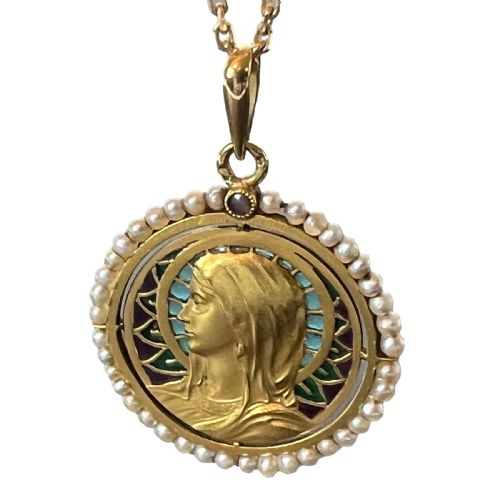
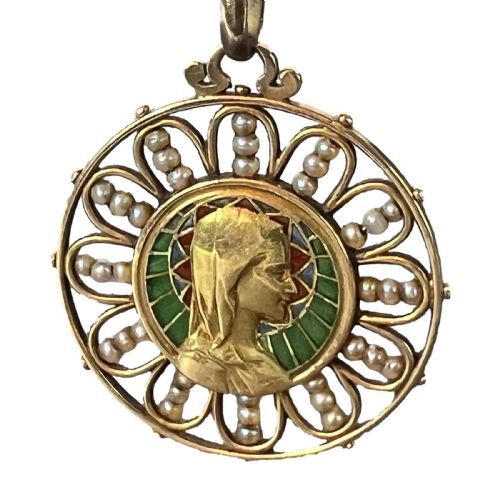
French makers produced the vast majority of these items, incorporating devotional imagery into wearable formats like oval medals and charm pendants. Buyers find pieces ranging from plain engraved gold to elaborate works adorned with enamel and pearls.
How they were made
Goldsmiths utilised eighteen karat yellow, rose, and white gold to form the structural foundations of these medals and pendants. Metalworking techniques involved casting, piercing, and delicate hand engraving to delineate the religious figures and floral borders.
Colour and luminosity enter the designs through the application of enamel, including translucent plique-a-jour methods that allow light to pass through the coloured glass. Artisans also integrated natural materials such as mother of pearl plaques and accented the borders with seed pearls.
Antique Catholic Jewellery Retail Price Guide 2026
Typical asking prices for catholic jewellery among the pieces listed under this phrase on Sellingantiques today, from the lower quarter to the upper quarter. They describe what is for sale here now, not the wider market.
The listings span several decades of French production, ranging from eighteen ninety to nineteen fifty.
What varies in quality
The inclusion of specialist decorative techniques like plique-a-jour enamel elevates a piece considerably. The survival of fragile enamel without loss and the careful setting of seed pearls distinguish standard production work from exceptional artisanal output.
Rasumny·Jampolsky·Emile Monier·Mazzoni·Pageli Perriat·Dropsy·Guilbert·Sellier·Tairac·Becker·Pageri Perroud
The Antique Catholic Jewellery Glossary
- Medal
- A small metal disk bearing a religious image or inscription intended for personal devotion. These objects were frequently worn on chains or added to charm bracelets.
- Plique-a-jour
- An enamelling technique where the enamel is applied without a backing, resembling miniature stained glass. This method lets light shine through the translucent coloured sections.
- Seed pearl
- A very small natural or cultured pearl used to decorate the bezels or borders of pendants. They add a delicate pearlescent contrast to the gold metalwork.
- Ecclesiastical
- Relating to the Christian Church and its official liturgy or art. In jewellery, this style adopts traditional religious motifs and iconography.
- Madonna
- A representation of Mary, mother of Jesus, often shown holding the infant Christ. This central devotional subject appears frequently on French religious medals.
Antique Catholic Jewellery: Frequently Asked Questions
What is a miraculous medal?
A miraculous medal is a devotional pendant whose design was based on apparitions reported by Saint Catherine Labouré in nineteenth century France. These pieces typically feature the Virgin Mary standing upon a globe with radiating rays of light.
On this page, you find these specific designs rendered in eighteen karat gold, sometimes enhanced with enamel or pearls. They served as physical expressions of faith and protection for the wearer.
How do I date these gold medals?
Dating these religious items relies on stylistic shifts from nineteenth century eclecticism through Art Nouveau curves to mid twentieth century forms. Makers' marks and French eagle head hallmarks stamped on the gold also provide chronological indicators.
The listings here span several decades from eighteen ninety to nineteen fifty, reflecting the prevailing artistic movements of each specific period in France.
Can I wear these everyday?
Wearing these gold pendants daily is common, provided you take standard precautions with antique items. The eighteen karat gold used is durable enough for regular wear on a sturdy chain.
Pieces featuring delicate plique-a-jour enamel or seed pearls require greater care to avoid impact damage or moisture exposure. Removing the pendant during physical activities helps preserve the fine details.
What does plique-a-jour mean?
Plique-a-jour translates from French as letting in daylight, describing an enamel work without a solid metal backing. It creates a stained glass effect where light illuminates the transparent coloured enamel cells.
This intricate technique demands high skill from the jeweller, making enamelled medals particularly prized by collectors of religious items.