




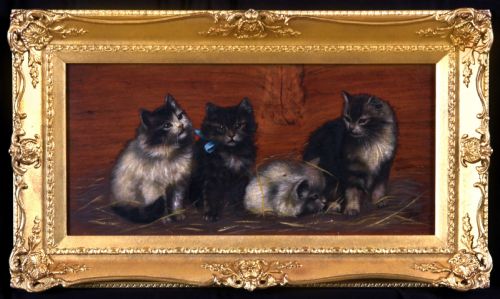

Antique Cat Canvas
These antique cat canvas works capture feline grace in oil paint across Victorian and early twentieth-century hands.
Antique Cat Canvas
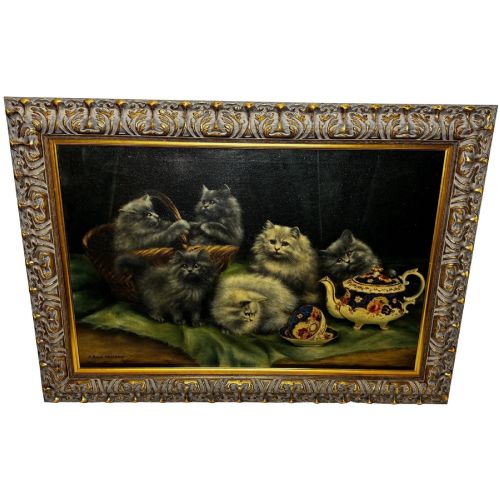
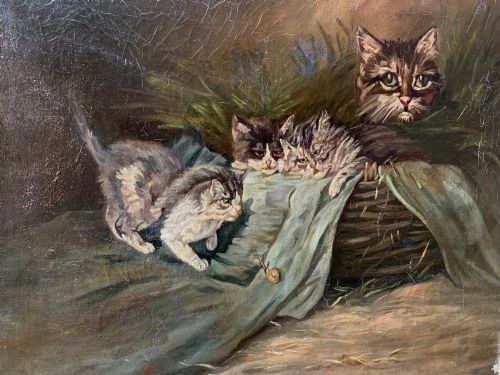
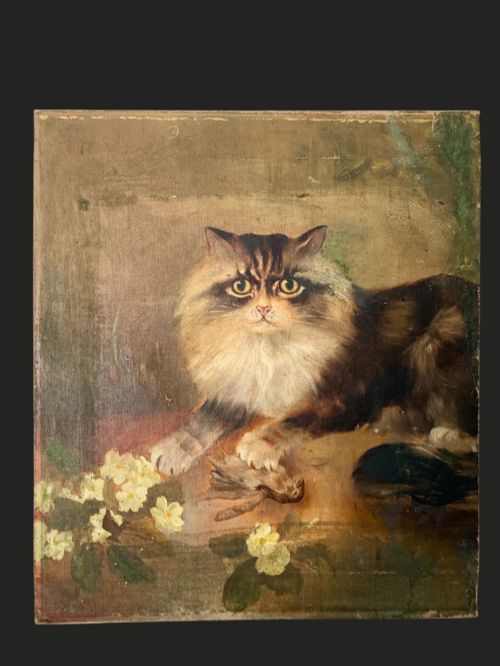
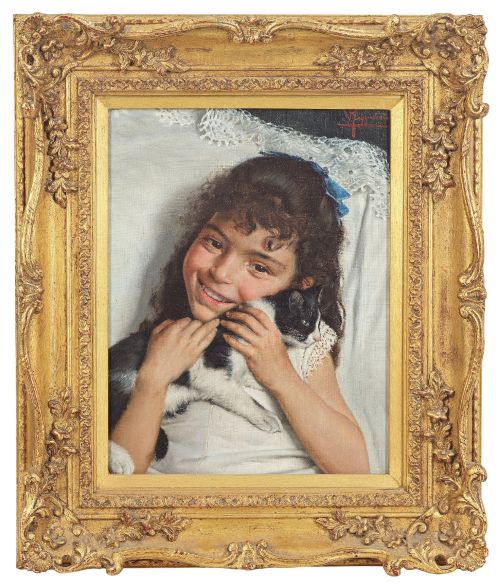
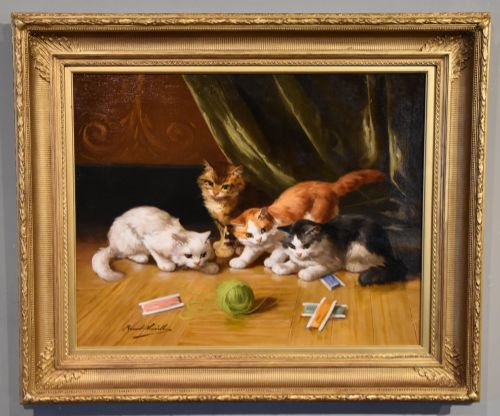
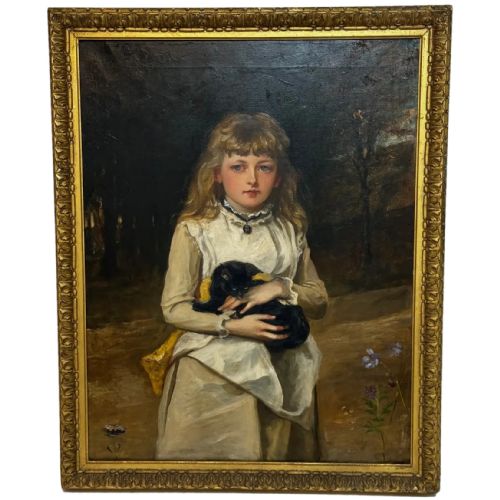
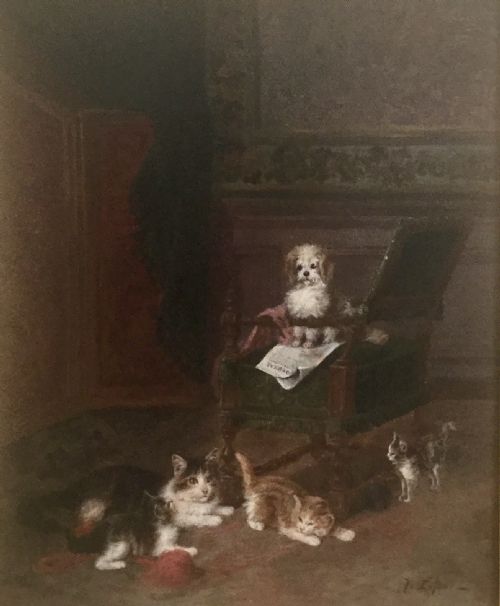
An antique cat canvas represents fine art oil paintings focused on felines, ranging from domestic pets to larger wild cats. Buyers seeking this phrase encounter works executed in oil on canvas, often housed in gilt wood frames.
The pieces on this page span the Victorian era, the nineteenth century, and the early twentieth century. School attributions include French, naive, and animalier traditions, alongside specific named artists.
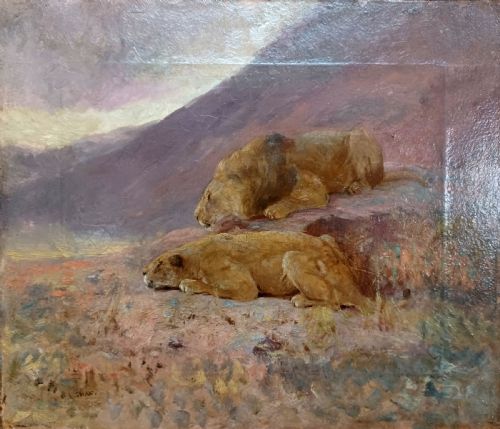
Domestic subjects feature heavily, showing Persian cats and playful kittens in domestic settings. Alongside these, related animalier works depict lions and leopards by artists working in the same broader genre.
Distinguishing quality
Quality rests upon the artist's ability to render the anatomy, texture, and expression of the animal convincingly. Works by accomplished painters demonstrate greater sensitivity to light across fur and whiskers.
The handling of the background and the preservation of the original oil paint and canvas surface also differentiate works. Finer examples retain clear signatures, robust canvas tension, and well-preserved gilt wood frames.
Cats have successfully supervised human painters for centuries, ensuring every whisker receives proper attention.
Agnes Augusta Talboys·Vittorio Reggianini·Alfred Arthur Brunel de Neuville·Henry Weigall·Cuthbert Edmund Swan·Horatio Henry Couldery·Geza Vastagh·Jules Le Roy·Bessie Bamber
The Antique Cat Canvas Glossary
- Oil on canvas
- Pigments bound in a drying oil applied to a woven fabric support. This combination underpins the majority of fine art paintings from the nineteenth century onwards.
- Animalier
- Art that concentrates on the realistic portrayal of animals. This style encompasses domestic cats as well as exotic big cats.
- Gesso
- A paint mixture consisting of a binder mixed with chalk, gypsum, or pigment. It was used on wooden frames to prepare a smooth surface for gilding.
- Naive school
- Art produced by individuals with little or no formal academic training. These works often display a charming disregard for traditional perspective in favour of direct expression.
- Gilt wood
- Wood decorated with gold leaf or gold paint. Such frames were standard for housing nineteenth-century oil paintings.
Antique Cat Canvas: Frequently Asked Questions
How do I identify a nineteenth-century cat painting?
Examine the canvas preparation, stretcher construction, and the style of the brushwork. Nineteenth-century works often utilise hand-woven canvas supports and specific pigment mixtures common to the period.
The framing and any inscriptions on the reverse also offer clues to the dating and origin of the painting.
What is the animalier style?
Animalier refers to the realistic depiction of animals in fine art and sculpture. Artists working in this tradition studied anatomy closely to capture both domestic pets and wild species accurately.
This movement gained significant popularity during the Victorian period across Europe.
How should I care for an oil painting on canvas?
Keep the artwork away from direct sunlight and significant fluctuations in temperature and humidity. Environmental stability prevents the canvas from slackening and protects the oil paint layers from cracking.
Dust the surface gently with a soft, dry brush without applying pressure to the paint.
Why do some paintings feature naive school attributions?
Naive school paintings are created by artists outside the formal academic tradition. They often possess a distinct directness and simplicity that differs from heavily structured academic art.
Collectors value these pieces for their unpretentious charm and observational honesty.