

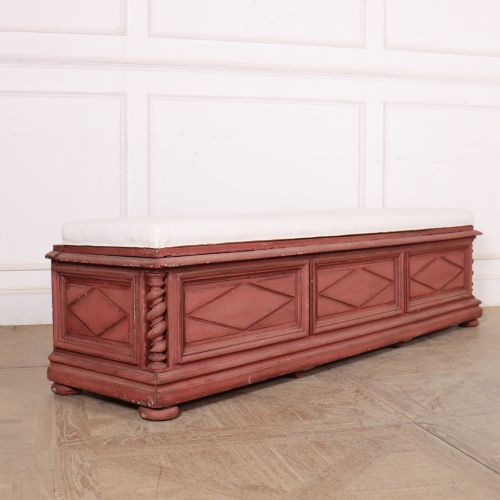


Antique Cassone
An antique cassone is a heavy storage chest holding centuries of domestic history, prized by collectors for its sculptural presence and deep timber grains.
Antique Cassone
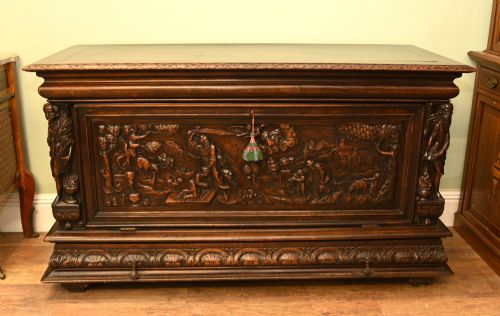
When you search for an antique cassone, you are looking at substantial storage coffers and marriage chests that originated primarily in Italy during the Renaissance and later periods. These monumental pieces served as secure containers for valuable linens and dowry goods, often placed along hallways or bedchambers.
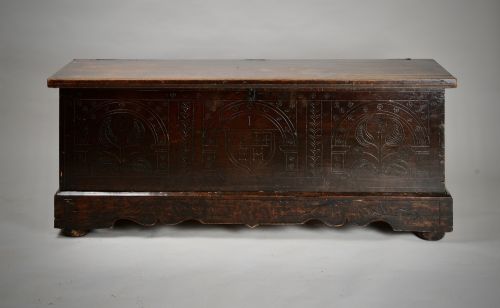
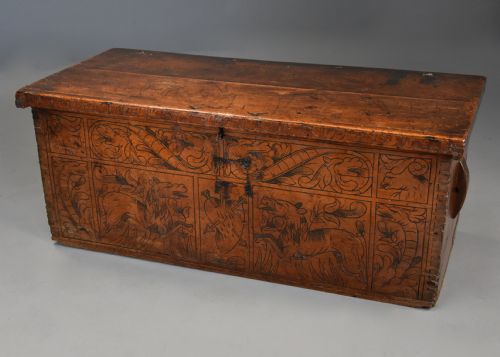
The versions you are most likely to meet on this page span from the seventeenth century through to the nineteenth century, reflecting revival movements and regional folk traditions. Forms range from stark, iron-reinforced coffers to elaborately carved walnut and painted timber marriage chests.
Makers utilised native and imported hardwoods like walnut, oak, cypress, and cedarwood to construct these sturdy chests. Alongside standard wooden lids, some examples feature padded upholstery or bench seating configurations.
How they were made
Construction relied heavily on solid timbers such as walnut, oak, and cypress, assembled into heavy panelled boxes designed to withstand decades of domestic use. Iron fittings and hinges provided essential structural reinforcement to the lid and corners.
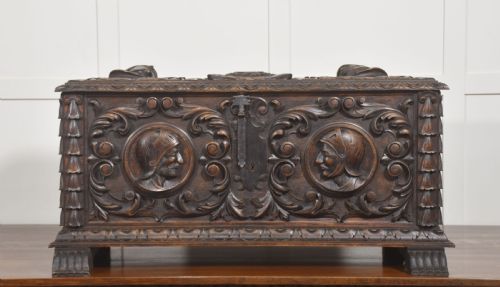
Decorative surfaces often combined deep sculptural carving with tempera paint and gilding. Artisans applied pigments directly to prepared wood grounds, creating figural medallions and heraldic ornamentation on marriage chests.
Antique Cassone Retail Price Guide 2026
Typical asking prices for cassone among the pieces listed under this phrase on Sellingantiques today, from the lower quarter to the upper quarter. They describe what is for sale here now, not the wider market.
Some seventeenth-century cedarwood coffers retain an aromatic scent after four hundred years inside damp Italian palazzos.
What varies in quality
Quality rests upon the integrity of the original timber and the depth of the carving. Deeply carved figural medallions and intact surface patination elevate an example far above plain, utility-grade storage boxes.
The presence of original polychrome paint, tempera decoration, and early gilding determines the artistic standing of a painted marriage chest. Pieces retaining their primary surface finish demonstrate superior historical preservation.
The Antique Cassone Glossary
- Cassone
- A large Italian chest or coffer traditionally used as a marriage chest to hold bridal dowries. These pieces often feature rich carving, painting, or gilded decoration.
- Tempera
- A permanent, fast-drying painting medium consisting of coloured pigment mixed with a water-binder agent, frequently found on decorated panels of early marriage chests.
- Coffer
- A strongbox or chest used for holding valuables and precious items. They are typically built with heavy timber planks and reinforced with ironwork.
- Patina
- The glossy sheen developed on wood surfaces over centuries through handling, waxing, and ageing. Original patination indicates an untouched historical surface.
- Medallion
- A circular ornamental panel, often carved in relief to depict figures or heraldic motifs upon the front board of a chest.
Antique Cassone: Frequently Asked Questions
What is an antique cassone?
An antique cassone is a large storage chest or coffer, traditionally made in Italy during the Renaissance and later periods as part of a marriage dowry. These heavy timber pieces were designed to hold textiles, garments, and valuables.
Over time, they evolved from functional storage into highly decorative items featuring carved walnut, painted panels, and gilded details intended to display family status.
How were these chests used?
Historically, these large coffers functioned primarily as secure storage for household linens, clothing, and valuable domestic goods. Their flat tops also allowed them to serve as benches or tables within the home.
In modern interiors, they work effectively as statement coffee tables, hallway storage benches, or architectural anchor pieces in living spaces.
What woods were used?
Carpenters relied on durable native timbers, choosing walnut and oak for their structural strength and capacity to hold intricate carved relief work. Cypress and cedarwood also appeared frequently, valued for their aromatic qualities.
Surfaces were occasionally treated with tempera paint or covered with upholstery, depending on the regional style and intended function of the piece.
How do I date a piece?
Dating relies on examining the construction methods, timber species, and stylistic markers such as Renaissance carvings, Gothic tracery, or later nineteenth-century revival details. Tool marks, joint types, and the presence of original iron hardware offer further clues.
Comparing the decorative motifs, such as figural medallions or painted marriage scenes, helps place the item within seventeenth or nineteenth-century traditions.