




Antique Carved Weather Glass
These antique carved weather glass pieces combine functional pressure instruments with elaborate woodwork, offering atmospheric monitoring framed in period craft.
Antique Carved Weather Glass
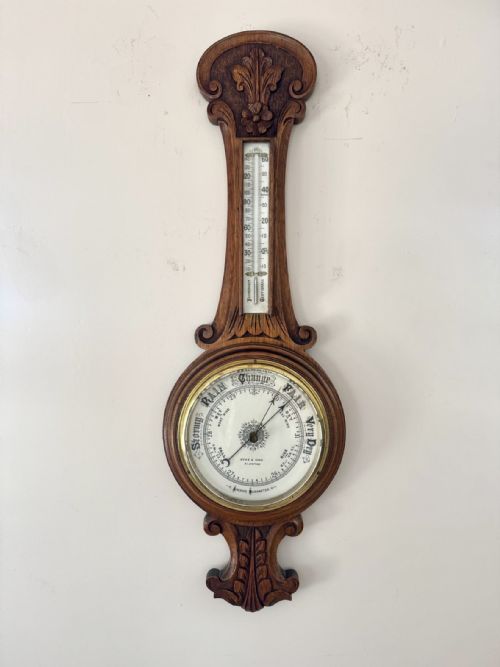
When you search for an antique carved weather glass, you encounter wall-mounted instruments designed to measure atmospheric pressure through mercury or aneroid mechanisms housed in timber enclosures. The pieces appearing here span the Victorian and Edwardian eras, alongside examples from the nineteenth century.
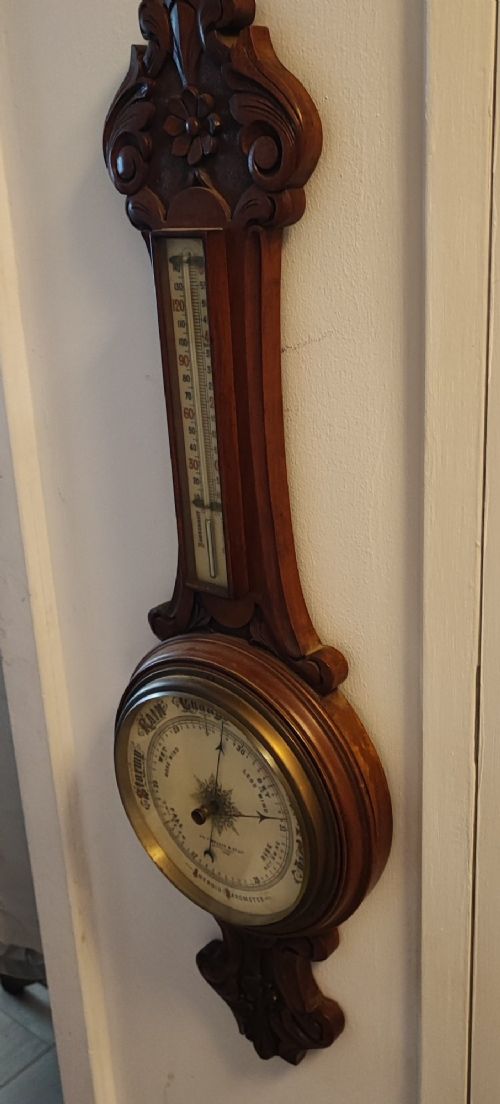
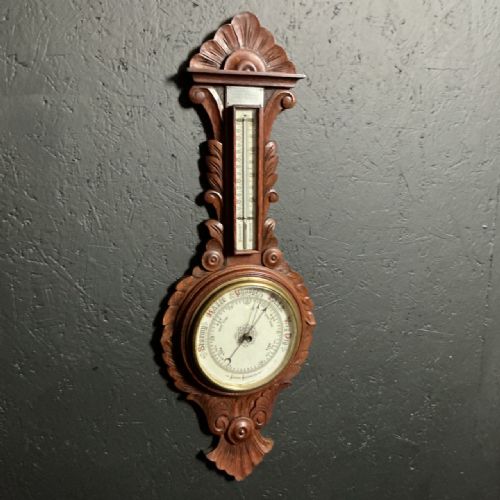
You meet several distinct forms within this selection, dominated by banjo barometers, wheel barometers, and stick barometers. Oak and walnut provide the primary housing for these instruments, frequently enriched with carved details.
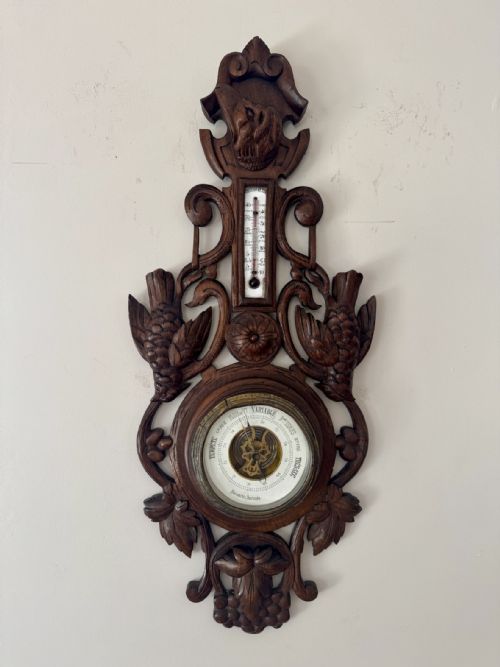
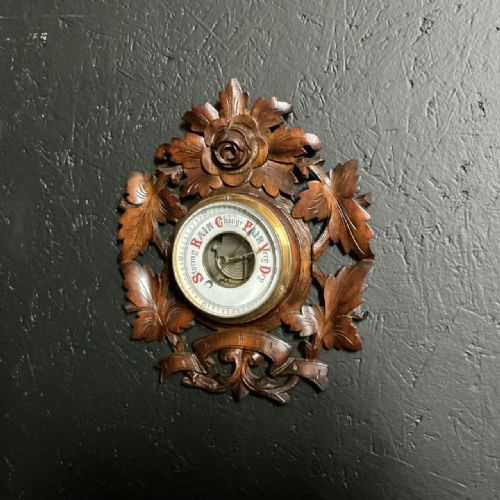
The aesthetic reaches from British domestic halls to continental workshops, taking in Black Forest carving traditions and Neo-Classical marquetry. Wall barometers form the core of what you find, often incorporating thermometers alongside the main dial.
What varies in quality
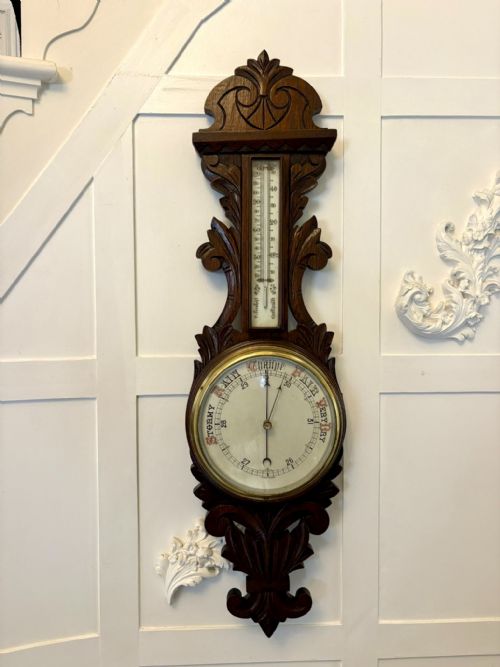
Quality rests upon the crispness of the timber carving and the architectural balance of the case. Deep, undercut foliage on a Black Forest frame or sharp geometric incisions on an oak housing distinguish superior workshops from routine production.
The sophistication of the internal movement and the legibility of the dial play an equal role. Instruments signed by notable scientific makers command attention through precise graduation and high-grade brasswork.
Listings feature Victorian and Edwardian oak, walnut, and mahogany barometers alongside nineteenth-century Black Forest carved wood examples.
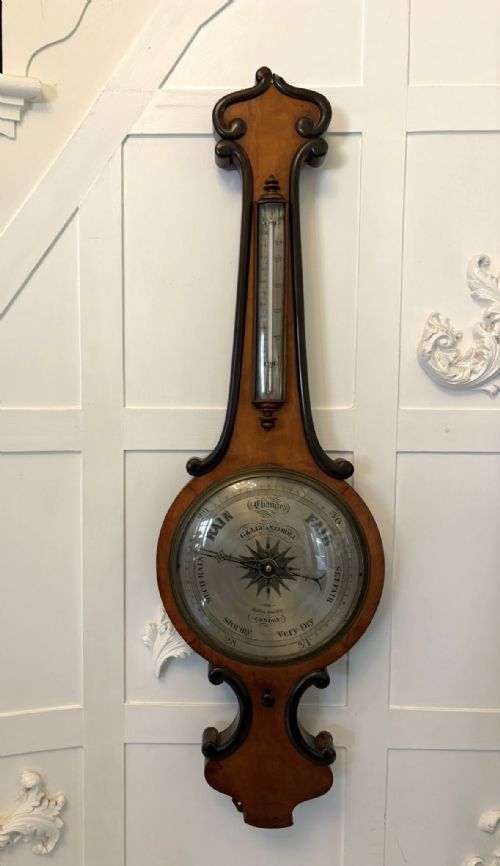
Hyde & Sons Sleaford·G & L Guanziroli London·Negretti & Zambra·J Hughes London·W Watson & Sons
The Antique Carved Weather Glass Glossary
- Aneroid barometer
- An instrument that measures atmospheric pressure using a flexible metal capsule rather than liquid mercury. These units rely on internal spring mechanisms to move the dial pointer.
- Stick barometer
- A tall, narrow wall instrument where the mercury column is exposed against a graduated scale. This form represents the traditional scientific approach to pressure reading.
- Banjo barometer
- A domestic wall barometer shaped like the stringed instrument, featuring a large circular dial at the base and a long stem above. They often incorporate thermometers and hygrometers.
- Black Forest
- A style of wood carving originating from the mountain region of Germany, known for naturalistic animal and plant motifs. Pieces from this tradition show high relief depth.
- Bezel
- The metal ring that holds the glass cover over the dial face. Brass is the standard material utilised for this component.
Antique Carved Weather Glass: Frequently Asked Questions
How do aneroid and stick barometers differ?
Aneroid barometers use a sealed metal box that expands and contracts with pressure changes, turning a mechanical pointer on a dial face. Stick barometers display a column of mercury directly in a vertical glass tube.
Stick models offer a direct scientific reading, while aneroid versions provide a more compact format suitable for domestic wall hanging.
Where should I hang a wall barometer?
Select an interior wall away from direct sunlight, central heating radiators, and damp areas. Stable indoor temperatures ensure the delicate internal mechanisms function correctly without timber warping.
Fix the instrument securely to solid masonry or utilise appropriate wall anchors, as timber and glass assemblies carry substantial weight.
How do I read the weather indicators?
Observe the main pointer to see the current atmospheric pressure reading marked on the dial face. Many instruments include a secondary manual pointer that you set directly over the needle to track whether pressure rises or falls.
A rising pressure trend generally indicates improving weather, while falling pressure suggests approaching rain or wind.
Can these antique barometers be calibrated?
Most aneroid barometers feature a small adjustment screw accessible on the rear of the movement. You align this with a reliable local weather report to match current barometric pressure.
Stick barometers operate on fixed mercury levels and typically require no internal adjustment once installed correctly.