

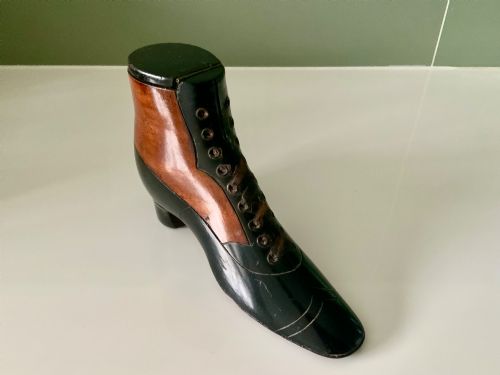
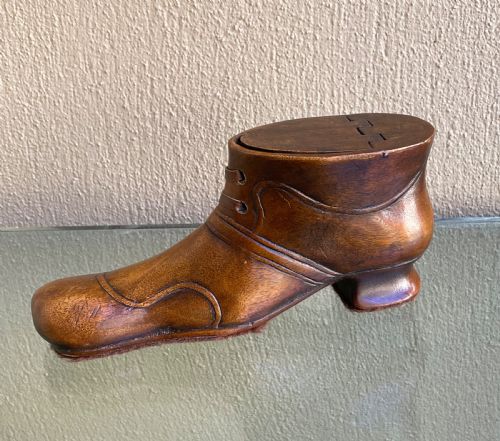


Antique Carved Shoe Box
An antique carved shoe box is a curious piece of folk art holding tobacco, found here in timber ranging from mahogany to fruitwood.
Antique Carved Shoe Box
These items are small snuff boxes shaped as footwear, created across the eighteenth, nineteenth, and early twentieth centuries in styles including Victorian folk art and Georgian work. When searching for an antique carved shoe box, a buyer typically encounters treen examples carved from fruitwood, mahogany, or general hardwood, often designed with double openings or shaped like ladies feet in open toed shoes.
The objects served a domestic or social function for holding snuff, fashioned into recognizable forms that sparked conversation in polite company. Most pieces visible in current and archived records date from the Georgian, Victorian, and Edwardian eras, reflecting the widespread popularity of carved treen during those periods.
Materials and construction methods
Craftsmen utilised dense timbers such as mahogany, fruitwood, and other hardwoods, working the material by hand to achieve the distinctive contour of a shoe or slipper. The surfaces often display careful carving of lace decoration, alongside inlaid diamonds and delicate brass pique work forming foliage and flowers.
Additional detail on these boxes comes through the integration of metal, bone, brass wire, and glass, creating contrast against the dark timber. Certain examples feature inlaid pictures of ladies or incorporate double opening mechanisms hinged to access the interior compartment.
Antique Carved Shoe Box Retail Price Guide 2026
Typical asking prices for carved shoe box among the pieces listed under this phrase on Sellingantiques today, from the lower quarter to the upper quarter. They describe what is for sale here now, not the wider market.
Factors determining quality
Quality rests upon the crispness of the carving and the complexity of the surface ornamentation, such as intricate brass pique work or inlaid motifs rather than plain timber. Pieces that show detailed lace patterns, pictorial inserts, or unusual double opening configurations stand apart from simpler utilitarian containers.
The condition of the wood surface and the depth of the natural patina also dictate the desirability of a piece. Well preserved treen with rich, deep surface tones and intact metal inlays represents the finer end of the surviving selection.
The Antique Carved Shoe Box Glossary
- Treen
- Small handmade wooden domestic objects. This term covers items carved from wood for household use, including boxes and small containers.
- Pique work
- A method of ornamentation using tiny points of metal. Craftsmen inset brass wire or pins into the wooden surface to form decorative foliage and geometric patterns.
- Snuff
- A powdered tobacco product. Users inhaled it through the nose, requiring small lidded containers to keep the powder dry and accessible.
- Patina
- The surface sheen developed through age and handling. A rich deep patina indicates years of touch and polishing on exposed hardwood.
Antique Carved Shoe Box: Frequently Asked Questions
What are antique carved shoe boxes?
These objects are small handheld containers carved from timber to resemble footwear. They were made during the Georgian, Victorian, and Edwardian periods.
Craftsmen shaped the wood into ladies shoes or slippers, frequently decorating the surfaces with inlay, metal wire, and carved lace patterns.
How were these shoe boxes used?
Owners used them to store and dispense snuff in social settings. The miniature footwear design served as a humorous and tactile conversation piece.
Many examples feature hinged lids or double openings to allow access to the tobacco compartment within.
What materials did makers use?
Makers relied on dense woods including mahogany, fruitwood, and various hardwoods that accepted fine hand carving. They embellished the timber using brass wire, bone, metal, and glass.
Some pieces incorporate inlaid pictures or detailed pique work depicting flowers and leaves across the instep.
How do I identify the period?
Dating relies on the style of carving, the timber used, and any decorative motifs like brass pique or pictorial inserts. Georgian and Victorian examples often display distinct folk art characteristics.
Examining the depth of the patina and the construction of the hinge helps confirm the age of the piece.