



Antique Carved Profile Jewellery
Antique carved profile jewellery brings forward centuries of portraiture, captured in shell, lava, hardstone, and gold.
Antique Carved Profile Jewellery
Antique carved profile jewellery encompasses rings, brooches, pendants, earrings, bracelets, and fob seals bearing human portraits in relief or intaglio. These pieces emerge primarily from the Victorian and Edwardian eras, alongside Georgian and early twentieth-century examples.
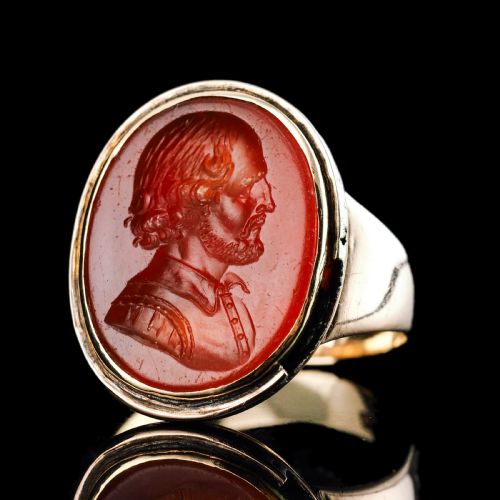
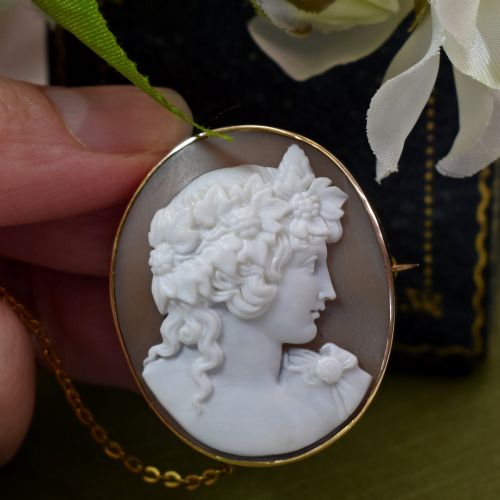
The most common forms you will encounter on this page are shell cameo brooches and hardstone intaglio rings depicting classical figures, gentlemen, or deities. Makers across nineteenth-century Britain, France, and Italy produced these wearable miniatures for personal adornment and keepsake.
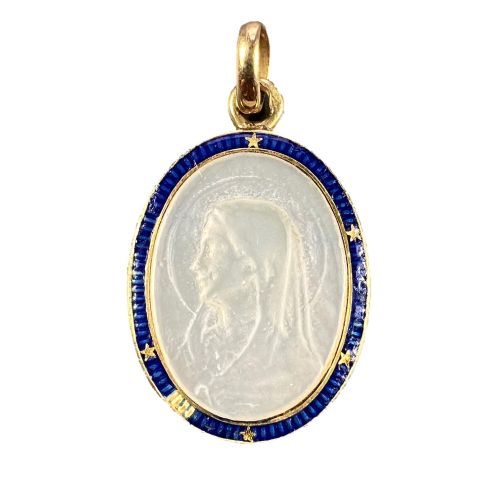
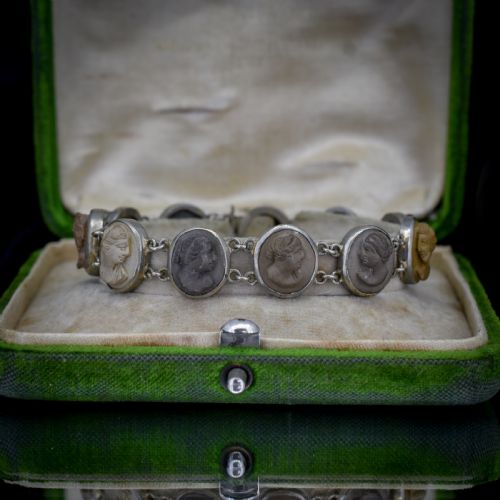
Grand Tour souvenirs and religious medals also appear frequently, spanning lava stone carvings from Italy and mother-of-pearl charms from France. Each item preserves a distinct likeness carved into natural materials designed to catch the eye.
Materials and carving techniques
Carvers shaped shell, coral, lava, carnelian, agate, and black opal by hand, utilising the natural colour variations within each layer to create contrast between the subject and the background. Shell cameos rely on the milky white upper layer cut away from a darker pink or brown base.
Hardstone intaglios involve carving a design recessively into stones such as carnelian or agate, functioning historically as signet seals as well as decorative rings. Lava stone, sourced near Naples during the Grand Tour period, offered a softer matte medium carved directly into porous volcanic material.
Metalsmiths housed these carvings in gold, varying from nine carat to eighteen carat, alongside silver, pinchbeck, and filigree mounts. Frames often incorporate detailed wirework and secure bezels tailored to the contours of the central stone or shell.
Demeter and Zeus occasionally share a jewellery box with anonymous gentlemen and French saints.
Judging the quality of carving and setting
Mount quality dictates overall merit, separating simple commercial bezels from substantial gold frames adorned with granulation, filigree, or high carat settings. A well-balanced composition where the profile fills the frame proportionally indicates superior craftsmanship from the workshop.
The Antique Carved Profile Jewellery Glossary
- Intaglio
- A design carved into the surface of a gemstone so that the impression appears in relief when pressed into wax. These served practical sealing functions in rings and fobs.
- Hardstone
- A semi-precious gemstone used for carving, including varieties like agate, carnelian, and sardonyx. These stones resisted wear better than shell and permitted finer detail.
- Lava cameo
- A portrait carved out of compressed volcanic ash, typically sourced in Italy during the nineteenth century. These matte carvings often depict classical mythological figures.
- Pinchbeck
- An alloy of copper and zinc invented in the eighteenth century to imitate gold. It provided an affordable golden mounting for jewellery before modern plating techniques.
Antique Carved Profile Jewellery: Frequently Asked Questions
How do I date a cameo?
Dating relies on the style of the subject's hair, the clothing depicted, and the construction of the metal mount. Victorian pieces often feature heavy gold frames and classical revival motifs, whereas Edwardian items lean toward lighter settings.
Examining the pin mechanism on brooches or the shank style on rings also helps narrow down the decade of manufacture. Hallmarks stamped into the gold or silver provide definitive markers when present.
Can I wear these rings daily?
Shell and lava pieces require careful handling because these materials are softer than precious gemstones. Wearing them requires avoiding hard knocks against furniture or stone surfaces.
Hardstone intaglios in agate or carnelian tolerate everyday wear much better due to their structural hardness. Removing jewellery before swimming, gardening, or heavy lifting preserves the integrity of both the carving and the metal mount.
What is a Grand Tour souvenir?
Grand Tour souvenirs were art objects and jewellery purchased by wealthy young travellers touring cultural centres in Europe during the eighteenth and nineteenth centuries. Italy served as the primary destination for acquiring shell and lava cameos.
These pieces allowed travellers to bring home portable representations of classical antiquity, mythology, and famous sculptures. They remain prized today for their historical association with nineteenth-century travel and education.
How do I clean shell jewellery?
Cleaning shell items involves using a soft dry cloth or a slightly damp brush with mild soap to remove dust from the crevices. Submerging shell in water or chemical cleaning solutions damages the natural protein layers and dulls the polish.
Hardstone and gold components tolerate gentle washing with warm soapy water followed by immediate drying. Regular maintenance prevents the buildup of oils from the skin without harming the delicate carved surface.