

Antique Carved Man
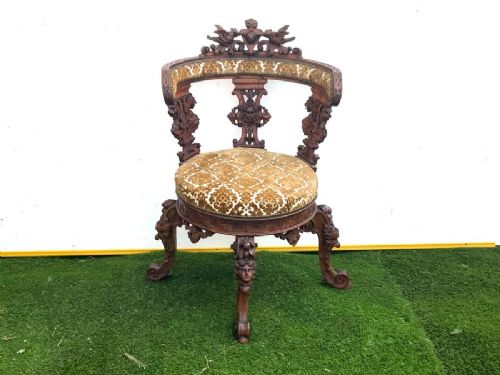
An antique carved man brings traditional woodwork and folklore into a room, taking the form of figures, portrait panels, and architectural grotesques.
Antique Carved Man
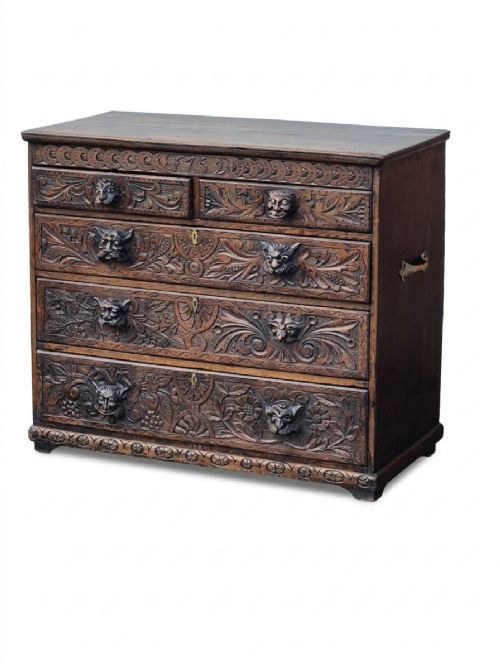
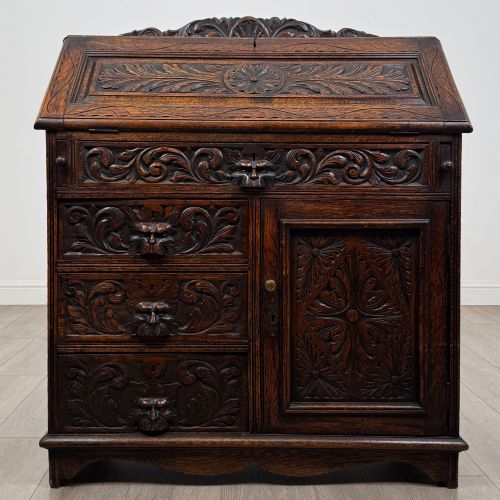
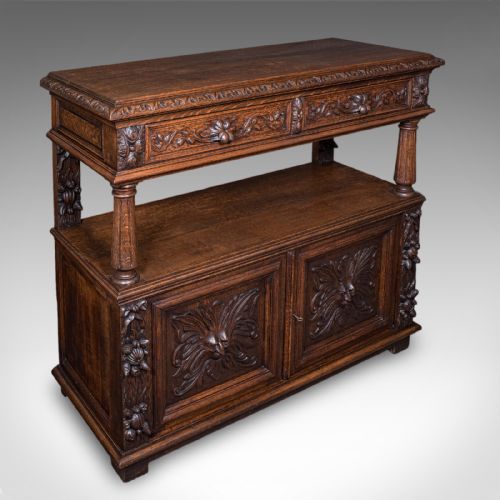
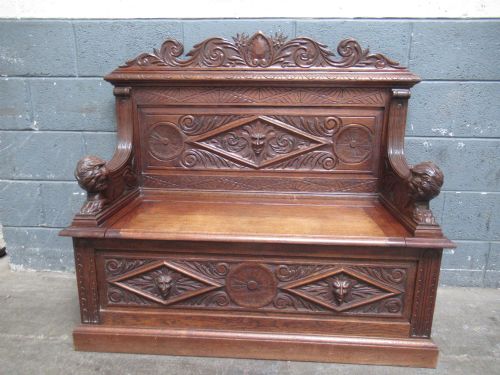
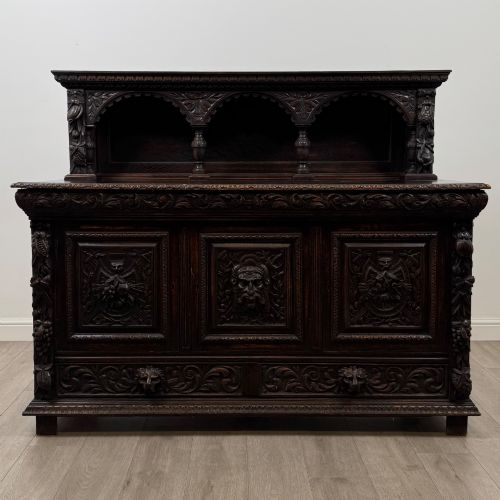
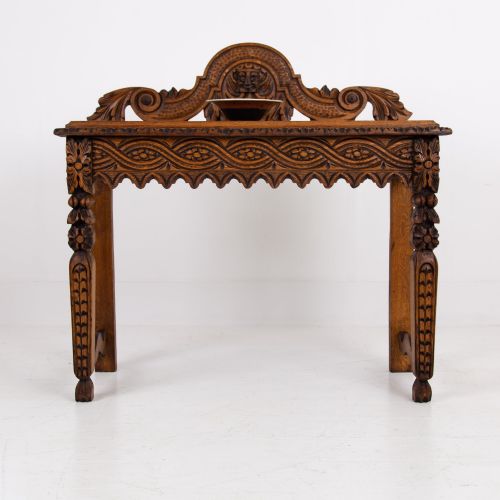
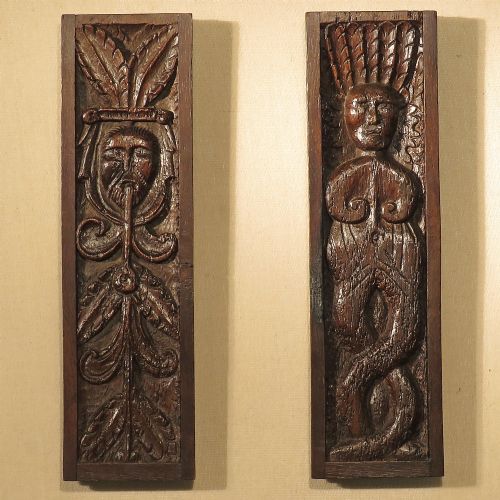
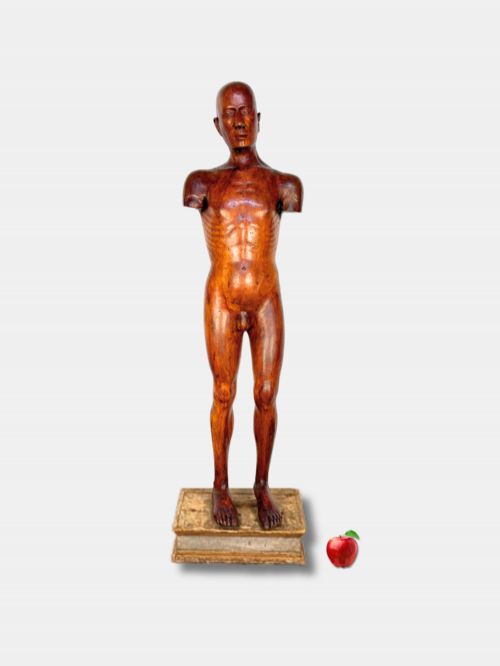
The search phrase antique carved man encompasses a diverse group of wooden sculptures, portrait figures, and architectural details rooted in centuries of craftsmanship. Buyers encounter solid wood figures, relief panels, and functional furniture adorned with facial carvings, most notably the folkloric Green Man motif.
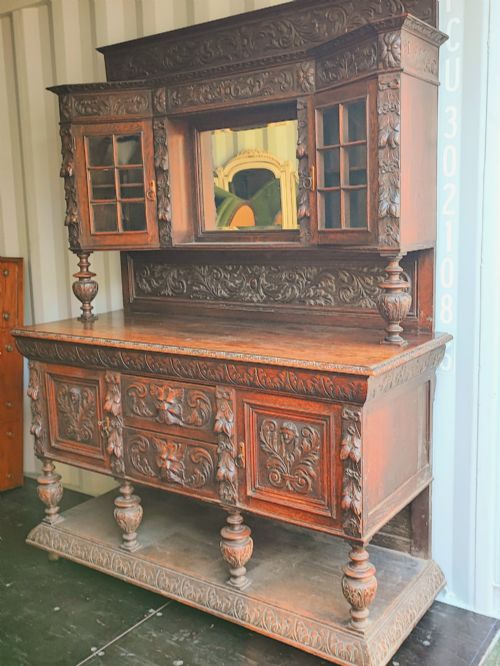
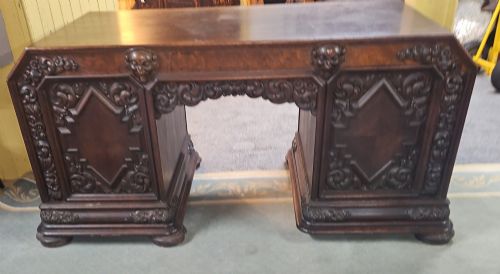
The pieces appearing on this page span from the sixteenth century through the Victorian era and into the early twentieth century. Oak dominates the material record, frequently utilised in Gothic Revival, Jacobean style, and Black Forest items such as hall stands, sideboards, desks, and bookcases.
Beyond European furniture and panels, the category extends to Asian hardwood okimono and life-size wooden figures on plinths. Domestic items like writing desks, armchairs, and mule chests often incorporate deep relief work depicting human visages and symbolic masks into their structural framework.
What Varies in Quality
Proportion and depth of relief separate standard production pieces from exceptional sculptural works. Superior examples display confident anatomy, expressive facial detailing, and harmonious integration between the carved human form and the host furniture.
The integrity of the timber and the retention of original surfaces dictate desirability. Pieces retaining their early patination, sound structural joinery, and crisp, unblemished facial carvings command greater appreciation among collectors than heavily restored or worn items.
Period origins span from sixteenth-century relief panels to early twentieth-century nutcrackers and domestic furniture.
Winterhalder And Hofmeier·Lamb Of Manchester
The Antique Carved Man Glossary
- Green Man
- An architectural and furniture ornament depicting a human face emerging from or entwined with foliage, vines, and leaves. This ancient symbol represents rebirth and spring.
- Gothic Revival
- A nineteenth-century design movement inspired by medieval architecture, characterised by pointed arches, heavy oak construction, and intricate tracery.
- Okimono
- A Japanese term for a decorative tabletop carving or figurine. These pieces were carved from hardwood during periods such as the Meiji era.
- Mule chest
- A traditional storage chest featuring one or more drawers at the base beneath a hinged lid. Early examples frequently incorporate panel carvings.
- Ebonised
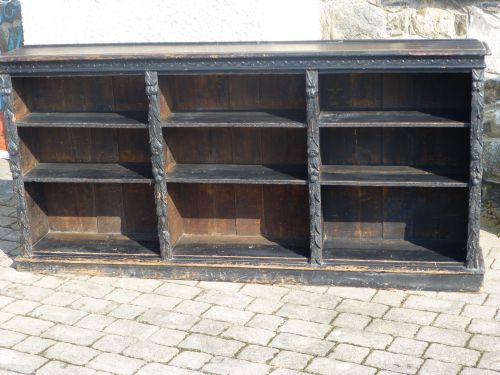
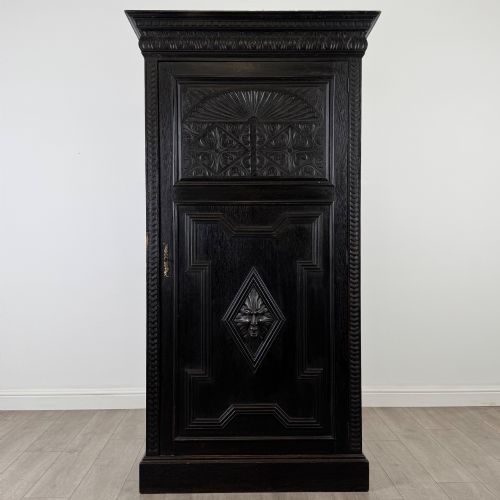
- Wood treated with a chemical stain or dark finish to imitate expensive ebony. This technique was common on Victorian library bookcases and display pieces.
Antique Carved Man: Frequently Asked Questions
What is a Green Man carving?
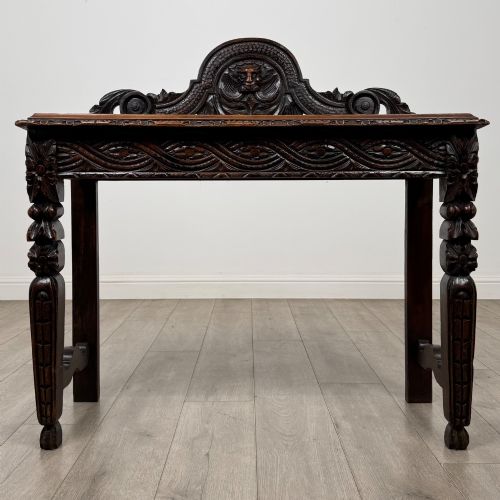
A Green Man carving represents a human face surrounded by or sprouting foliage, symbolising the cycle of growth and nature. These motifs appear frequently on Victorian oak furniture, panels, and architectural woodwork.
Craftsmen carved these faces into the wood of sideboards, bookcases, and hall stands, often blending mythology with practical household storage.
How do I date a carved oak piece?
Dating relies on examining the construction methods, joinery style, and decorative vocabulary associated with specific historical periods like the Jacobean era or Victorian Gothic Revival. Tool marks and timber shrinkage also offer clues to age.
Earlier pieces from the sixteenth or eighteenth centuries exhibit hand-pegged joinery and distinct patination compared to late nineteenth-century factory-finished furniture.
Where were Black Forest carvings made?
Black Forest carvings originated in the mountainous region of central Europe, notably Switzerland and Germany, during the nineteenth century. Artisans used softwoods like limewood to create detailed figures and animals.
These sculptures often depicted rural characters, such as musicians or hunters, rendered with high realism and expressive detail.
How do I care for antique carved wood?
Maintenance involves keeping wooden pieces away from direct heat sources and dramatic humidity fluctuations to prevent the timber from splitting. Regular dusting with a soft, dry cloth preserves the finish.
Application of traditional beeswax helps nourish old oak and hardwood surfaces, maintaining their natural lustre without building up heavy chemical residues.