



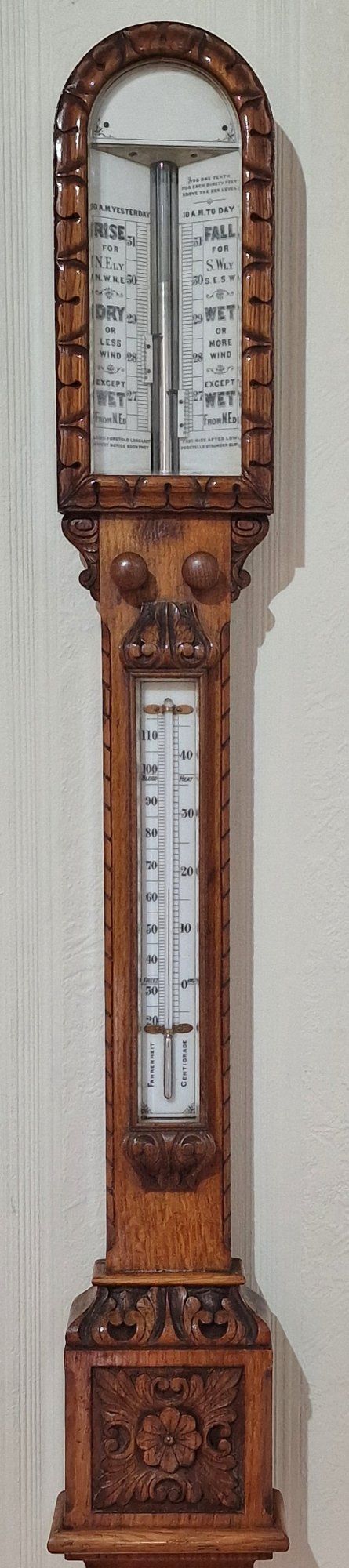

Antique Carved Barometer
An antique carved barometer measures atmospheric pressure while bringing intricate woodwork and traditional dials into a room.
Antique Carved Barometer
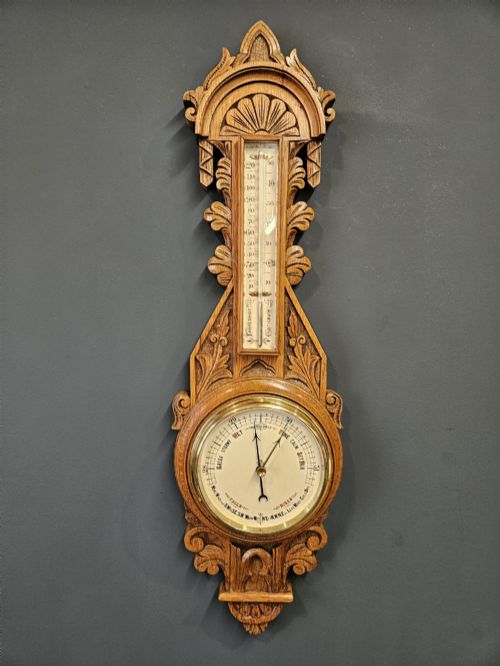
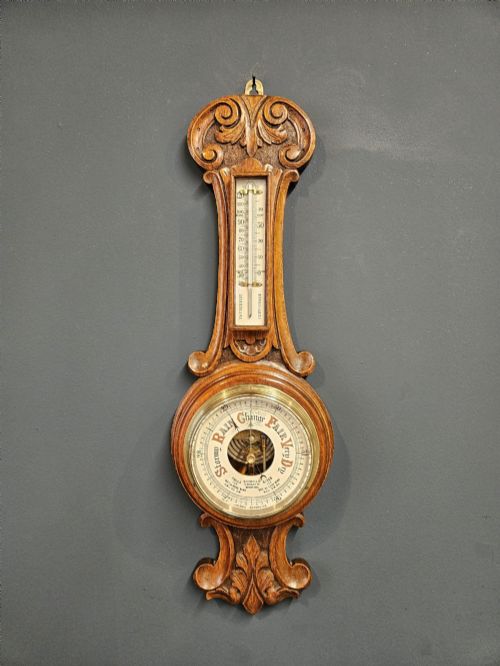
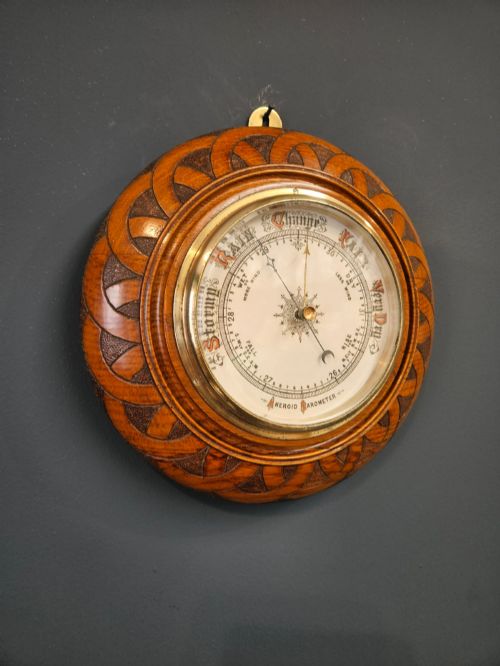
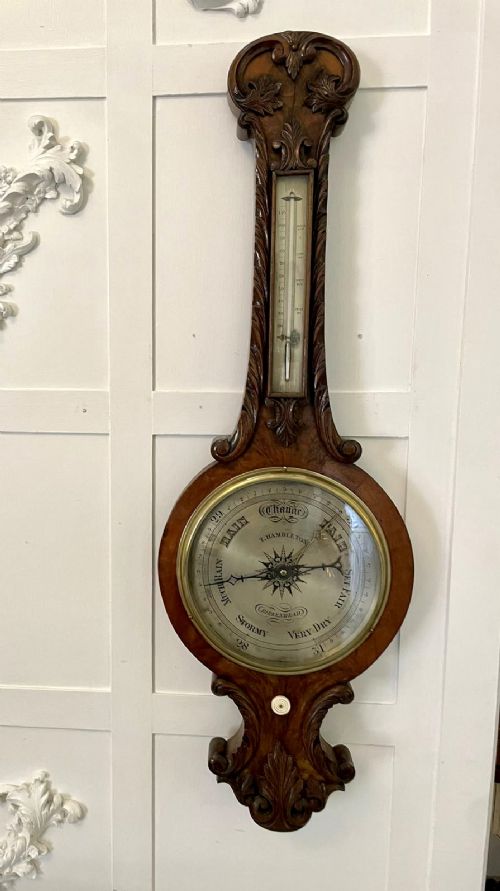
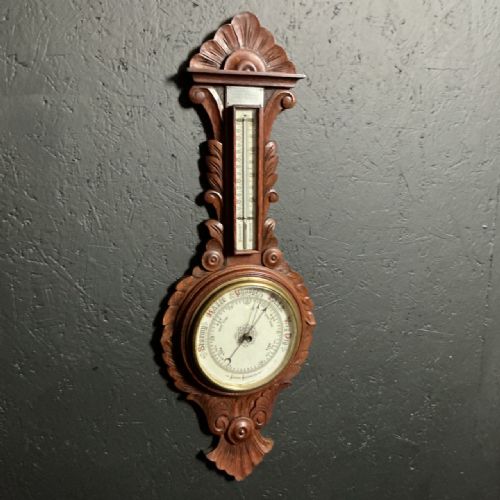
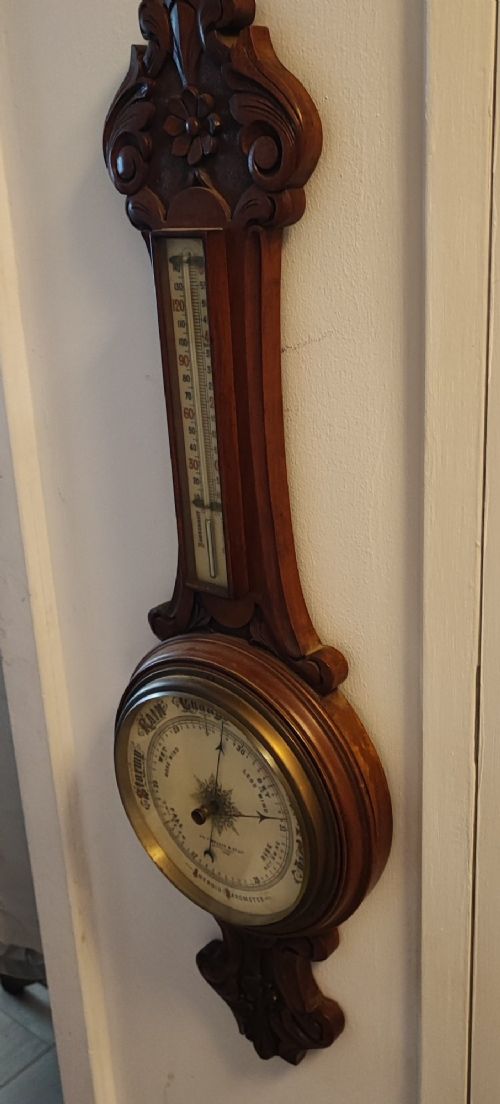
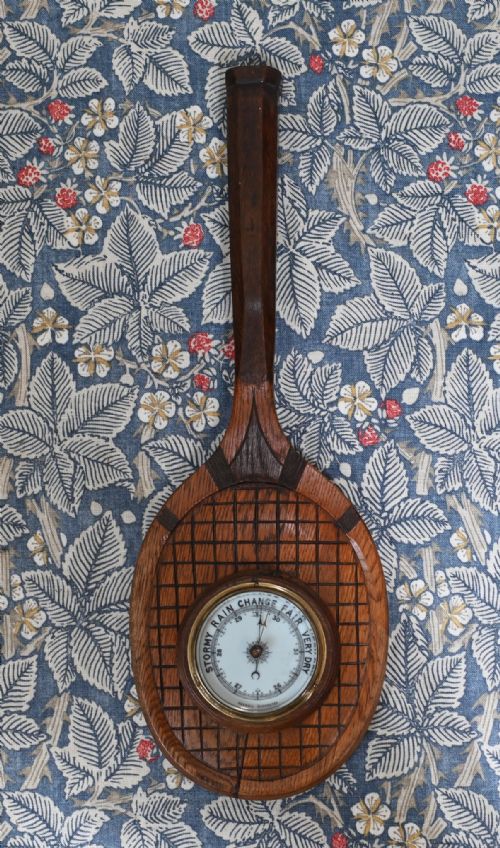
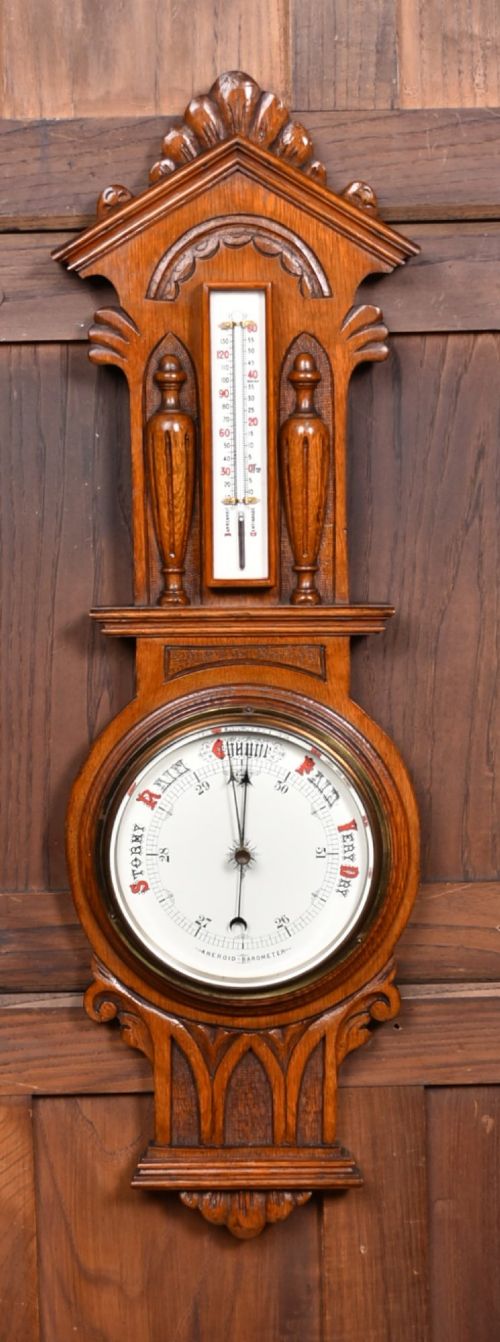
When you search for an antique carved barometer, you encounter instruments housed in wooden cases shaped into banjo, stick, wheel, or wall-hanging formats. The most common examples on this page date from the Victorian and Edwardian periods, featuring robust timber enclosures created to hang on domestic walls.
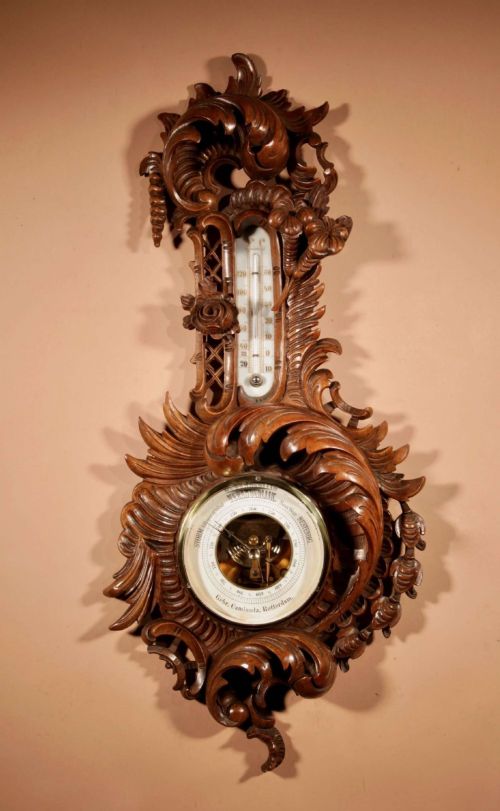
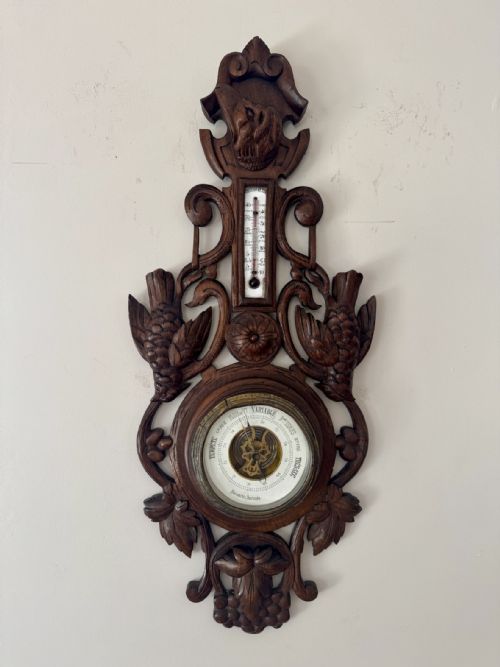
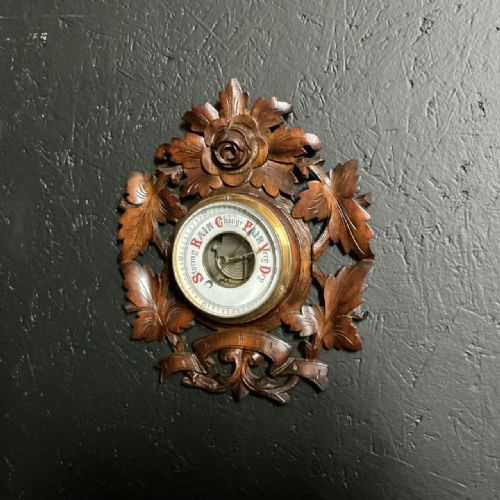
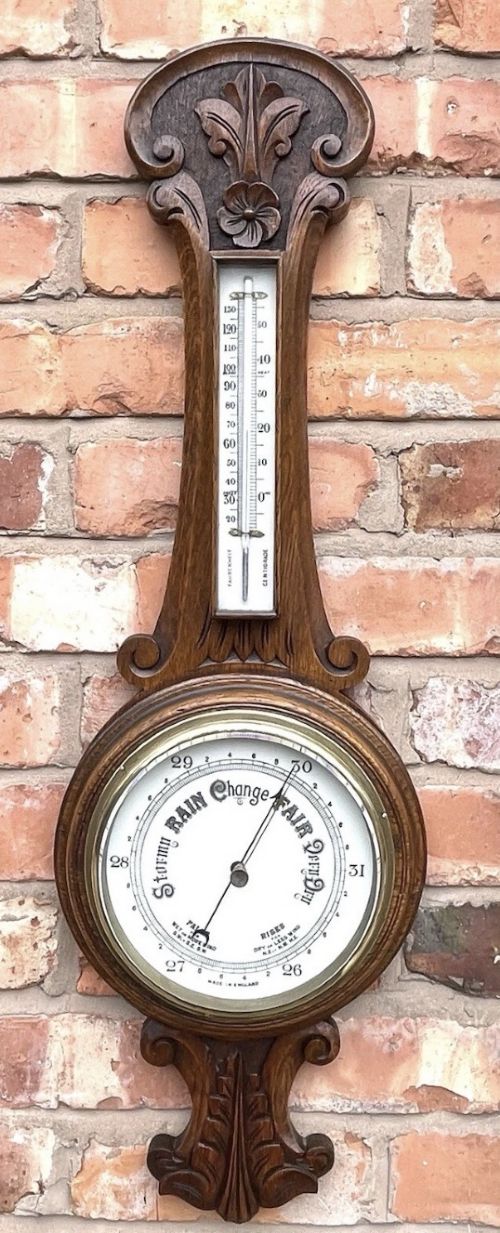
Makers utilised various timber species, notably oak, walnut, and mahogany, often embellished with deep relief carving. Pieces originating from the Black Forest tradition display distinctive naturalistic ornamentation, whilst standard English banjo barometers incorporate exposed dials and thermometers alongside the main pressure gauge.
Many variants integrate secondary functions, pairing the barometer with a thermometer or clock movement within the same carved frame. The scale might be presented on a silvered brass plate, ceramic, or porcelain dial, protected beneath a bevelled glass cover.
Materials and construction
Craftsmen shaped these instruments using solid hardwoods such as oak, walnut, and mahogany, applying hand-carved details directly to the timber cases. Black Forest examples frequently employ deeply carved walnut or softer carved woods depicting foliage and animals.
Internal mechanisms rely on either mercury-filled glass tubes for stick barometers or aneroid movements utilising metal capsules for banjo and wheel configurations. Dials are constructed from brass with engraved silvered surfaces, porcelain, or ceramic, matched with delicate indicator needles.
Antique Carved Barometer Retail Price Guide 2026
Typical asking prices for carved barometer among the pieces listed under this phrase on Sellingantiques today, from the lower quarter to the upper quarter. They describe what is for sale here now, not the wider market.
Mechanisms include both mercury-filled glass tubes and brass aneroid movements.
Factors determining quality
The distinction between ordinary and superior pieces rests largely on the depth, sharpness, and ambition of the wood carving. Deeply undercut foliage, birds, and geometric motifs executed in walnut or oak demonstrate a higher degree of artisan skill than mass-produced linear mouldings.
Material selection and dial legibility also dictate the tier of an instrument. Burr walnut veneers, complex skeletonised movements, and crisply engraved silvered brass dials elevate a barometer far above plain timber enclosures with standard printed ceramic faces.
G & L Guanziroli London·Bramwell & Harbron of Darlington·Negretti & Zambra
The Antique Carved Barometer Glossary
- Aneroid barometer
- A type of barometer that measures air pressure using an expanding metal capsule rather than liquid mercury. It is the mechanism found inside most banjo and wheel barometers on this page.
- Banjo barometer
- An instrument housed in a vertical case shaped vaguely like a banjo, typically combining a dial at the bottom with a thermometer shaft above. This form is dominant among Victorian carved examples.
- Stick barometer
- A vertical wall-mounted barometer containing a long glass tube filled with mercury to display atmospheric shifts. These units often feature exposed scales and vernier adjustments.
- Silvered dial
- A brass clock or barometer face treated chemically to produce a bright, matte silver finish with dark engraved lettering. It provides clear contrast for reading weather indicators.
- Skeletonised movement
- A clock or barometer mechanism with open metal plates that expose the inner wheels and springs to view. Such configurations are seen on select Victorian walnut models.
Antique Carved Barometer: Frequently Asked Questions
How do aneroid barometers work?
An aneroid barometer uses a small, flexible metal box called an aneroid capsule that expands or contracts as atmospheric pressure changes. This movement connects via levers to the pointer on the dial.
These mechanical units allowed barometers to be built into wall cases of various shapes without the risk of spilling mercury during mounting.
What is a Black Forest barometer?
Black Forest barometers originate from the wooded mountain region of Germany and are characterised by elaborate, naturalistic wood carvings. They frequently depict leaves, vines, and birds carved in deep relief around the dial.
Cabinetmakers in this tradition utilised rich walnut and dark woods to create highly ornate frames that doubled as striking wall art.
How do I hang a wall barometer?
A wall barometer must be secured firmly to a wall stud or using a heavy-duty wall anchor matched to the weight of the timber case. Because many of these pieces feature dense carved oak or walnut, proper weight support is essential.
Once hung, the indicator needle can be calibrated using the small screw typically located on the bezel or glass face to match local barometric pressure.
What is the difference between stick and banjo barometers?
Stick barometers are tall and narrow, displaying the open mercury-filled glass tube directly against a wooden backboard. They represent an earlier, more scientific approach to measuring air pressure.
Banjo barometers feature a rounded lower section for a circular dial and an extended upper stem, offering a decorative wall piece that often incorporates a thermometer.