
Antique Cane with Silver
These antique cane with silver pieces combine functional walking supports and concealed blades with decorative metalwork from the nineteenth and early twentieth centuries.
Antique Cane with Silver
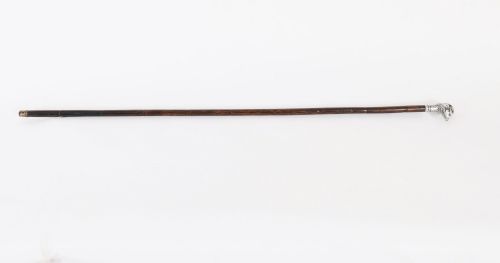
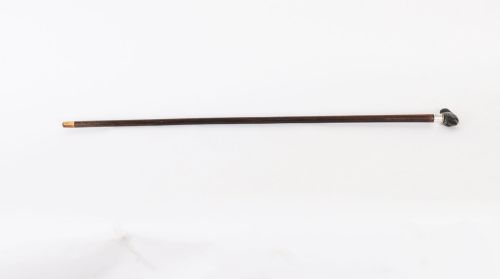
An antique cane with silver brings together traditional walking sticks and umbrella stands, with a strong focus on gentleman's walking sticks and sword sticks. The selection spans the Victorian, Edwardian, and Art Deco periods, alongside Chinese export pieces.
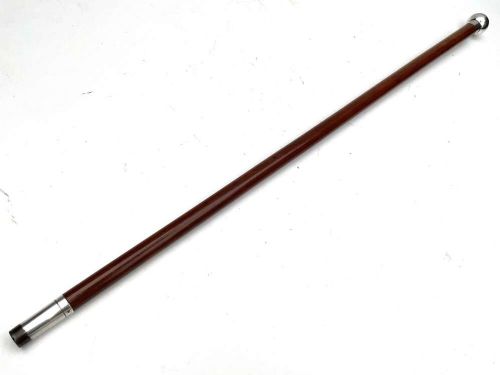
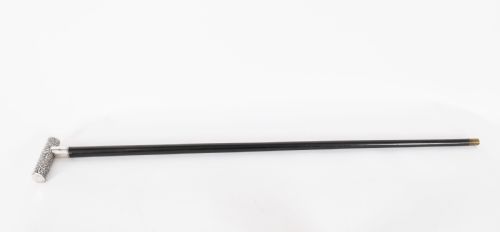
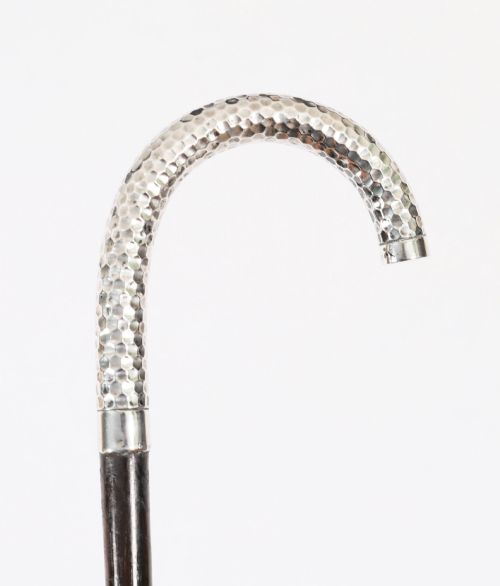
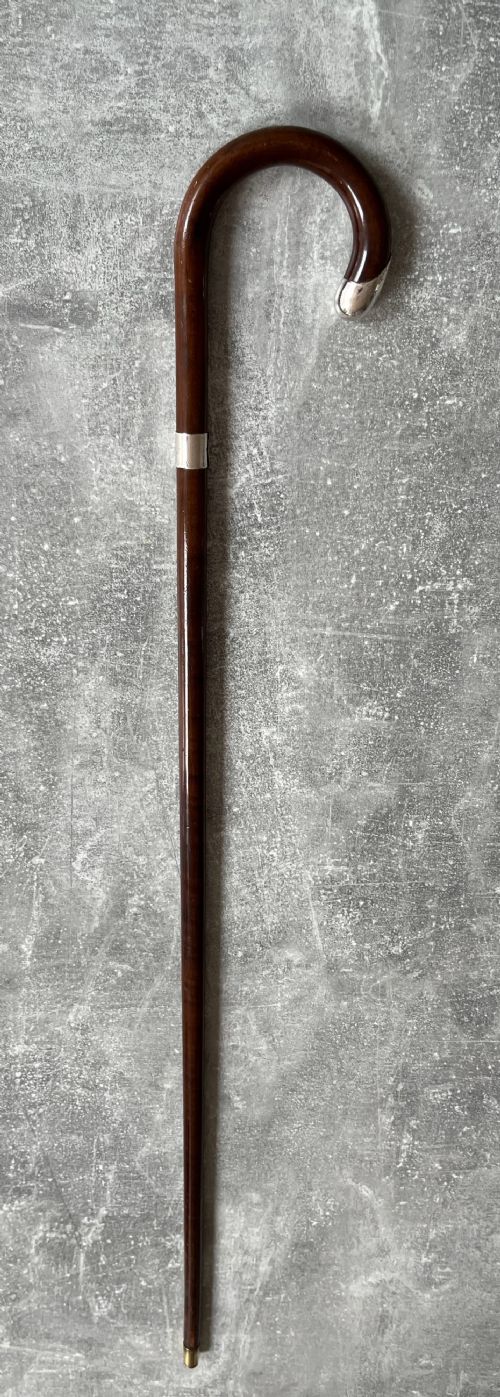
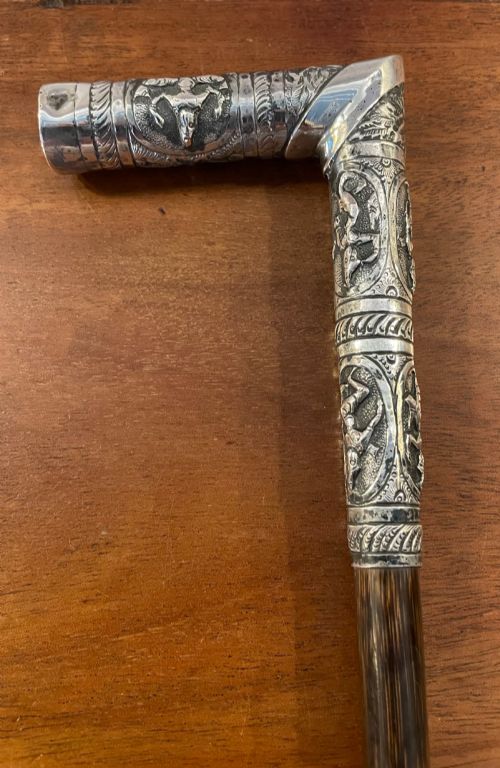
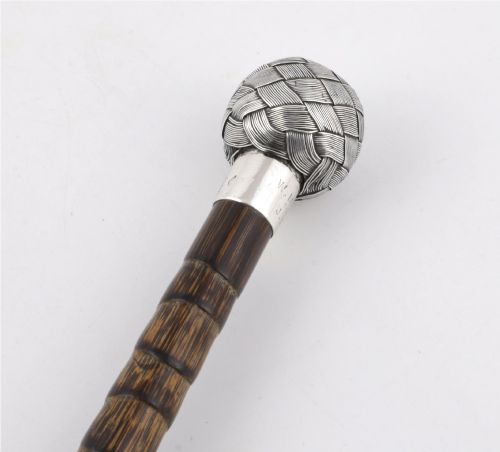
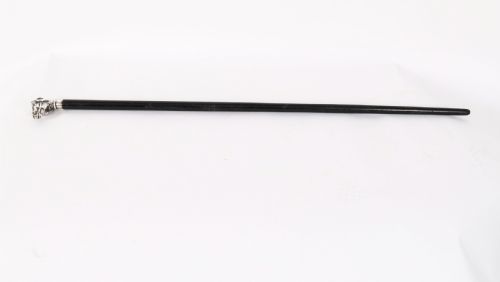
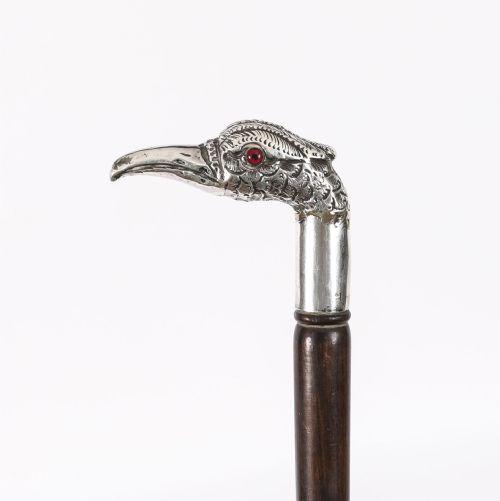
Most examples feature wooden shafts paired with silver collars, mounts, or detailed handles shaped as animals or novelty motifs. You will encounter functional umbrella stands alongside sophisticated gadget canes containing hidden corkscrews, snuff boxes, or blades.
How They Were Made
Craftsmen utilised natural materials such as malacca cane, palm wood, horn, bone, and steel alongside solid silver and nickel plating. Shafts were fitted with metal collars and handles secured through traditional joining techniques.
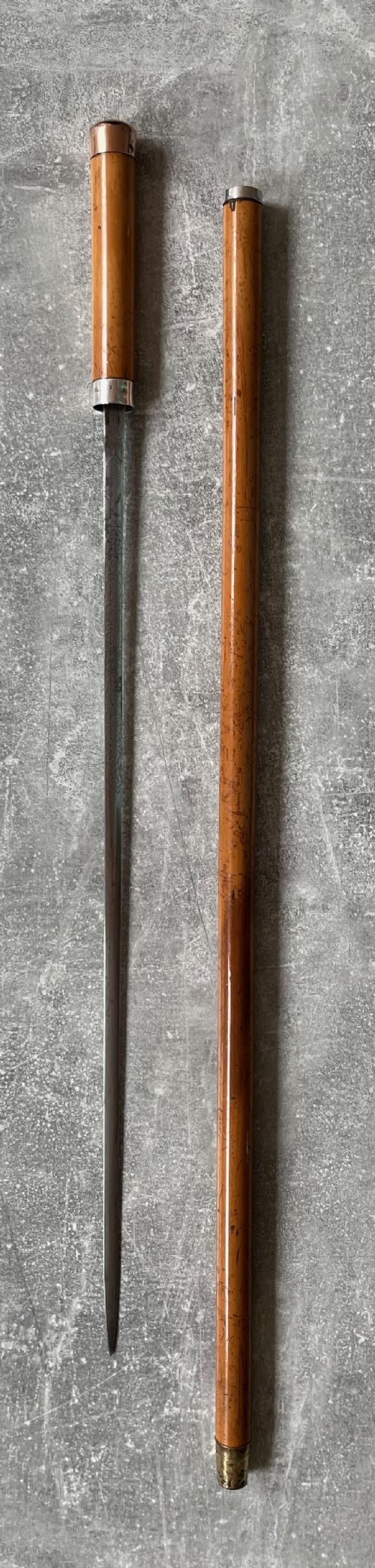
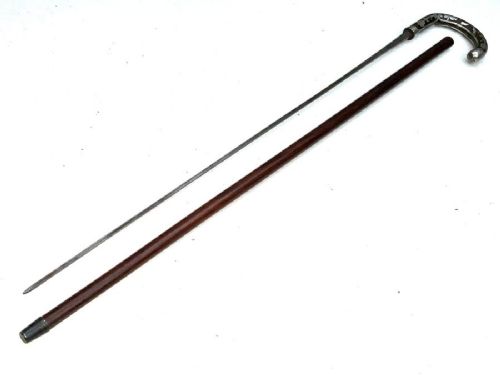
Blade integration required precision smithing, utilising notable blade makers such as Wilkinson and Toledo for swords concealed within the wooden shafts. Handles incorporated repoussé work, casting, and hand-carved details.
Several gentleman's walking sticks conceal four-leaf clover motifs and rabbit handles alongside fully functional corkscrews.
What Varies in Quality
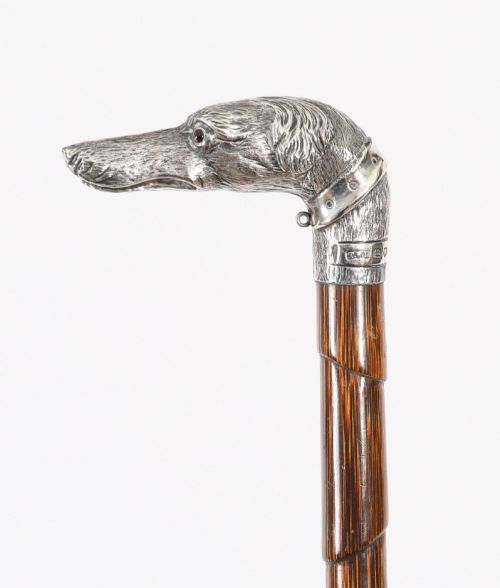
Quality rests in the precision of the silver mountings and the artistic merit of the handle, particularly on pieces shaped as animals or featuring intricate repoussé decoration. The integrity of the concealed mechanism, whether a blade, corkscrew, or snuff box, separates standard items from exceptional ones.
The choice and condition of the shaft material, from malacca to palm wood, alongside the inclusion of recognised blade signatures or city assay marks, define the upper tier of the selection.
Wilkinson Blade·Toledo Blade
The Antique Cane with Silver Glossary
- Malacca cane
- A strong, flexible rattan stem imported from Southeast Asia, frequently utilised for walking stick shafts due to its distinctive mottled brown finish.
- Repoussé
- A metalworking technique where silver is hammered from the reverse side to form a raised, ornate design on handles and collars.
- Knop
- A decorative knob or rounded handle fitted to the top of a walking stick.
- Sword stick
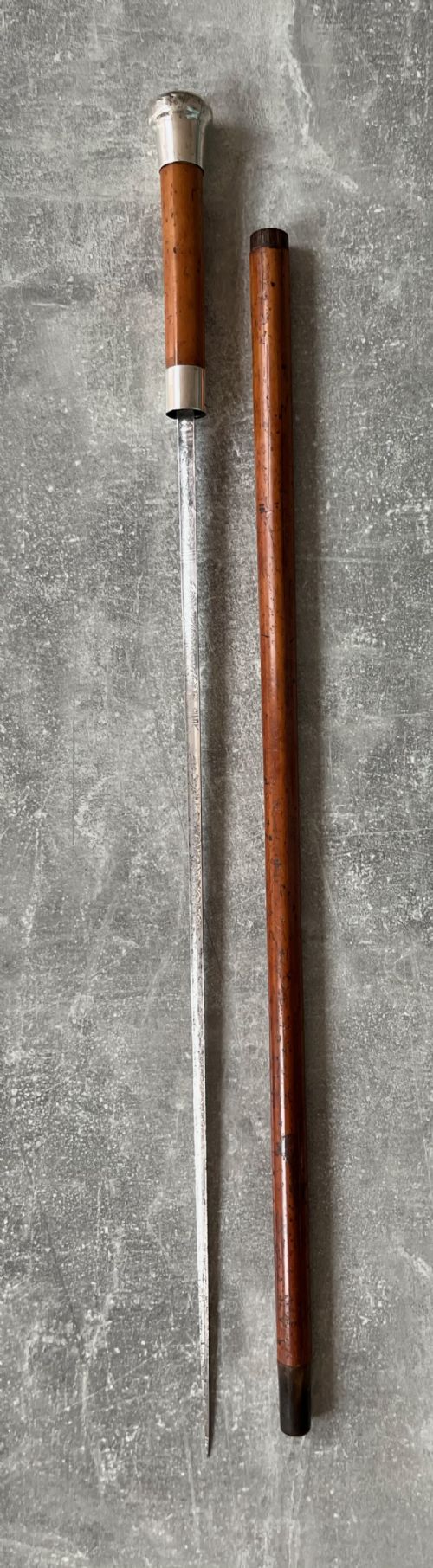
- A walking cane containing a concealed blade housed securely within the wooden shaft.
- Demi-lune
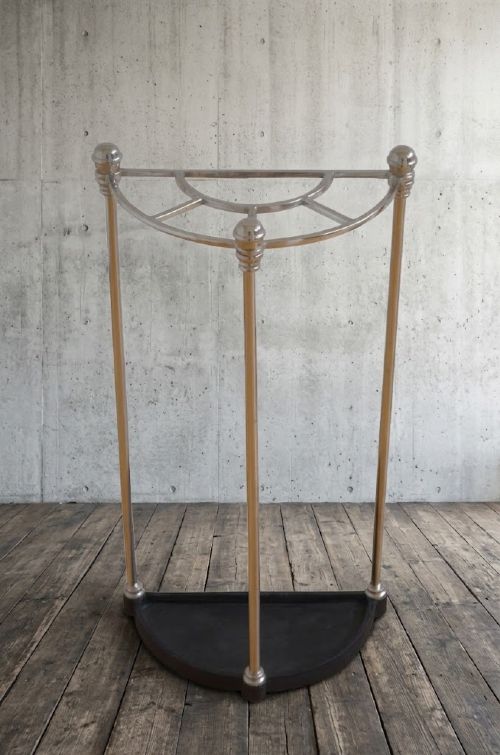
- A half-moon shape characteristic of certain umbrella stands designed to sit flush against a hallway wall.
Antique Cane with Silver: Frequently Asked Questions
How do I identify a sword stick?
A sword stick typically appears as a standard walking cane with a silver collar or metal mount masking the join where the shaft unscrews or pulls apart from the handle.
The internal blade is secured within the wooden body, designed for discretion and self-defence during the nineteenth and early twentieth centuries.
What materials are used for the handles?
Handles are formed from solid silver, bone, horn, or carved wood, frequently shaped into figurative designs such as horses, hares, or rabbits.
Silver mounts often feature hallmarks indicating the year of assay and the city of origin, such as London.
How should I display an umbrella stand?
An umbrella stand, such as a nickel-plated demi-lune model with multiple divisions, suits an entryway or hallway to organise walking sticks and umbrellas.
The metal divisions keep individual canes upright and separated to prevent crowding.
Are gadget canes functional?
Gadget canes incorporate hidden compartments such as snuff boxes, corkscrews, or folding mechanisms built directly into the handle or top section.
These additions served practical daily purposes for gentlemen and ladies of the Victorian and Edwardian eras.