

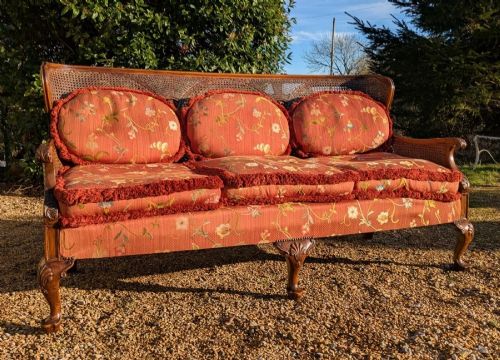


Antique Cane Sofa
An antique cane sofa brings tactile warmth and classic French or English design into a room.
Antique Cane Sofa
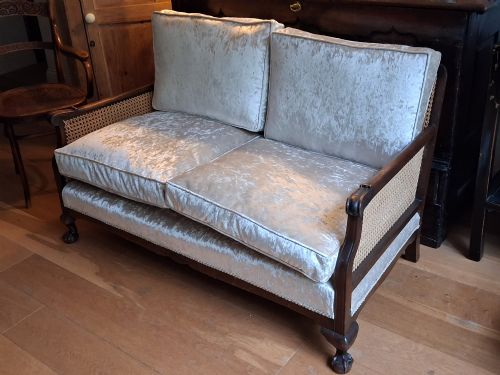
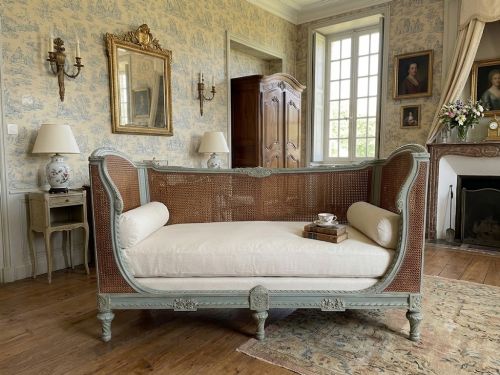
When you search for an antique cane sofa, you encounter seating designed for formal reception rooms and leisurely sitting areas. The pieces on this page span the eighteenth, nineteenth, and early twentieth centuries, reflecting styles from Louis XVI and Carolean revivals to Anglo-Indian forms. The version you are most likely to meet here is the French or English bergere settee, constructed with woven cane panels to the back and sides.
The category encompasses diverse formats including daybeds, window seats, and multi-piece suites alongside standard settees. Frameworks range from painted and gilded wood to rich hardwoods like walnut and mahogany. These seating options bridge the gap between architectural presence and light, open visual weight.
How they were made
Cabinetmakers built the structural frames of these sofas using solid timbers such as walnut, beech, mahogany, and satinwood, often embellishing the wood with hand carving, paint, or gilt. Canework panels were then hand-woven directly into drilled channels along the frame or inserted as separate woven mats.
Many examples incorporate loose cushions upholstered in fabric, linen, or leather, paired with sprung or feather-filled foundations for comfort. The union of dense hardwood framing and flexible woven cane creates a balanced piece that relies on traditional joinery.
Antique Cane Sofa Retail Price Guide 2026
Typical asking prices for cane sofa among the pieces listed under this phrase on Sellingantiques today, from the lower quarter to the upper quarter. They describe what is for sale here now, not the wider market.
One notable settee arrived straight from the ballroom of the RMS Queen Elizabeth ocean liner.
What varies in quality
The standard of a piece rests heavily on the crispness of the timber carving and the tightness and regularity of the cane weave. Hand-woven cane demands precision, and uniform tension across curved bergere backs denotes superior craftsmanship.
The integrity of the underlying wood frame and the retention of original surface treatments, whether paint, gilding, or polished grain, dictate the distinction between ordinary and exceptional examples.
J. S. Kinsey·Thonet
The Antique Cane Sofa Glossary
- Canapé
- The traditional French term for a sofa or settee. These pieces frequently adopt stylistic cues from Louis XV and Louis XVI designs.
- Canework
- A method of weaving rattan or cane strips to form a patterned lattice. It provides lightweight ventilation for furniture panels.
- Giltwood
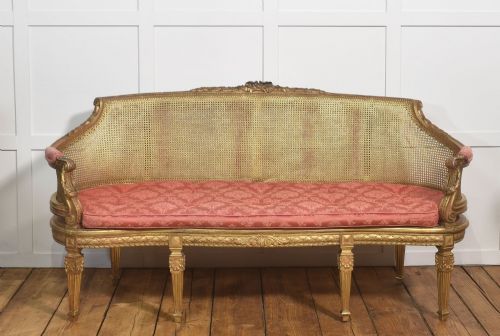
- Timber coated with a thin layer of gold leaf or gilt paint. This finish appears frequently on formal French revival furniture.
- Settee
- A long wooden or upholstered seat for two or more people with a back and arms. It occupies a middle ground between a chair and a full sofa.
Antique Cane Sofa: Frequently Asked Questions
How do I care for antique cane?
Keep cane work away from direct heat sources and strong sunlight to prevent the natural fibres from drying out and snapping. Light dusting with a soft brush helps maintain the weave without straining the material.
Applying a damp cloth occasionally helps retain moisture in the cane strands. Avoid placing heavy concentrated weight against unsupported woven panels.
Are these sofas comfortable for daily use?
Many examples feature deep feather cushions or sprung seats designed for relaxation. The supportive wooden frames combined with soft squabs offer a firm yet comfortable sit.
Adding cushions can adjust the seat depth to personal preference. The open cane sides provide a breezy feel rather than total enclosure.
How do I distinguish French and English styles?
French pieces often display painted, gilded, or carved walnut frames with flowing cabriole legs and rounded corbeille shapes. English equivalents commonly lean towards mahogany or walnut with Chippendale or George V revival characteristics.
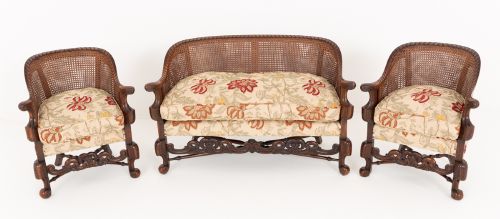
English suites frequently include matching armchairs alongside the main settee. French designs tend to emphasise decorative giltwork and pastoral painted finishes.
Can damaged cane be repaired?
Skilled restorers can re-weave broken sections of cane by hand using traditional drilling and threading techniques. Matching new cane to aged material requires patience and compatible gauge sizes.
Professional re-caning restores both the structural integrity and the appearance of the piece. Minor breaks do not automatically ruin an otherwise solid frame.