


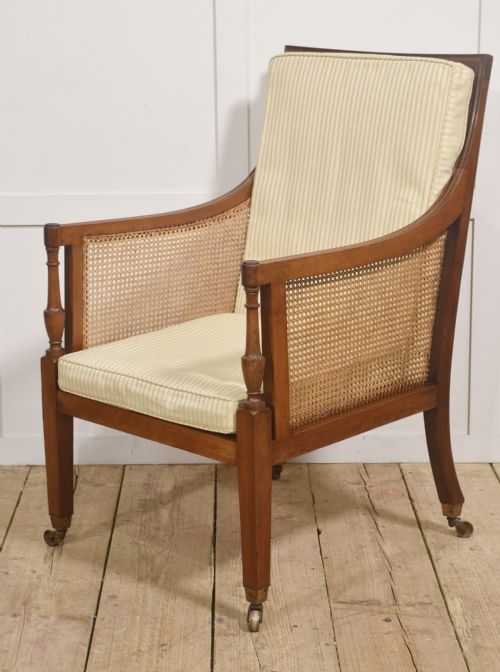

Antique Cane Library Chair
An antique cane library chair brings solid mahogany and woven work together for a deep seat designed to hold heavy volumes.
Antique Cane Library Chair
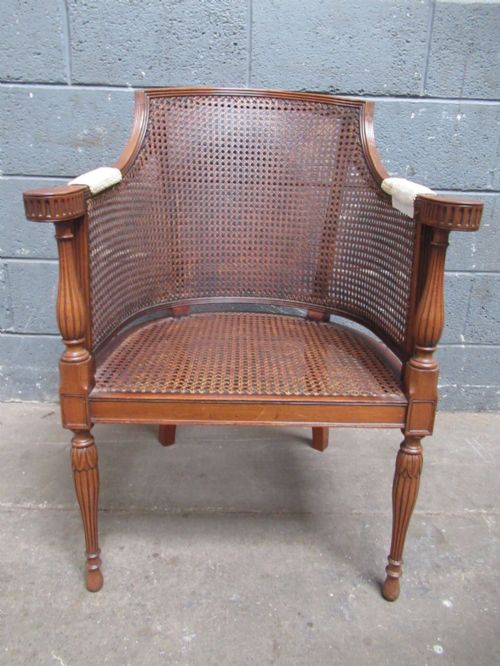
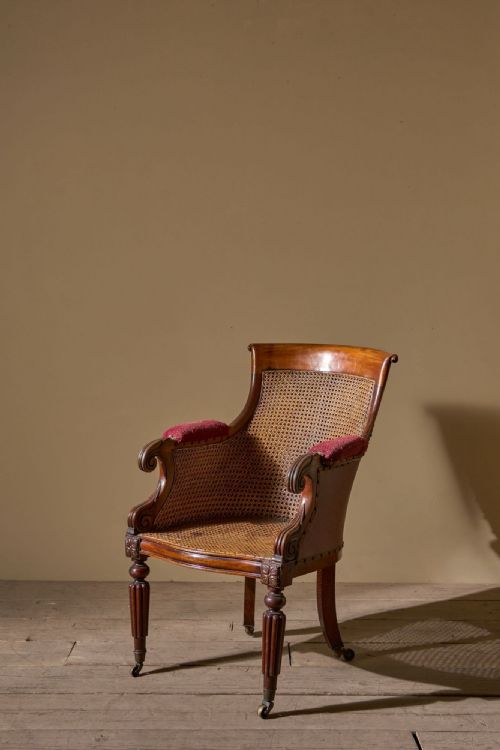
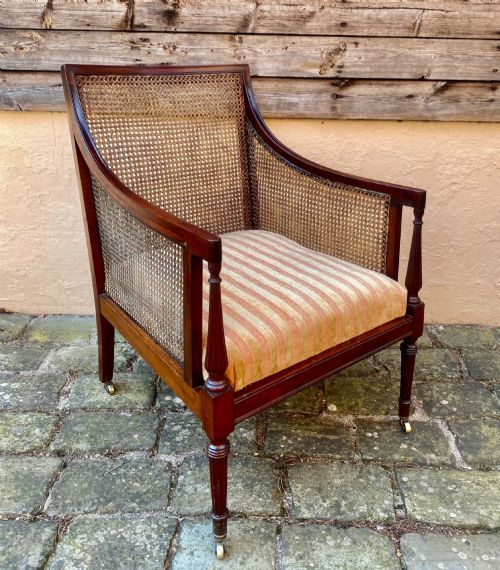
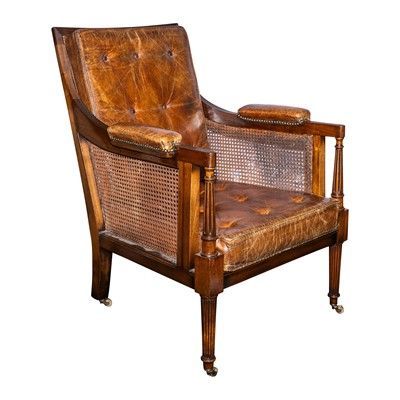
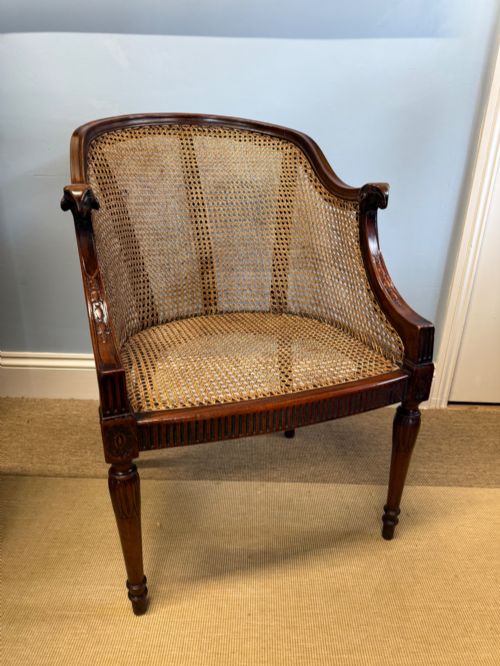
An antique cane library chair is a low, deep-seated armchair designed for reading rooms and studies, built chiefly from mahogany with woven cane panels. You will frequently encounter forms from the Regency and Victorian periods, often styled as bergères with enclosed sides.
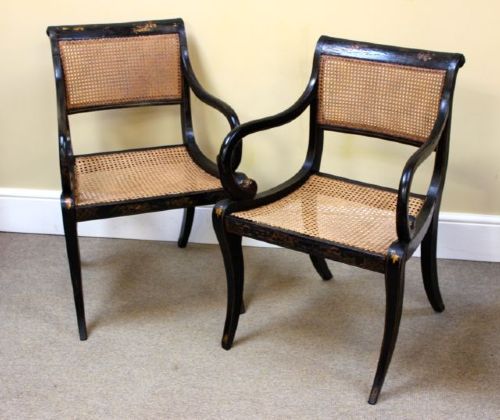
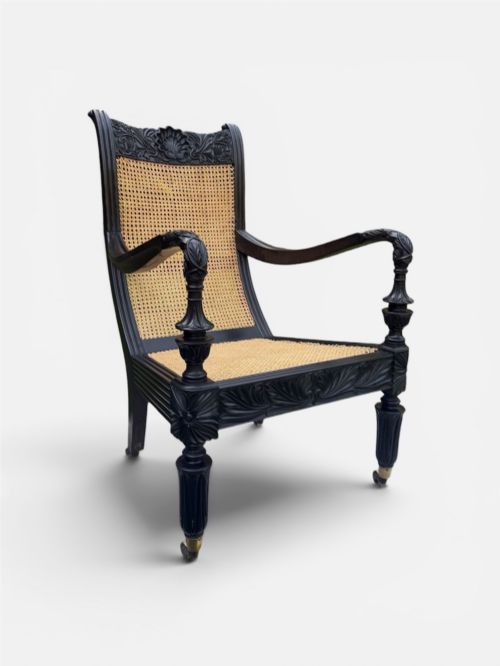
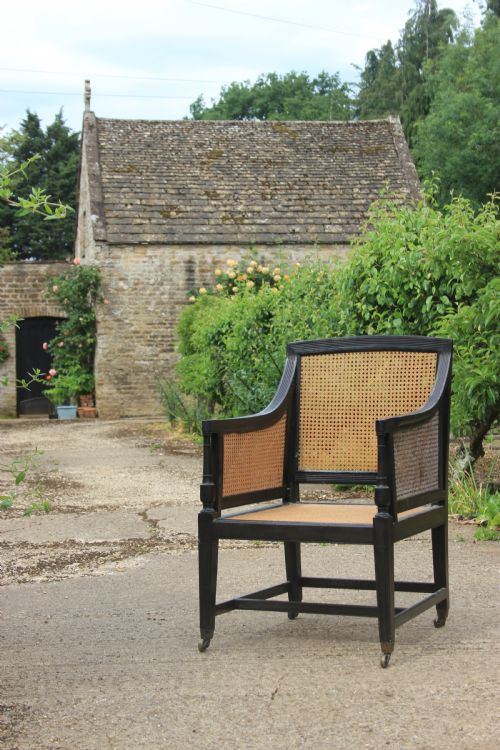
The selection here includes solid ebony frames, faux rosewood finishes, and occasional metamorphic designs that convert into library steps. These pieces range from Georgian origins through Edwardian revivals, prioritising a comfortable posture for long hours of reading.
How they were made
Cabinetmakers constructed the frames primarily in mahogany, alongside solid ebony and simulated rosewood, employing skilled turnery and joinery. Brass mounts and leather pads occasionally augmented the primary timber structures.
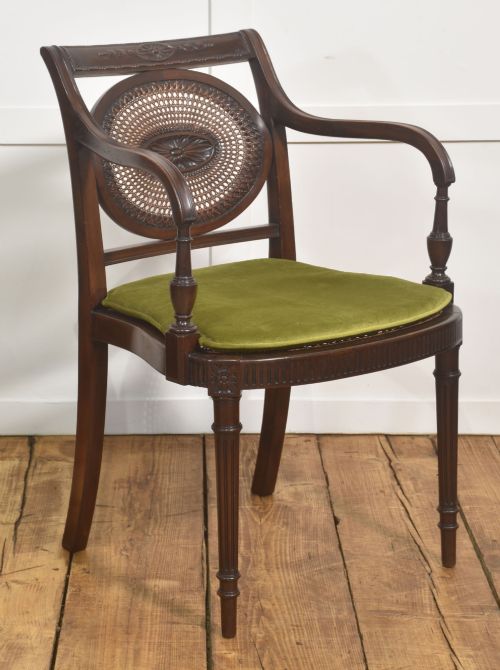
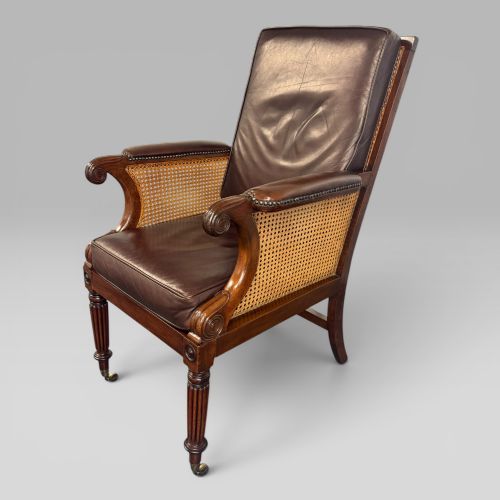
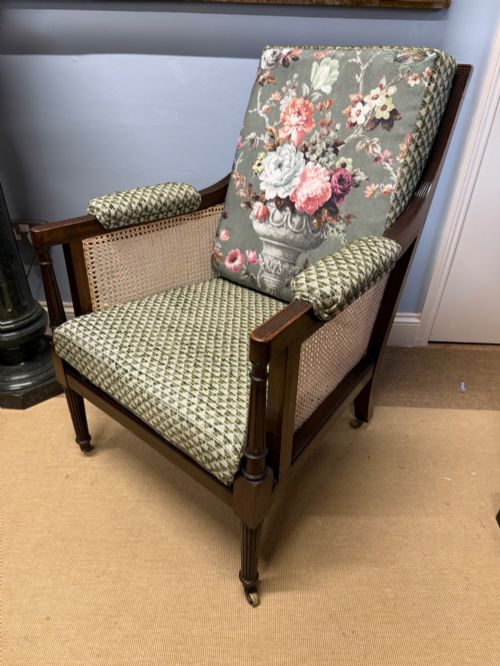
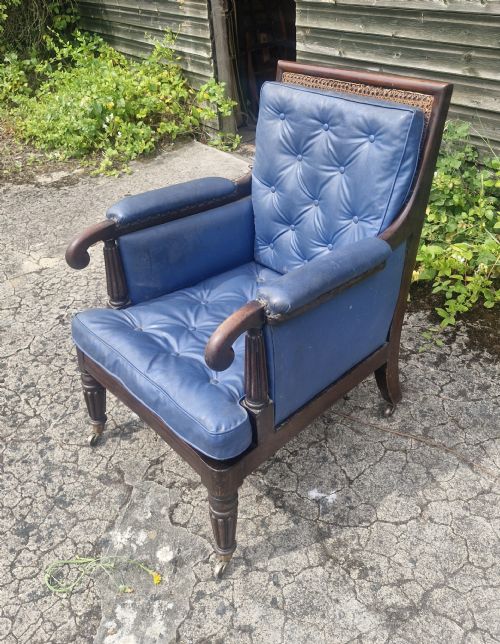
Caning and rattan cane were woven tightly into the back and seat frames to provide a resilient, breathable support. Many examples incorporated loose cushions upholstered in fabric, leather, or velvet to soften the seat.
Some ingenious readers needed to climb shelves just as much as they needed to sit, spawning chairs that unfold into staircases.
What varies in quality
The distinction between average and exceptional pieces lies in the crispness of the timber carving and the tightness of the cane weaving. Finer workshops delivered precise turnery and seamless joints that endure without wobble.
Gillows
The Antique Cane Library Chair Glossary
- Caning
- A method of weaving rattan strips through holes drilled in the chair frame. This creates a flexible, supportive surface for backs and seats.
- Metamorphic
- Furniture engineered with hidden hinges or pivots to transform into another object, such as a chair turning into library steps.
- Faux rosewood
- A painted or stained finish applied to a secondary timber to imitate the distinctive grain of true rosewood.
- William IV
- A British design style bridging the Regency and Victorian eras, noted for heavy scrollwork and robust proportions.
Antique Cane Library Chair: Frequently Asked Questions
What is a bergere chair?
A bergère is a closed-arm armchair featuring cane panels fitted into a wooden frame. They originated in France but became a staple of British libraries during the Regency period.
The style offers a wide, deep seat intended for comfort, usually accompanied by a loose squab cushion in leather or fabric.
How do I spot a Regency library chair?
Regency pieces often display classical lines, sabre legs, and dark timbers such as mahogany or simulated rosewood. Look for understated brass details and precise craftsmanship typical of the early nineteenth century.
Many examples in this style incorporate caned backrests and sides to lighten the visual weight of the heavy wood frame.
Are these chairs comfortable for daily use?
These seats were originally built for long hours spent reading among heavy volumes, so their proportions favour a relaxed, reclined posture. The woven cane provides a springy base that adapts to the sitter.
Most surviving examples rely on a loose feather or hair-filled cushion on the cane seat base for added comfort.
How do I care for antique caning?
Cane requires moderate humidity to prevent the natural rattan from drying out and snapping under pressure. Keep these chairs away from direct heat sources and radiators.
An occasional gentle wipe with a damp sponge helps keep the woven strands pliable and clean over decades of use.