


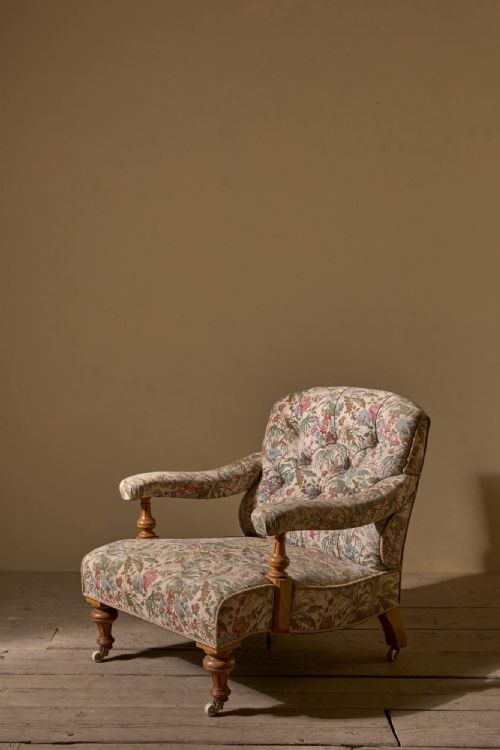
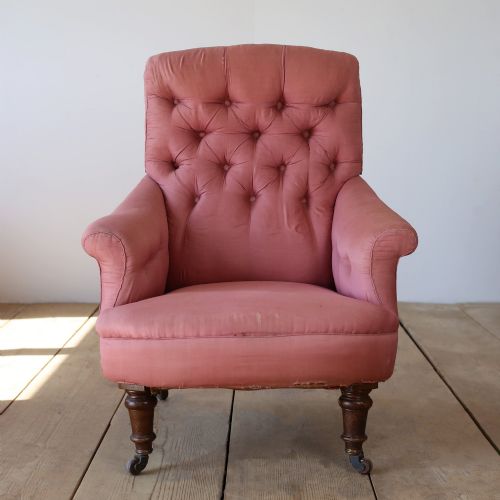
Antique Buttoned Armchair
An antique buttoned armchair brings deep upholstery and tailored tufting to a room, offering both substantial comfort and historic character.
Antique Buttoned Armchair
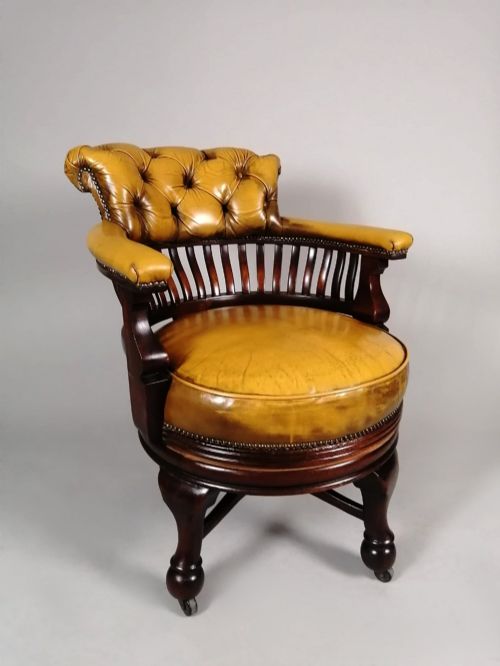
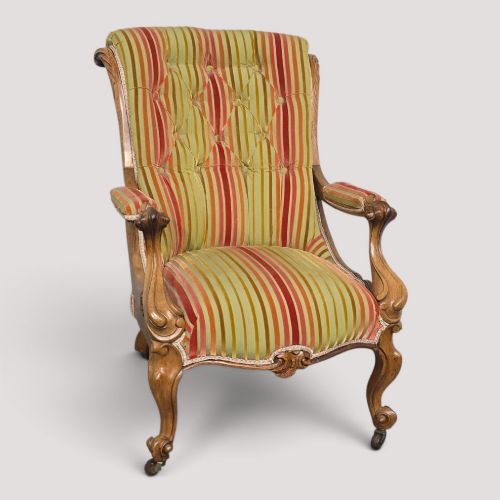
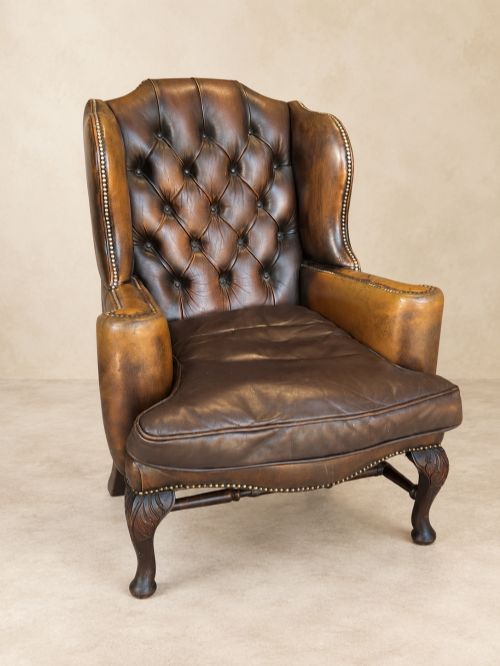
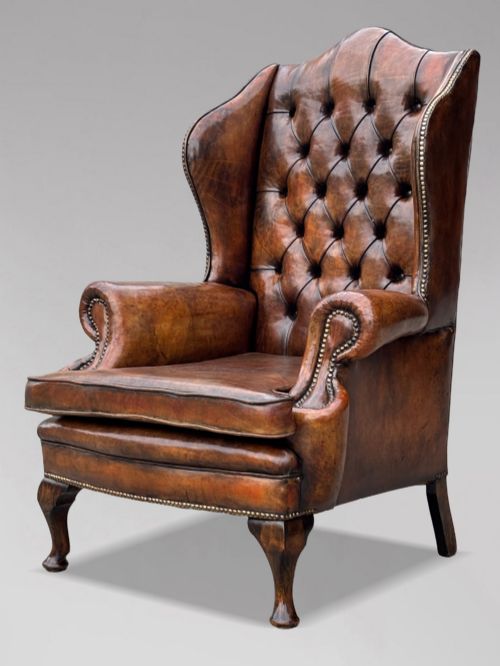
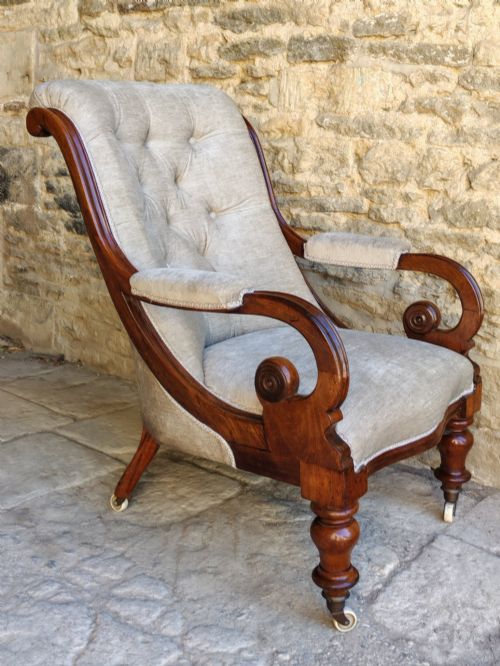
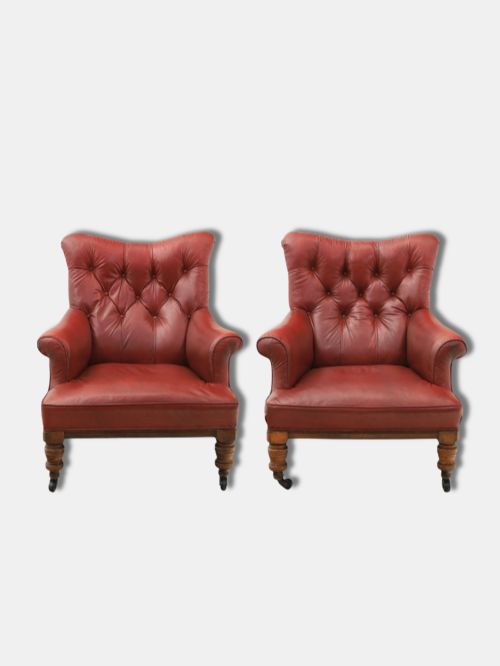
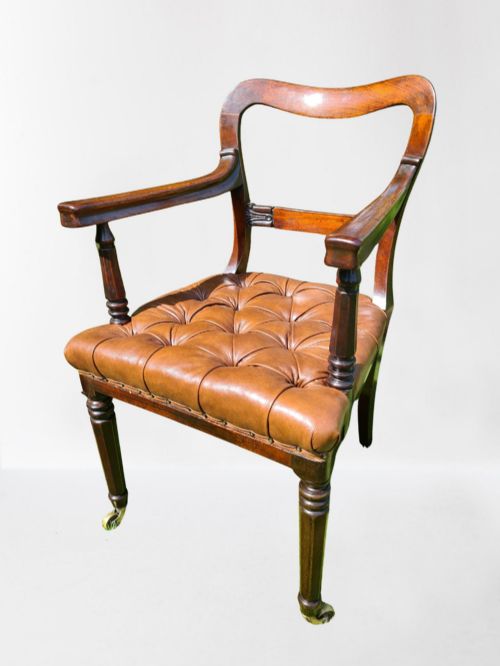
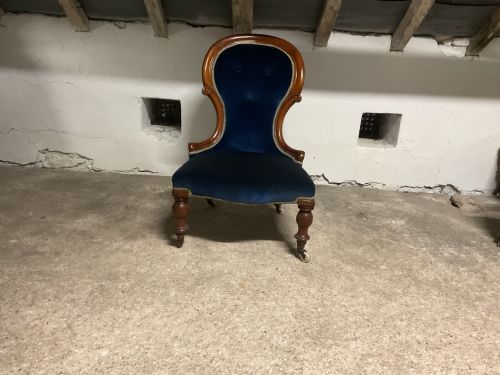
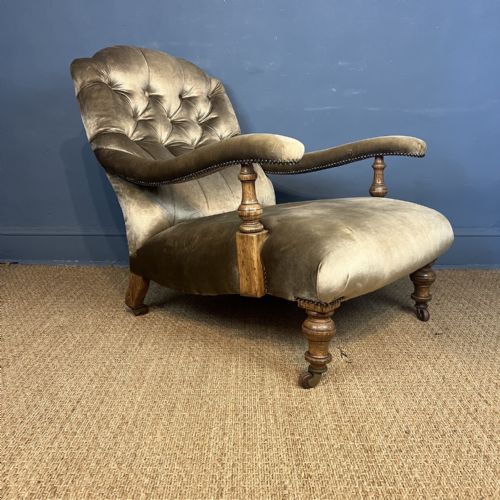
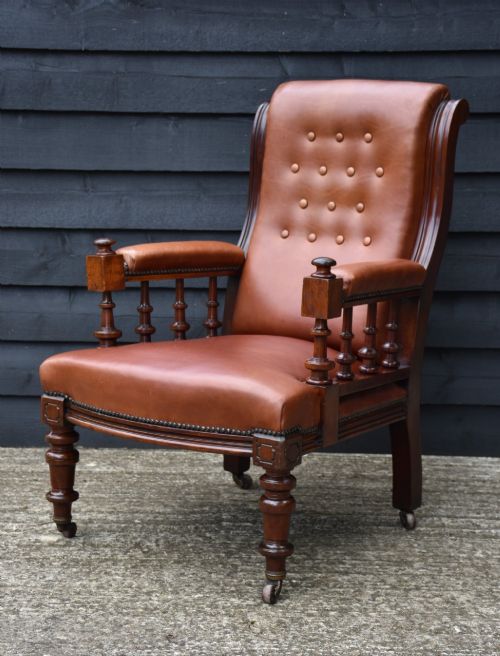
An antique buttoned armchair is a piece of upholstered seating defined by its tufted back, where pulls or buttons create a rhythmic pattern across the fabric or leather. Buyers seeking this phrase encounter a wide variety of forms on this page, ranging from library and wing chairs to nursing chairs, desk chairs, and low occasional seating.
The majority of these chairs date from the nineteenth century and the Victorian era, though Regency, William IV, and early twentieth-century examples also appear. Timber frames in mahogany, walnut, oak, and rosewood support deep padding covered in leather, velvet, calico, fabric, or rexine.
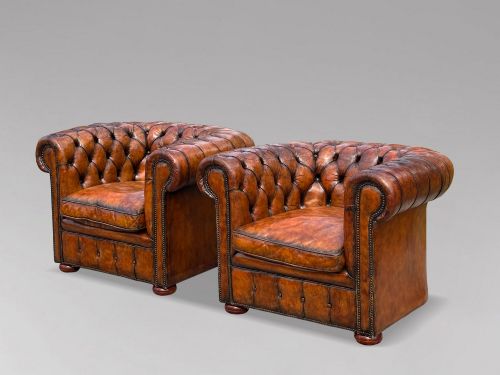
Originating predominantly from English country houses and urban workshops, these chairs served diverse domestic functions, from reading and desk work to parlour entertaining. The grouping includes robust club chairs, swivel desk models, and grand Chesterfield suites designed for heavy daily use.
How They Were Made
Makers built these frames using sturdy hardwoods such as mahogany, walnut, oak, and rosewood, often shaping the timber into scrolling arms, turned legs, or cabriole supports. Brass castors frequently aided mobility on heavy carpets.
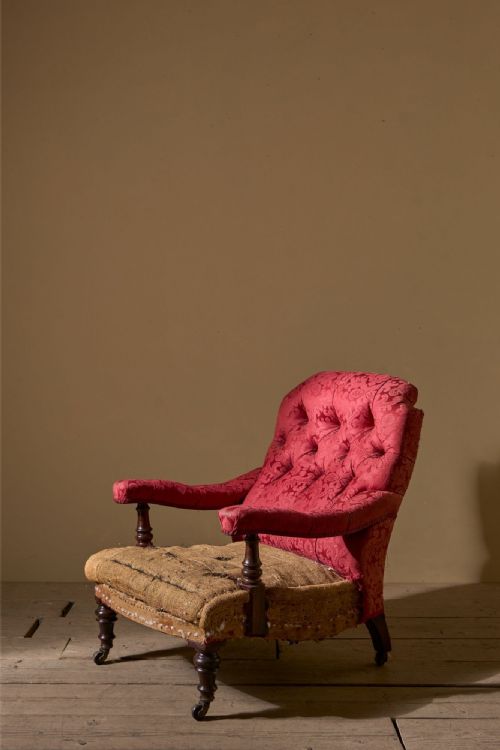
Upholstery required layered stuffing secured with webbing and springs, over which leather, velvet, fabric, or calico was pulled tight. Deep tufting was achieved by threading cords through the padding to anchor buttons into the internal structure, creating the characteristic dimpled surface.
Listings span the nineteenth century through the 1920s, featuring Victorian, Regency, and Edwardian periods with frames in mahogany, walnut, oak, and rosewood.
What Varies in Quality
The distinction between standard commercial production and superior craftsmanship lies in the timber selection and the precision of the frame joinery. Finer pieces employ dense, well-figured mahogany or walnut with hand-carved details rather than plain, utilitarian woods.
Upholstery work also dictates the hierarchy, where evenly spaced buttoning, resilient springing, and high-grade hides or rich velvets separate ordinary seating from exceptional examples produced by prominent nineteenth-century makers.
Howard and Sons·Gillows·Holland and Sons·Mellier and Co
The Antique Buttoned Armchair Glossary
- Button back
- A style of upholstery where the covering is pulled into the padding at regular intervals and secured with buttons, creating a tufted, diamond-patterned surface. This technique adds structural tension and visual texture to the backrest.
- Wing back
- An armchair featuring protective side panels, or wings, attached to the arms and framing the back to deflect draughts and retain heat. It is a traditional form frequently upholstered in leather.
- Library armchair
- A sturdy, capacious seat designed for prolonged reading and study, often incorporating leather upholstery and sometimes paired with a reading stand or swivel base.
- Nursing chair
- A low-seated, comfortably padded armchair designed for nurseries or bedrooms, allowing the sitter to tend to children with ease.
- Chesterfield
- A heavy, deeply upholstered seating form characterised by rolled arms and a back of the same height, traditionally covered in buttoned leather.
Antique Buttoned Armchair: Frequently Asked Questions
What is an antique buttoned armchair?
An antique buttoned armchair is a historic seat featuring deep tufting secured by buttons across leather, velvet, or fabric upholstery. These chairs were produced in numerous domestic forms during the nineteenth and early twentieth centuries.
They combine robust hardwood frames in mahogany, walnut, or oak with padded armrests and supportive backs. Such seating ranges from low parlour chairs to grand library armchairs.
How were these armchairs used originally?
These chairs fulfilled various roles across nineteenth-century interiors, serving as reading seats in libraries, desk chairs for studies, and low chairs in bedrooms or parlours. Their robust construction suited heavy daily use in country houses and town residences.
Winged variants protected sitters from draughts near firesides, while swivel models at desks facilitated movement. Upholstered suites accommodated formal entertaining and relaxation alike.
How do I live with an antique armchair?
Living with these chairs involves placing them in studies, living rooms, or bedrooms where their timber frames and textured upholstery can anchor a room's decor. Leather and wooden elements require standard environmental care, avoiding excessive dryness or direct sunlight.
Their substantial proportions make them ideal statement pieces that mix easily with both historic and contemporary furniture schemes. Regular gentle dusting preserves the finish of the timber and the texture of the fabric.
How can I tell the period of a chair?
Dating relies on observing the timber species, frame style, and upholstery construction methods visible in the piece. Regency and William IV examples often feature heavier classical motifs, while Victorian pieces encompass a broader range of revival styles and walnut or mahogany frames.
Later Edwardian and 1920s pieces introduce different frame proportions and materials such as rexine. Structural markers like castors, turning styles, and maker stamps further clarify the date of manufacture.