



Antique Button Back Suite
An antique button back suite brings deeply cushioned comfort and formal nineteenth century presence into a drawing room.
Antique Button Back Suite
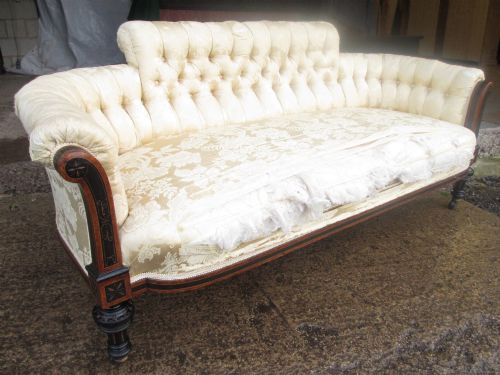
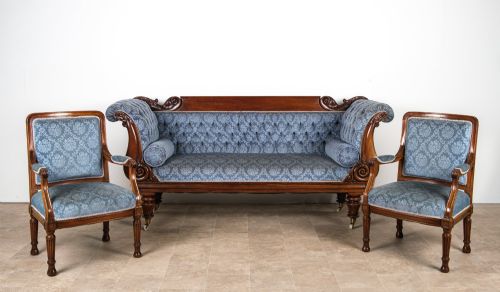
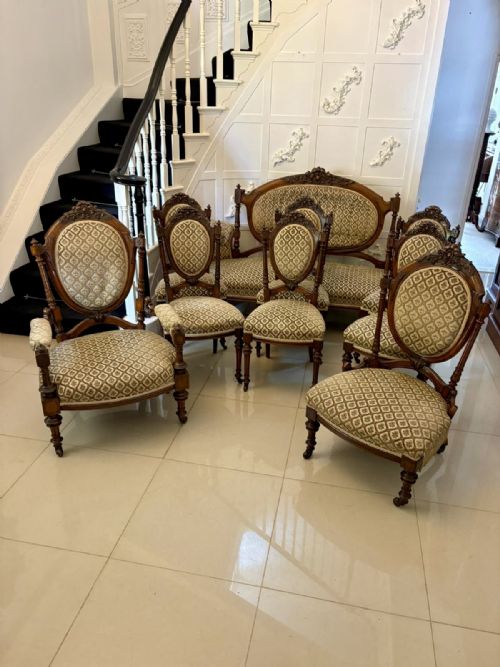
An antique button back suite comprises matching groupings of upholstered seating designed for formal reception rooms, pairing settees with corresponding armchairs and occasional chairs. When you search for an antique button back suite, you encounter multi piece settings dating principally from the Victorian and Edwardian eras, constructed in configurations ranging from intimate two piece pairs to substantial nine piece drawing room settings.
The dominant forms on this page include walnut and mahogany framed salon suites, alongside larger multi piece lounge settings upholstered in velvet, damask, fabric, and leather. These pieces originate predominantly from the nineteenth and early twentieth centuries, reflecting the evolving domestic comfort and reception styles of the period.
Buyers most frequently meet Victorian walnut carved salon suites and early twentieth century upholstered three piece settings consisting of a sofa and two matching chairs. Individual settees and smaller drawing room suites also appear, demonstrating the diverse scale of formal seating arrangements produced across these decades.
Materials and construction methods
Makers utilised solid timbers such as walnut, mahogany, rosewood, and various woods for the structural frames, applying intricate hand carving to show crisp architectural details and organic motifs. Exposed timber components frequently feature polished surfaces that contrast with the heavily upholstered sprung seating areas.
Upholstery techniques relied on deep buttoning through fabrics like velvet, damask, and leather, securing the textile tension while creating the signature padded indentations across the backrests. Brass and metal fittings supplemented internal structural support and ornamentation where required.
Antique Button Back Suite Retail Price Guide 2026
Typical asking prices for button back suite among the pieces listed under this phrase on Sellingantiques today, from the lower quarter to the upper quarter. They describe what is for sale here now, not the wider market.
Listings feature walnut, mahogany, rosewood, and wood frames upholstered in velvet, damask, leather, and fabric across Victorian and Edwardian periods.
Distinctions in quality and execution
The distinction between standard commercial production and exhibition grade work lies in the depth of timber carving and the architectural ambition of the frame design. Finer examples display meticulous hand sculpting to the walnut or mahogany framework, whereas simpler items rely on plain moulded lines.
Upholstery execution and frame integrity separate enduring suites from those requiring extensive remedial work. Suites designated as exhibition quality or featuring maker attribution typically display superior joinery, heavier timber gauges, and more sophisticated decorative inlays.
James Shoolbred
The Antique Button Back Suite Glossary
- Button back
- A style of upholstery where the fabric is pulled tight and secured with deep inset tufts or buttons, creating a padded, diamond patterned surface. This technique provides structural tension as well as ornamental texture.
- Salon suite
- A matching set of reception room seating comprising a settee and coordinated armchairs designed for formal entertaining. These groupings formed the visual centrepiece of Victorian and Edwardian drawing rooms.
- Spoon back
- A chair or settee backrest shaped in a concave oval resembling the bowl of a spoon, characteristic of mid nineteenth century seating. The wooden rim frames the upholstered central panel.
- Drawing room suite
- A comprehensive collection of matching upholstered furniture intended for formal household reception spaces. Such settings often included multiple chairs alongside a central sofa.
- Cameo back
- An upholstered furniture backrest enclosed within a carved wooden frame that resembles a classical cameo profile. This decorative framing is typical of finer Victorian walnut seating.
Antique Button Back Suite: Frequently Asked Questions
What pieces make up a standard suite?
A standard suite typically includes a main settee paired with one or more matching armchairs or occasional chairs, though larger configurations can comprise up to nine separate seating items.
These coordinated groupings were designed to furnish formal drawing rooms and salons with a unified decorative scheme.
How do I care for antique upholstery?
Protect delicate textiles such as velvet, damask, and leather by keeping them away from direct sunlight and maintaining stable indoor humidity levels.
Gentle surface cleaning and professional maintenance help preserve the structural integrity of both the fabric and the underlying buttoned padding.
How do I distinguish Victorian from Edwardian suites?
Victorian suites generally feature heavier dark timbers like walnut and mahogany with elaborate hand carving, deep buttoning, and rounded or spoon back forms.
Edwardian examples often incorporate lighter woods, simpler upholstered lines, and occasional decorative inlays reflecting changing taste at the turn of the twentieth century.
Where were these suites originally placed?
These seating arrangements were positioned in the principal reception spaces of nineteenth and early twentieth century homes, specifically drawing rooms and formal sitting rooms.
They served both as functional seating for guests and as a display of the household's social standing and taste.