






Antique Burr Walnut Seating
Burr walnut seating delivers rich, swirling grain patterns across chairs, stools, and suites spanning the Victorian, Edwardian, and Art Deco periods.
Antique Burr Walnut Seating
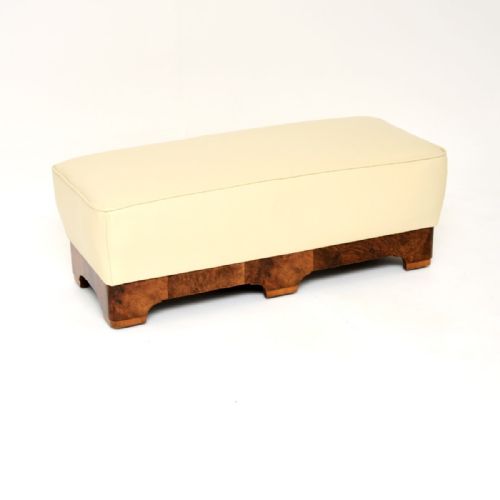
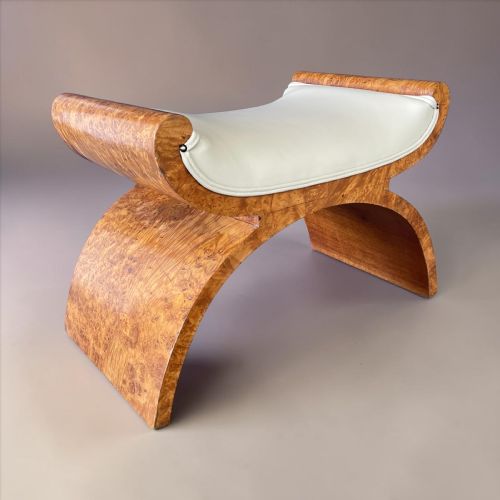
Antique burr walnut seating encompasses dining chairs, side chairs, armchairs, stools, lounge suites, and ottomans formed from timber featuring intricate knot growths. These pieces emerge across the Victorian and Edwardian eras alongside distinct twentieth-century revivals.
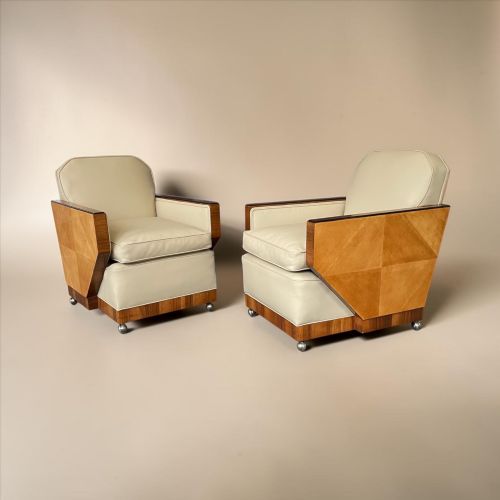
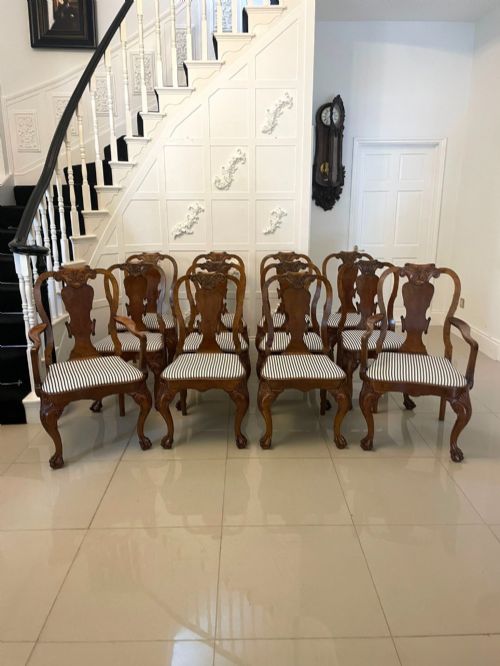
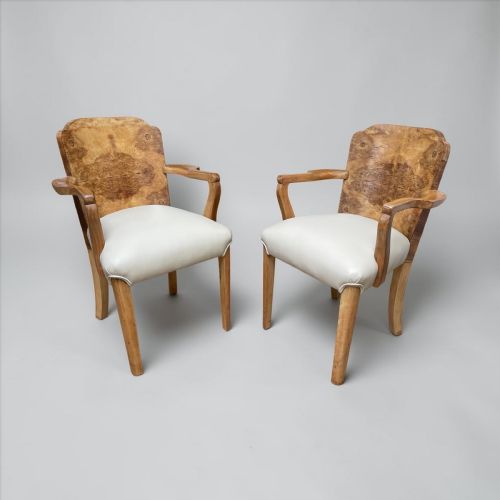
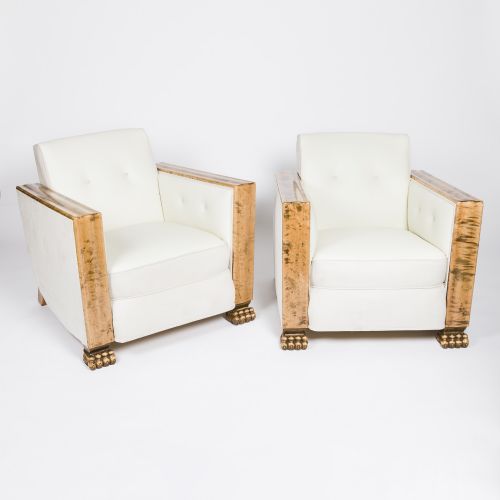
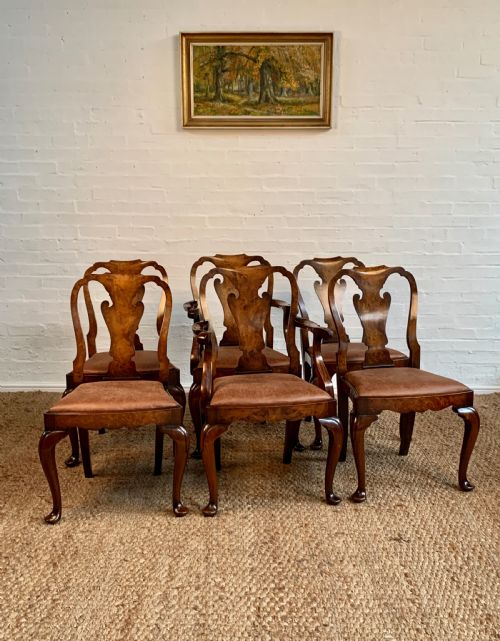
The most common examples on this page are dining chairs in sets of six, eight, or twelve, often styled after Queen Anne or rendered in the bold geometries of Art Deco. Side chairs and armchairs complement these larger sets, utilising walnut and burr walnut alongside leather or textile upholstery.
Early nineteenth-century examples appear occasionally alongside twentieth-century creations, bridging traditional craftsmanship with the streamlined forms favoured by makers such as Epstein and Hille.
Materials and construction methods
Craftsmen built these pieces using solid timber frames faced with thin veneers of burr walnut, a figured wood prized for its complex, swirling grain patterns. Timber foundations provided structural stability while the decorative walnut veneer created rich visual depth across seat backs and frames.
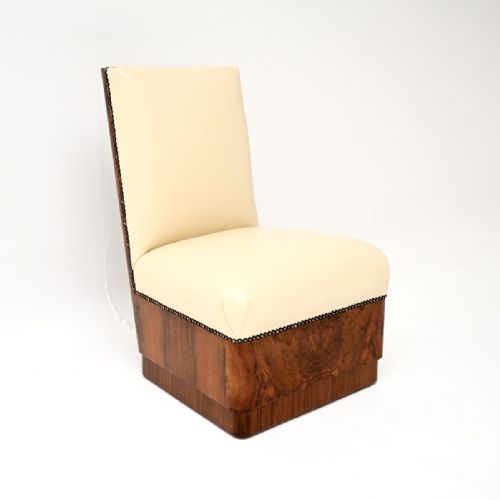
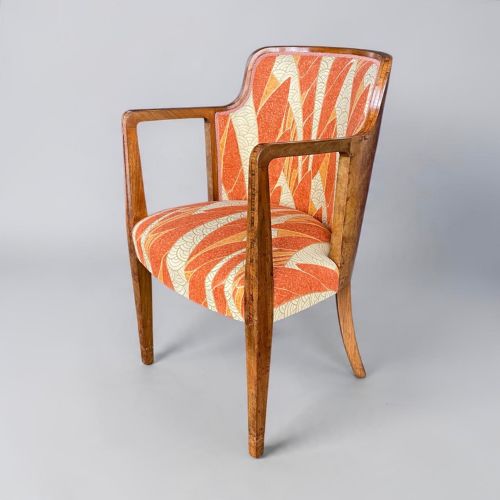
Upholstery materials such as leather, fabric, and textile were integrated into dining chairs, club chairs, and lounge suites, often fastened with traditional tacks or finished with newly applied coverings. Frames incorporated carved details, particularly on Victorian and Queen Anne style items.
Antique Burr Walnut Seating Retail Price Guide 2026
Typical asking prices for burr walnut seating among the pieces listed under this phrase on Sellingantiques today, from the lower quarter to the upper quarter. They describe what is for sale here now, not the wider market.
Listings feature burr walnut seating across Victorian, Edwardian, and Art Deco periods, utilising timber, leather, and fabric upholstery.
Distinctions in construction and finish
Quality rests in the selection and matching of the burr walnut veneer across a set, where continuous, symmetrical grain patterns indicate superior cabinet work. Lesser examples display disjointed grain matching or heavy secondary timbers beneath degraded finishes.
The integrity of the frame and the precision of carved elements, from Queen Anne cabriole legs to Art Deco cloud forms, separate standard production items from exceptional workshop output. Sets that retain their original scale and matching components command greater recognition.
Charles Tozer·Harry and Lou Epstein·Hille
The Antique Burr Walnut Seating Glossary
- Burr walnut
- A wood veneer derived from the irregular growths on walnut trees, yielding circular knot patterns and rich figuring. It provides a decorative surface for chair backs and frames.
- Queen Anne style
- A traditional design idiom characterised by curved lines, pad feet, and spooned chair backs. This style appears frequently across twentieth-century revival seating.
- Art Deco
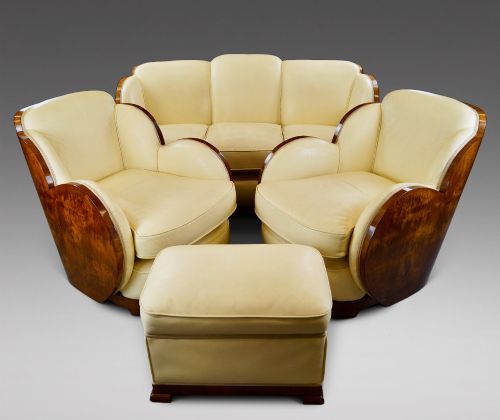
- A twentieth-century design movement focusing on streamlined geometry, smooth surfaces, and rounded forms. Makers applied this style to club chairs, stools, and dining suites.
- Cloud suite
- A distinctive Art Deco seating form featuring rounded, bulbous upholstered shapes reminiscent of clouds. These suites typically include armchairs and matching sofas.
- Side chair
- A light, un-armed chair designed for dining or occasional use around a room. These pieces appear frequently in matched sets of various periods.
Antique Burr Walnut Seating: Frequently Asked Questions
How do I identify burr walnut?
Burr walnut is identified by its dense, swirling grain full of small circular knot formations and rich colour variations. It differs from straight-grained walnut by offering a highly decorative, mottled surface.
Cabinet makers applied thin slices of this figured veneer over solid timber foundations, ensuring the most striking patterns appeared on prominent areas like chair backs.
Are dining chair sets matched?
Many dining chair sets are assembled from the same period and workshop, sharing identical carved details and wood tones. Sets often include a mix of single and carver chairs designed to sit at the table heads.
Checking the uniformity of the burr walnut veneer and frame construction helps confirm whether chairs originated together as a single suite.
How do I care for antique walnut?
Antique walnut requires protection from direct sunlight and sudden temperature shifts to prevent the wood and veneer from drying out. Regular dusting with a soft cloth maintains the polished finish without moisture damage.
Leather and fabric upholstery benefit from appropriate specialist cleaning depending on the specific textile used on the seat pads.
What defines Art Deco seating?
Art Deco seating relies on smooth curved lines, bold volumes, and minimal carved ornament compared to earlier Victorian or Queen Anne styles. Pieces often utilise black walnut or burr walnut paired with leather or heavy textiles.
Forms range from streamlined side chairs to oversized club chairs and curved lounge suites designed for modern twentieth-century interiors.