
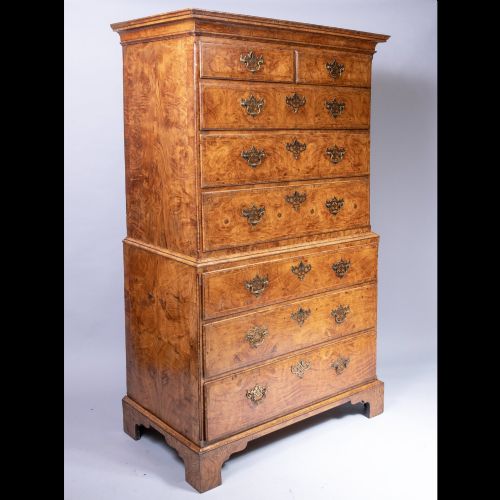
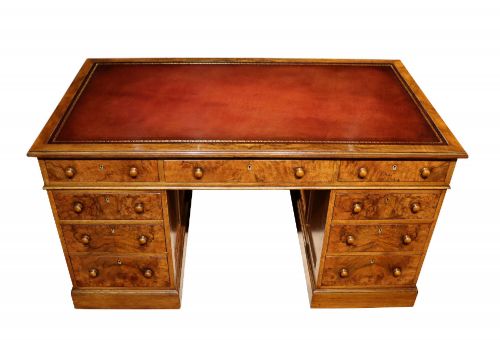


Antique Burr Oak Furniture
Antique burr oak furniture brings together wonderful knotted grain patterns and practical forms from the eighteenth and nineteenth centuries.
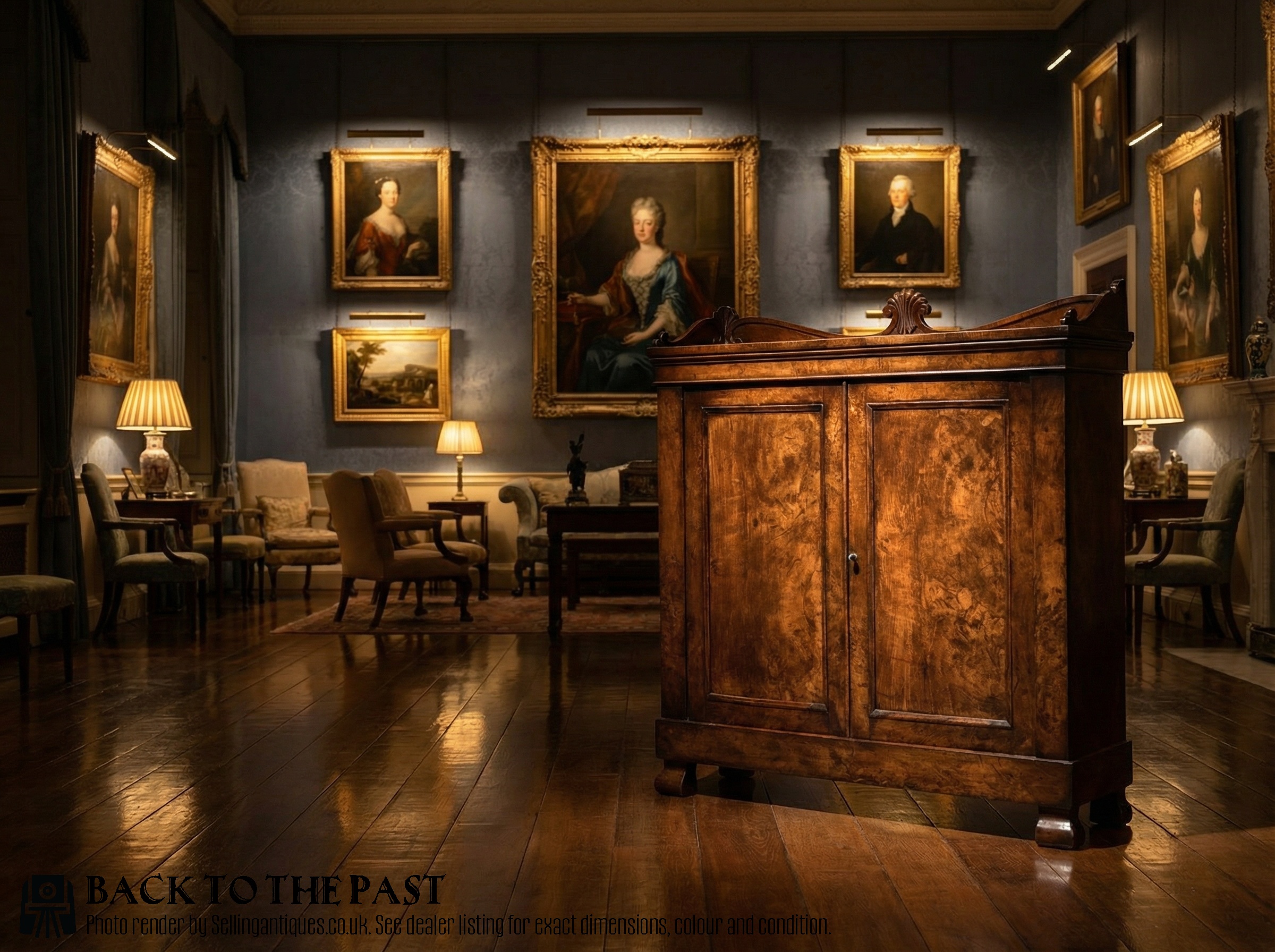
Antique Burr Oak Furniture
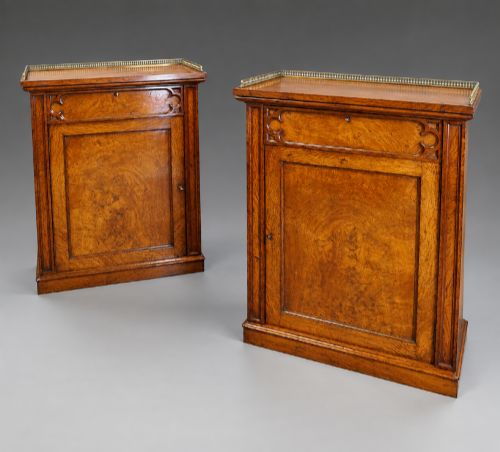
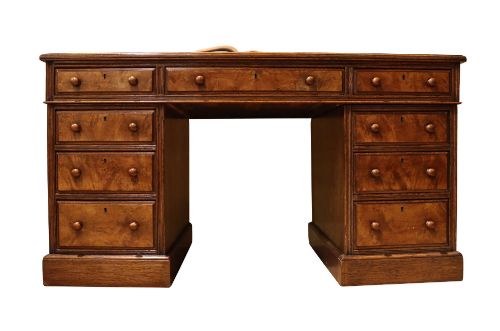
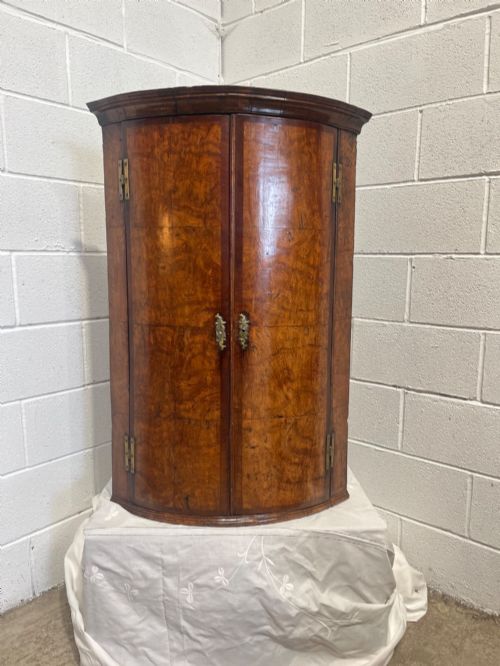
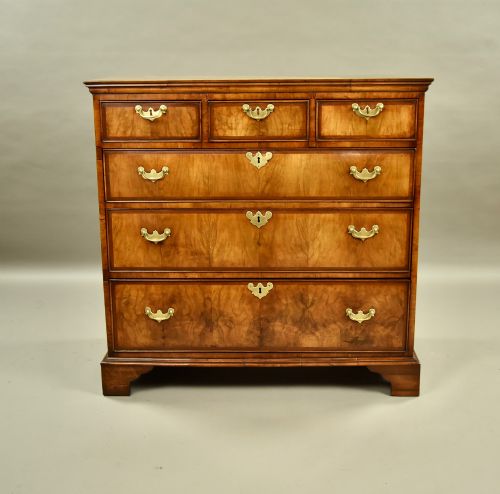
When you search for antique burr oak furniture, you encounter practical items made from highly figured timber taken from the growth knots of oak trees. These pieces date across several distinct historical eras, spanning the Georgian, Regency and Victorian periods.
Makers often combined burr oak with related timbers such as pollard oak, walnut and elm to create contrasting panels and borders. These items display a range of historical design influences, from early Georgian simplicity to Gothic Revival and Regency sophistication.
What varies in quality
Quality in these items depends primarily on the selection and symmetry of the burr oak veneer used across the primary display surfaces. Superior pieces show tightly packed, lively grain patterns that have been carefully laid out by an experienced hand.
The standard of the underlying cabinet work and the depth of the finish also determine the overall merit of a piece. Finer examples maintain original brass hardware, crisp joinery and a warm, rich tone developed through years of natural polishing.
Materials recorded across the inventory include solid oak, burr oak, pollard oak, walnut, elm and brass hardware.
William Trotter·James Winter And Sons·Whytock And Reid Of Edinburgh
The Antique Burr Oak Furniture Glossary
- Burr oak
- Timber harvested from a tree growth deformity that produces tightly clustered, swirling knot patterns across the wood. This highly decorative grain makes each cut unique.
- Pollard oak
- Wood taken from trees that were regularly pruned back to the trunk to encourage dense, highly figured branch growth. It shares a similar speckled appearance with burr timber.
- Lowboy
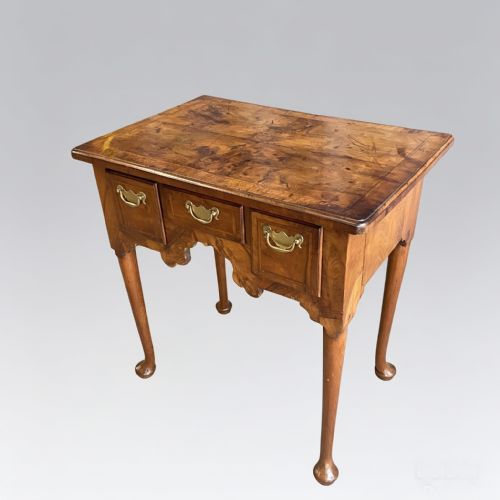
- A small side table featuring one or more rows of drawers beneath the flat top, typically raised on four slender legs. These functional items date frequently to the eighteenth century.
- Tripod table
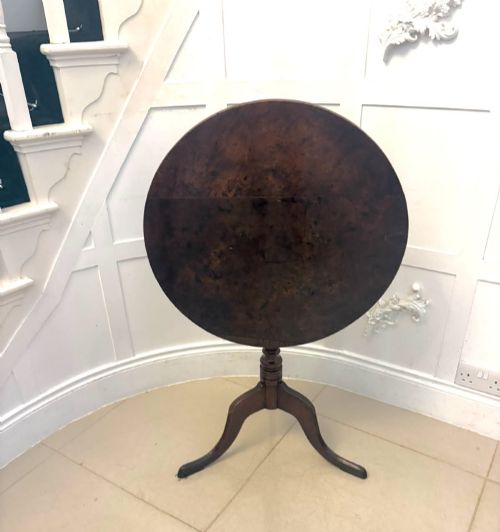
- A small occasional table supported by a central pillar that splits into three distinct feet. Many examples include a tilt-top mechanism for convenient storage.
- Partners desk
- A large double-sided writing desk designed for two people to work opposite one another. They often feature banks of drawers and cupboards on both faces.
Antique Burr Oak Furniture: Frequently Asked Questions
How do I care for burr oak surfaces?
Keep these items away from direct heat sources and strong sunlight to prevent the timber veneers from drying out or splitting.
Apply a traditional beeswax polish occasionally to nourish the wood and maintain a soft, protective sheen.
Are these pieces suitable for daily use?
Most of these desks, tables and cabinets were built for practical domestic tasks and remain fully functional for modern living.
Exercise normal care with hot drinks, moisture and heavy impacts to protect the historic polished finishes.
How can I tell the period of a piece?
Examine the construction methods inside the drawers and the style of the hardware for clues regarding the date of manufacture.
Georgian items often display simple geometric lines while Regency and Victorian pieces incorporate more ornate decorative flourishes.
What is the difference between burr oak and pollard oak?
Burr oak forms naturally from irregular tree growths that create swirling clusters of small knots across the grain.
Pollard oak results from a deliberate pruning practice that generates dense branching patterns and a speckled visual texture.