



Antique Buckle Ring
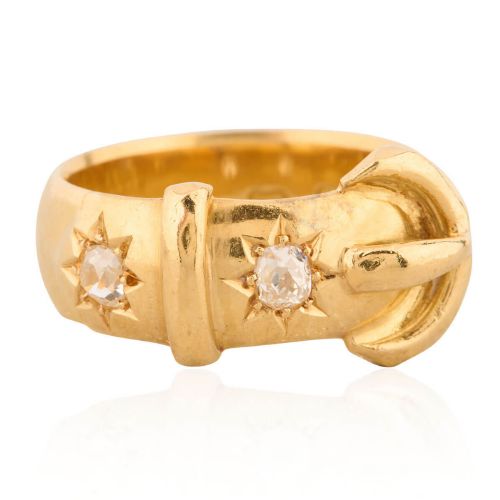
An antique buckle ring is a wearable token of fidelity, most often found here in Victorian and Edwardian gold set with diamonds or turquoise.
Antique Buckle Ring
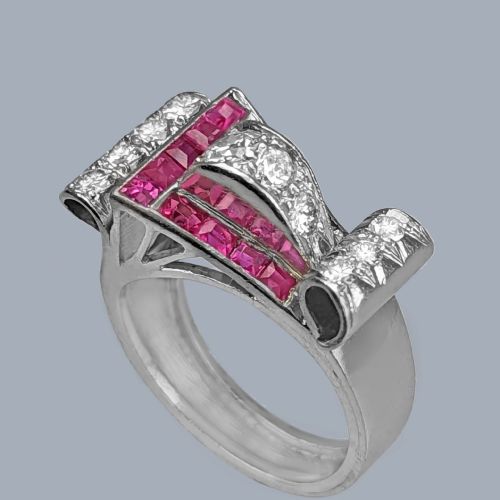
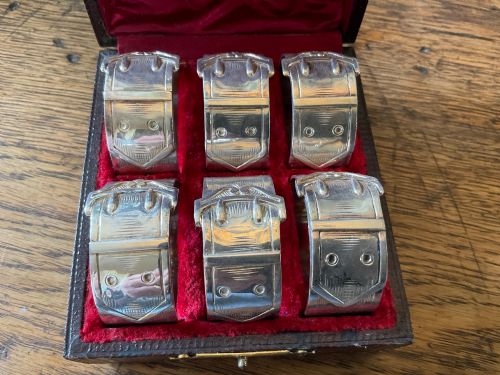
The inventory also includes domestic silver items shaped in the same fashion, specifically cased napkin rings modelled as belt buckles from the nineteenth century. Ring forms range from simple gold bands to elaborate stacked bands and gemstone-set designs featuring old cut diamonds, rubies, turquoise and garnets.
How they were made
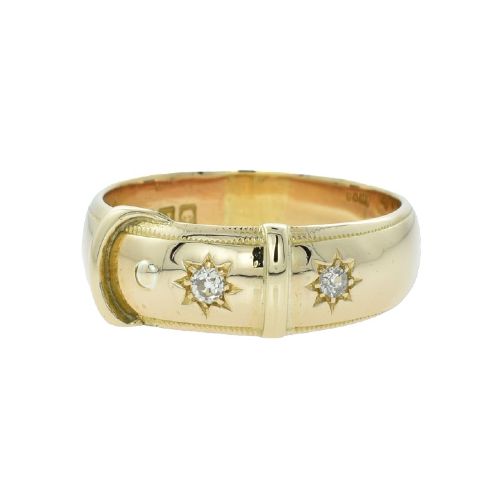
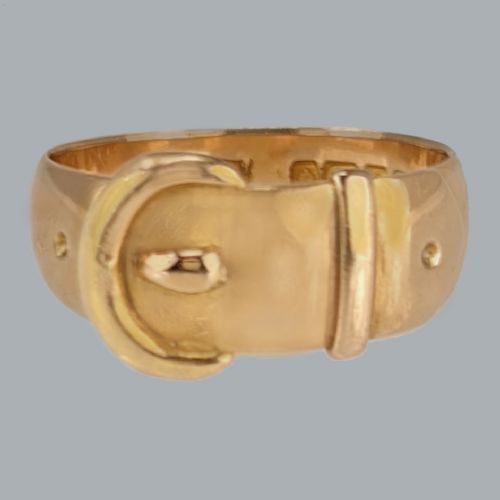
Goldsmiths shaped these pieces predominantly from 18ct and 9ct gold, alongside platinum in later twentieth-century examples, while sterling silver was utilised for table items. Hallmarks stamped in Birmingham and Chester frequently date the metalwork precisely to the late Victorian and Edwardian eras.
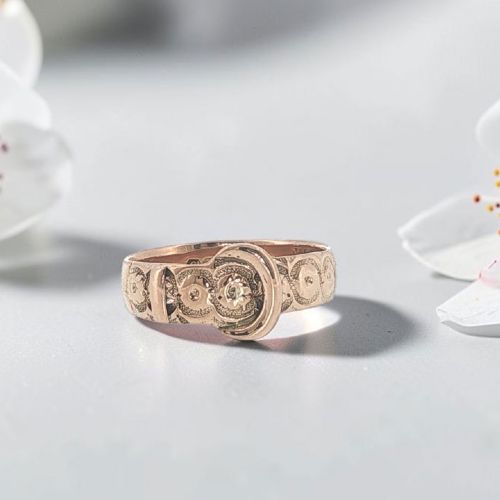
Gemstones such as old cut diamonds, turquoise cabochons, rubies and garnets are flush-set or star-set directly into the gold band to echo the fastening and strap of a physical buckle.
Assay offices in Birmingham and Chester dominate the hallmarked gold and silver items recorded across the archives.
What varies in quality
Quality in these designs rests upon the crispness of the chased metalwork defining the buckle tongue, strap holes and metal loop. Superior examples retain sharp relief and clear hallmarks, whereas worn pieces show softened edges from decades of daily wear.
The choice of stones also elevates a piece, shifting standard gold bands into high-value jewelled rings set with matched old cut diamonds or vibrant turquoise clusters.
William Griffiths and Son
The Antique Buckle Ring Glossary
- Old cut diamond
- A diamond faceted by hand with a smaller table, higher crown and open culet, typical of stones set in Victorian and Edwardian jewellery.
- Cabochon
- A gemstone shaped and polished with a smooth, rounded surface rather than faceted with flat planes, often seen with turquoise in these bands.
- Hallmark
- An official mark stamped into precious metal indicating the standard of purity, the assay office such as Birmingham or Chester, and the year of assay.
- Celestial diamond
- A term used to describe a diamond set within a starburst engraving on the face of a ring.
- Chased
- Metal decorated by hammering tools from the front to sink the design and create raised relief patterns like belt loops.
Antique Buckle Ring: Frequently Asked Questions
What do buckle rings symbolise?
These pieces represent loyalty, fidelity and enduring connection, stemming from Victorian sentimental jewellery traditions where fastening motifs denoted binding affection.
Couples frequently exchanged them as tokens of betrothal or friendship, translating the physical act of buckling a belt into a permanent metal pledge.
How do I date an antique ring?
Assay office hallmarks stamped inside the band provide the most reliable evidence for dating British gold and silver pieces.
Date letters, maker marks and crown stamps direct you to the exact year and town where the piece was hallmarked.
Are all buckle rings made of gold?
While the finger rings listed across these records are predominantly fashioned from 18ct or 9ct yellow and rose gold, other materials exist.
Sterling silver and silver plate appear specifically among the domestic table items, such as cased napkin rings modelled as belts.
Can I wear a buckle ring daily?
Solid gold bands with flush-set stones generally endure regular daily wear quite well, provided the metal shank remains thick.
Lighter antique bands or multi-row stacking rings benefit from occasional rest to preserve the delicate chased details of the buckle strap.