

Antique Brown Leather Seating
Antique brown leather seating brings deep character to a room through rich hides and robust frames spanning several historic periods.
Antique Brown Leather Seating
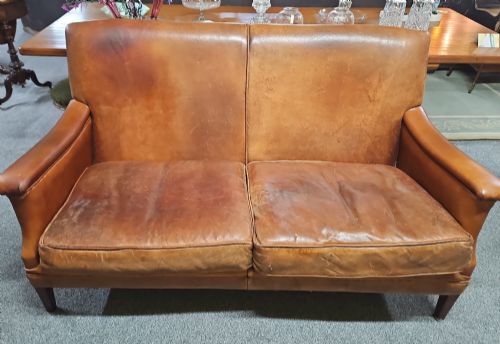
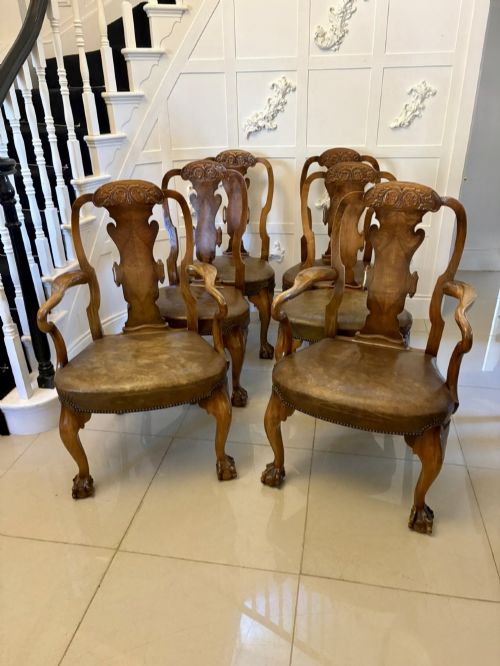
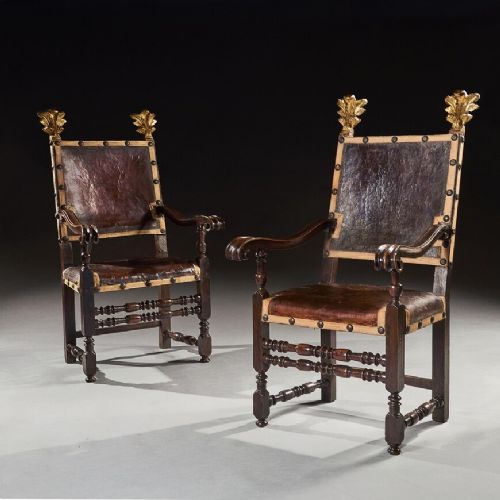
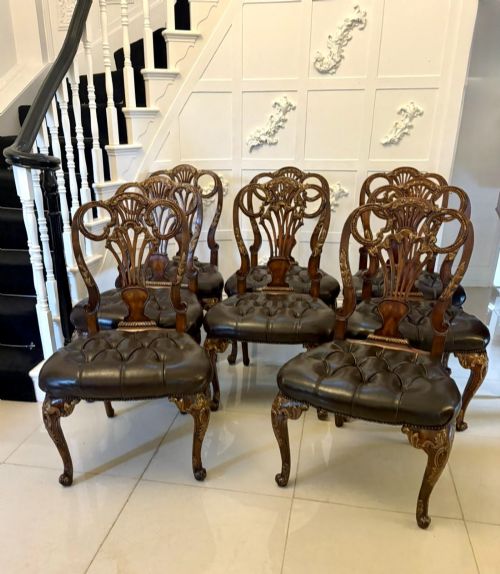
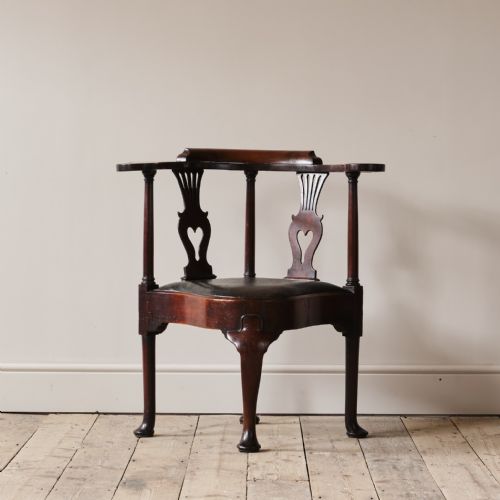
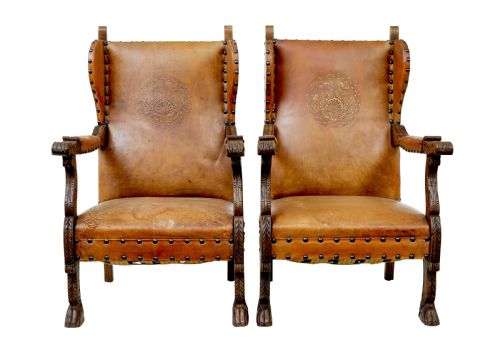
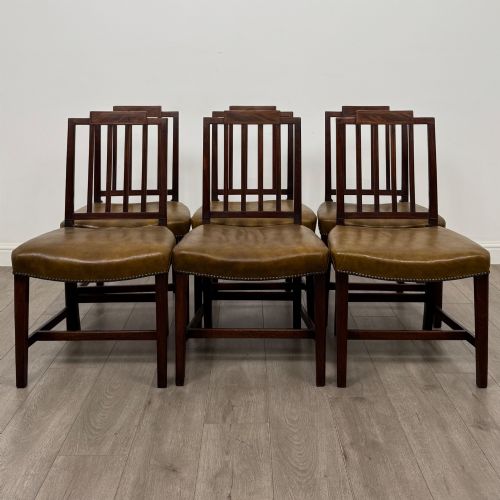
When you search for antique brown leather seating, you encounter a diverse range of furniture including dining chairs, armchairs, club chairs, desks chairs, ottomans, and club fenders. The selection spans the eighteenth, nineteenth, and early twentieth centuries, drawing on Georgian, Victorian, Art Deco, and Baroque styles.
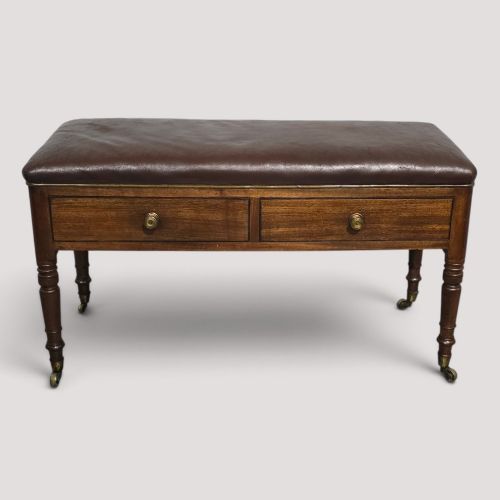
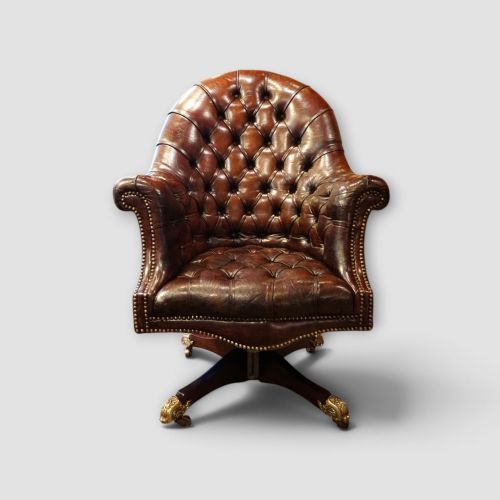
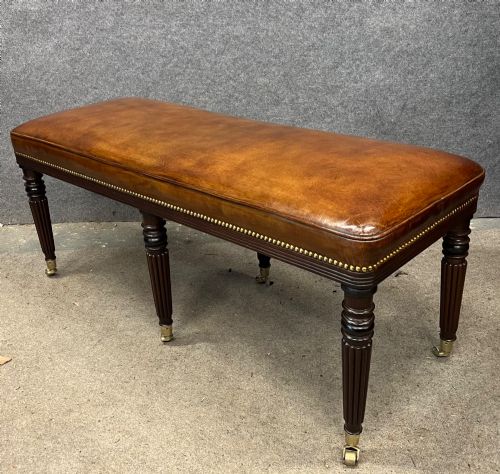
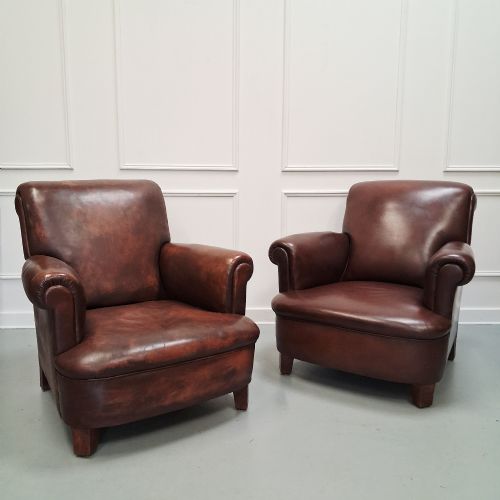
You are most likely to meet Victorian and 1930s pieces on this page, particularly oak and mahogany dining chairs alongside French leather club chairs. These items range from sturdy country house benches and revolving desk chairs to elegant library armchairs upholstered in aged hide.
The objects serve practical seating functions while displaying the distinct decorative vernacular of their respective decades. Walnut, mahogany, and oak frames support patinated leather surfaces shaped by decades of domestic use.
How they were made
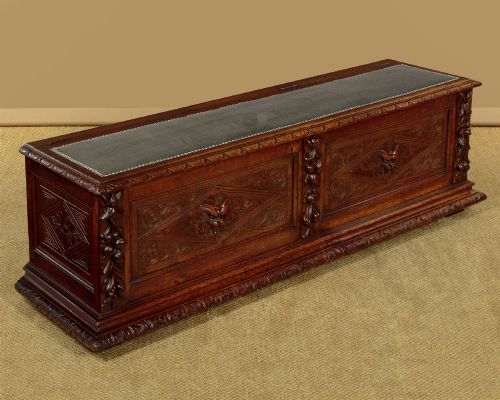
Frames rely on traditional cabinet-making timbers such as mahogany, oak, and walnut, joined with pegged or mortise-and-tenon construction. Carved details, blind fretwork, and cabriole legs reflect the stylistic preferences of Georgian, Victorian, and Edwardian makers.
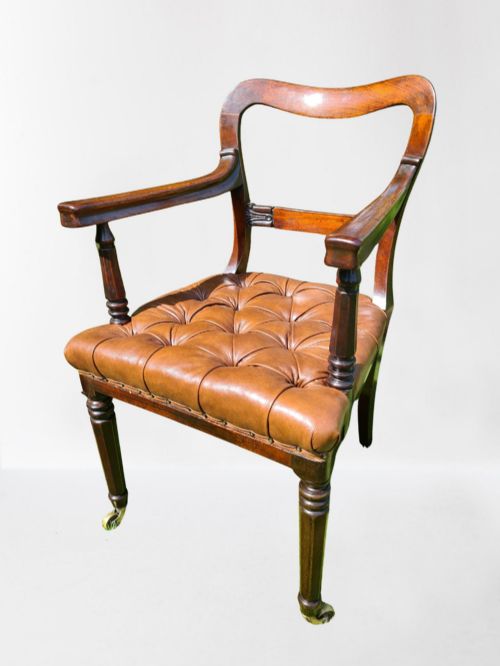
Upholstery involves fitting cattle hide over supportive stuffing, often secured with brass tacks or button-back tufting. Secondary materials like iron, brass, and cane appear in structural hardware, club fenders, and supportive seating panels.
Footstools disguised as library steps and revolving chairs made for Victorian card players add unexpected utility to these historical seating groups.
What varies in quality
The depth of the hide's natural patina and the integrity of the timber framing dictate the standing of each piece. Superior examples exhibit hand-dyed leathers with rich tonal variation and finely executed carvings rather than mechanical uniformity.
Construction robustness separates utilitarian workshop output from pieces commissioned for substantial country houses or smart drawing rooms. Heavier timber gauges, sophisticated joinery, and intact original upholstery systems elevate the status of individual chairs and sofas.
The Antique Brown Leather Seating Glossary
- Club fender
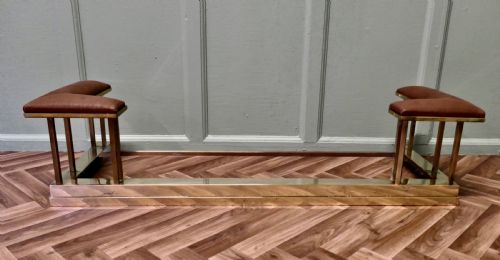
- A low, padded seat structure placed around a fireplace, typically combining brass framing with leather top cushions. These fixtures provided comfortable fireside perches in larger period rooms.
- Bergère
- An enclosed upholstered armchair with wooden framing exposed around the sides and back. These seats frequently incorporate cane panels alongside loose leather or fabric cushions.
- Gainsborough chair
- A wide, open-armed desk or reading chair originating in the mid-eighteenth century. They feature upholstered seats and armrests supported by mahogany frames with straight or carved legs.
- Blind carving
- Carved ornamentation applied to a flat wooden surface without piercing the wood right through. This technique appears on the stiles and rails of finer Georgian seating.
- Cabriole leg
- A furniture leg that curves outward at the knee and tapers inward toward the foot, mimicking animal limbs. Popularised during the Queen Anne and Georgian periods.
Antique Brown Leather Seating: Frequently Asked Questions
How do I date an antique leather chair?
Dating relies on examining the timber species, structural joinery, and the style of the carved ornamentation. Secondary woods and tool marks reveal the working methods of specific periods.
Upholstery techniques and nail types also provide reliable clues. Older pieces often employ hand-hammered brass tacks and traditional stuffing materials beneath the surface hide.
Are Art Deco club chairs comfortable?
Art Deco club chairs are designed for deep lounging, featuring generous proportions and low seating profiles. The thick cushioning and supportive sprung bases offer a relaxed sitting posture.
The supple leather upholstery adapts readily to body warmth. These chairs remain popular for modern living spaces due to their ergonomic comfort.
How should I maintain antique leather?
Maintaining antique leather involves keeping the hide nourished with specialised balms to prevent drying and cracking. Regular dusting with a soft cloth preserves the historic surface finish.
Avoid placing these items in direct sunlight or close to heat sources. Gentle care protects the natural patina developed over generations of use.
What is a club fender used for?
A club fender provides perimeter seating directly around an open hearth. The padded top rails allowed people to sit close to the fire during colder months.
Constructed from brass and iron with leather cushions, these fixtures also protected rooms from stray embers. They remain practical additions to traditional fireplace settings.