


Antique Bronze Wall Candelabra
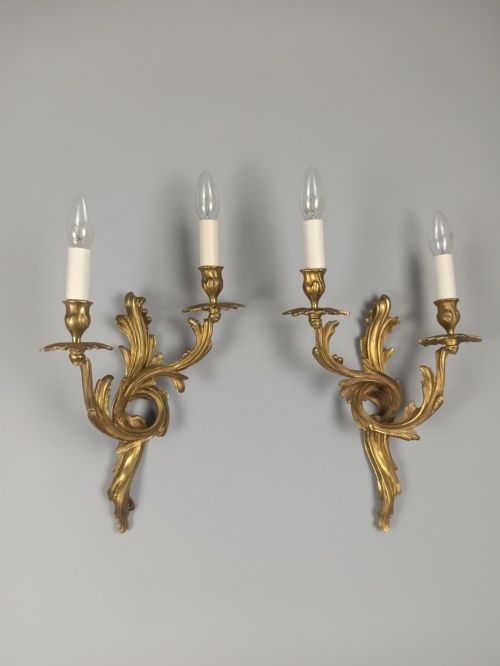
These antique bronze wall candelabra bring genuine period illumination and French decorative character to an interior wall.
Antique Bronze Wall Candelabra
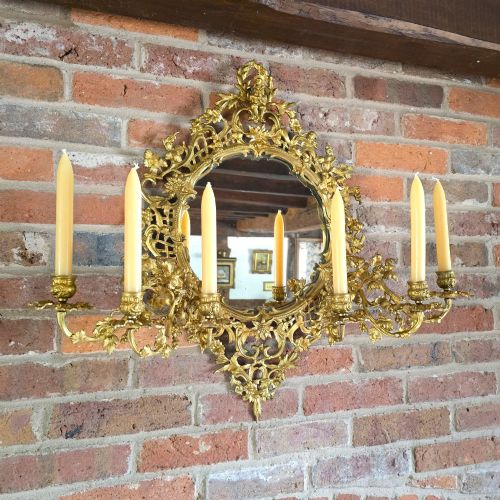
When you search for antique bronze wall candelabra, you find branch lighting fixtures designed to mount directly onto vertical surfaces, combining structural metalwork with candle holders. The pieces gathered here span from the nineteenth century into the twentieth century, with French origins predominating across the selection.
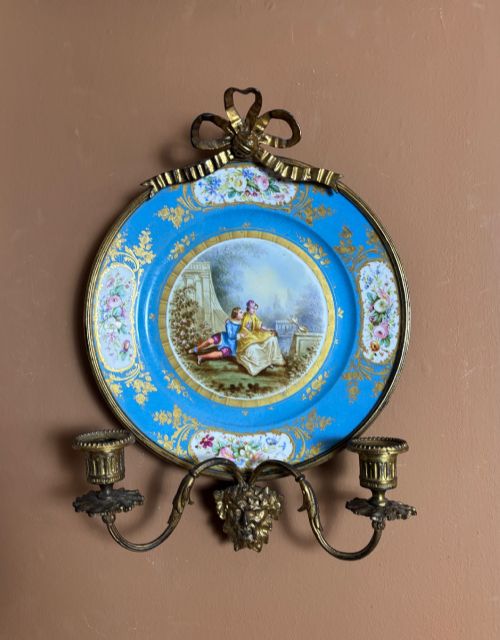
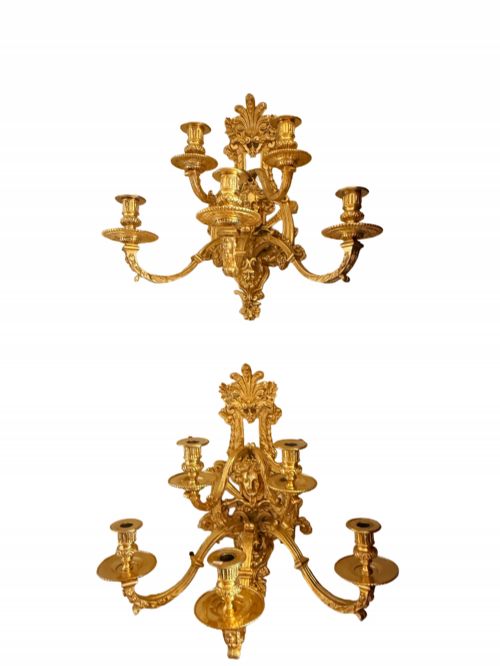
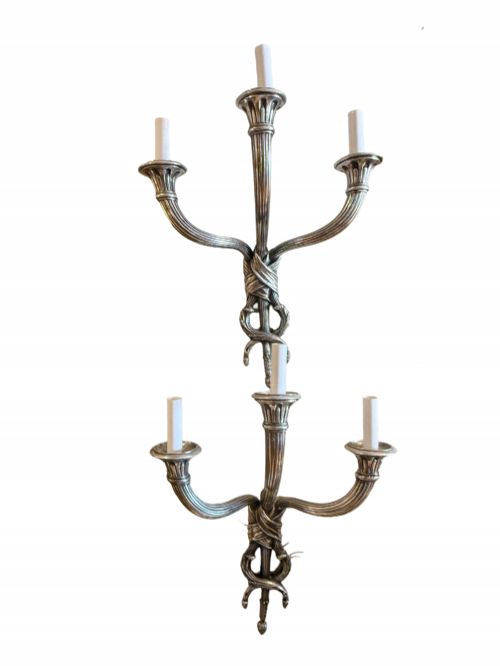
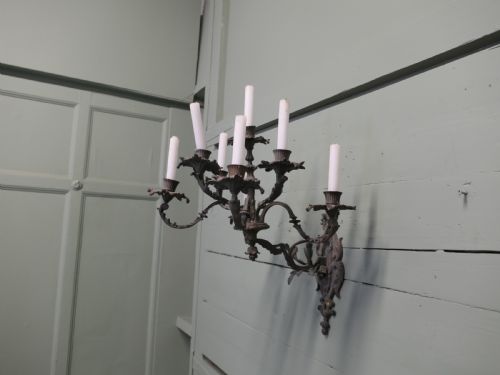
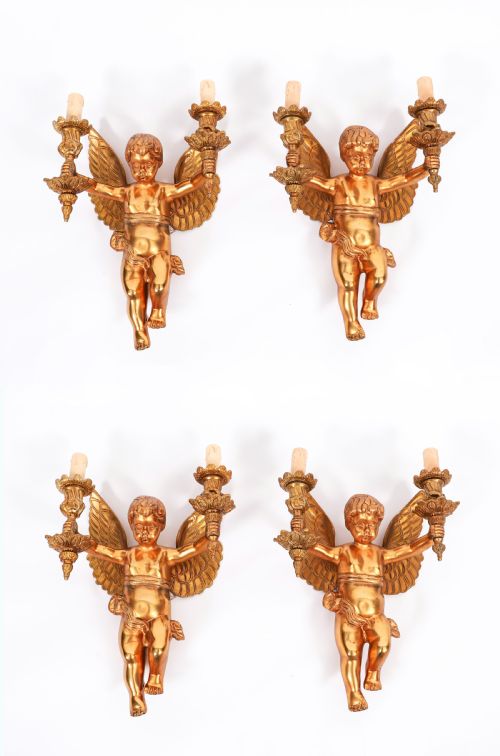
Most examples you meet are pairs or sets, taking the form of wall sconces, girandoles, or wall lights featuring multiple arms. The designs range from simple two-branch configurations to elaborate seven-arm iterations and large mirrored combinations.
Materials and construction methods
Makers utilised cast bronze as the primary structural body, frequently applying gilding, ormolu, or silver plating to the metal surface to achieve rich tonal finishes. Combinations of materials appear regularly, incorporating porcelain inserts, crystal drops, and glass elements alongside the metal arms.
Casting techniques allowed workshops to produce highly detailed relief work, from cherubs and mermaids to classical architectural motifs. Individual branches and drip pans were cast separately and secured together to form the complete multi-arm lighting fixture.
The listings feature pieces spanning the 18th, 19th, and 20th centuries, executed in gilt bronze, ormolu, silver plate, and brass.
Distinctions in quality
The richness and integrity of the original surface treatment also define the tier of the piece. Deeply applied gilding, intact ormolu, and substantial bronze weight indicate superior workshop standards compared to thinner metal plating or lesser alloy compositions.
The Antique Bronze Wall Candelabra Glossary
- Ormolu
- Finely ground high-carat gold applied to a bronze base through a mercury amalgamation technique. This historic process creates a durable, warm metallic finish seen on many nineteenth-century French pieces.
- Girandole
- An ornamental branched candlestick or candelabra, frequently incorporating a wall-mounted mirror that reflects the candle flame. The reflective glass enhances the perceived light within a room.
- Wall sconce
- A bracket fixture fixed to a wall for holding candles or lamps. These pieces project outward to cast light across the surrounding architectural surfaces.
- Gilt bronze
- Bronze metal that has been coated with a thin layer of gold leaf or gold paint. It provides a bright golden appearance while maintaining the strength of the underlying bronze.
- French Rococo
- A decorative style characterised by asymmetrical scrollwork, naturalistic shell motifs, and flowing organic lines. It heavily influences the ornamentation found on nineteenth-century wall lights.
Antique Bronze Wall Candelabra: Frequently Asked Questions
How do I wire wall candelabra for electricity?
Many antique wall lights are adapted for modern electrical wiring by running a cord through the central mounting plate and down the arms to dummy candle sleeves. A qualified electrician should handle the conversion to ensure the internal wiring safely accommodates modern voltage.
Retaining the original drip pans and candle cups allows the conversion to look sympathetic to the historic character of the bronze work.
Are these candelabra sold as pairs?
The selection includes many matched pairs and sets of four, alongside individual wall sconces. Pairs allow for balanced placement on either side of a fireplace, mirror, or doorway.
Checking the specific listing details confirms whether the pieces comprise a matched pair or a larger set.
How do I clean gilt bronze wall lights?
Dusting gently with a soft, dry brush or microfibre cloth removes surface accumulation without disturbing the finish. Avoid commercial metal polishes, abrasive cloths, and liquid cleaners, as these can strip away historic gilding or ormolu.
Preserving the aged patina protects the underlying metal and maintains the visual depth of the casting.
How can I tell French styles apart?
French Rococo and Louis XV styles feature asymmetrical curves, scrolling foliage, and shell motifs that create a sense of movement. Neoclassical and Adam styles rely on symmetrical geometry, urns, swags, and classical architectural proportions.
Examining the decorative motifs on the backplate and arms reveals which historical design vocabulary the maker followed.