



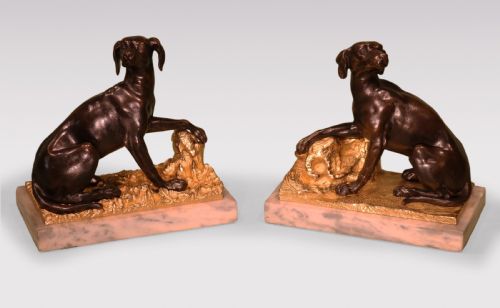

Antique Bronze Pheasant
An antique bronze pheasant brings the raw tension of the field straight into a room through solid metal and meticulous finishing.
Antique Bronze Pheasant
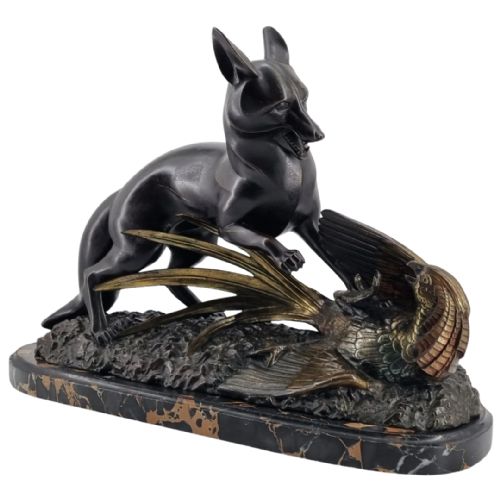
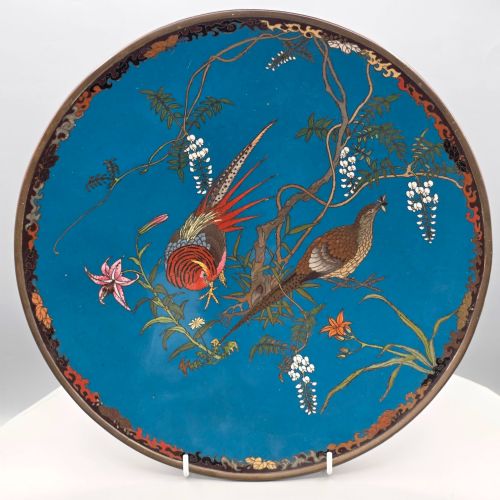
When you search for an antique bronze pheasant, you are looking at small animalier sculptures, larger hunting groupings with gundogs, and occasional enamelled chargers bearing bird motifs.
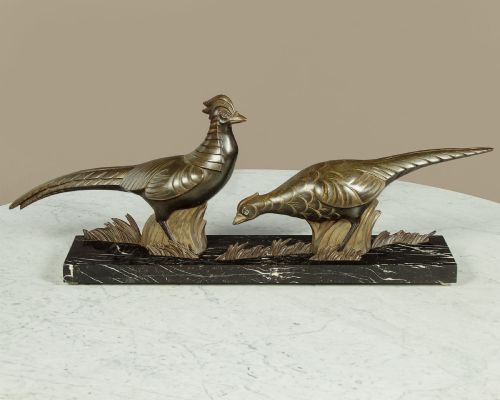
The pieces on this page span from the nineteenth century through the Art Deco period, capturing everything from naturalistic studies of gamebirds to stylised decorative figures.
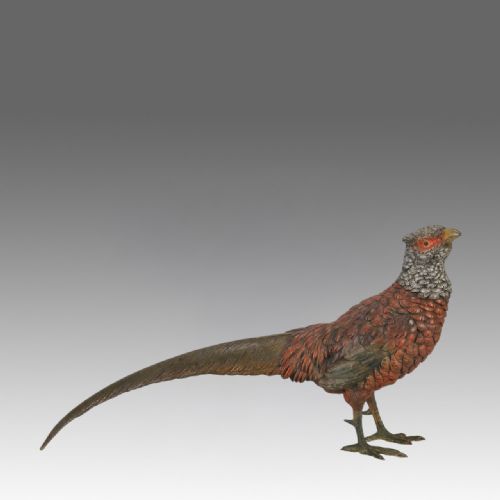
You will encounter work rooted in French animalier traditions, Japanese Meiji craftsmanship, and Austrian cold-painted foundries.
Materials and construction methods
Foundries cast these figures primarily in bronze, occasionally mounting the heavy metal bodies upon bases of marble, onyx, or ormolu.
Many of the smaller Austrian examples utilise cold painting, where colours are applied to the metal surface without high-temperature firing, while others employ enamel or retain a rich dark patination.
Antique Bronze Pheasant Retail Price Guide 2026
Typical asking prices for bronze pheasant among the pieces listed under this phrase on Sellingantiques today, from the lower quarter to the upper quarter. They describe what is for sale here now, not the wider market.
Materials appearing across these pieces include bronze, marble, onyx, enamel, brass, and patinated metal.
Assessing the range of quality
Quality rests entirely in the anatomical precision of the bird and the crispness of the feather chasing, where superior pieces show individual quill separation rather than smooth, generalised casting.
The integration of the subject with its base, whether a solid bronze hunt scene or a polished stone plinth, distinguishes workshop execution.
Lavroff·Franz Bergman·Delabrierre·P J Mêne·Paul Joris·Jules Moigniez
The Antique Bronze Pheasant Glossary
- Animalier
- A nineteenth-century artistic movement dedicated to the realistic depiction of animals. Sculptors in this tradition focused heavily on anatomical accuracy and dynamic movement.
- Cold-painted bronze
- A technique where bronze figures are painted with oil paints or cold enamels after casting and patination. It was particularly popular in Austrian foundries during the late nineteenth and early twentieth centuries.
- Ormolu
- Finely ground gold-mercury amalgam applied to a bronze object. It provides a bright golden surface finish frequently used for decorative mounts and bases.
Antique Bronze Pheasant: Frequently Asked Questions
What is an animalier bronze pheasant?
An animalier bronze pheasant is a nineteenth or twentieth-century sculpture that captures the bird in a realistic, naturalistic pose.
These pieces reflect the period's intense fascination with wildlife and field sports, often depicting the pheasant standing alert, taking flight, or being pursued by hounds.
How do I care for cold-painted bronze?
Cold-painted bronze requires gentle treatment because the surface pigment is not fired onto the metal.
Keep these figures out of direct sunlight and dust them only with a soft, dry brush to preserve the delicate original colours.
How do I date an antique bronze pheasant?
Dating relies on stylistic clues, foundry marks, and the materials used for the base.
Nineteenth-century pieces lean towards heavy naturalism, while works from the 1920s and 1930s adopt the clean, geometric lines of the Art Deco movement or incorporate modern stone plinths.
Where were these bronze pheasants made?
These sculptures originated primarily in French, Austrian, and Japanese workshops.
Each region brought distinct techniques to the subject, from the detailed chasing of French animalier foundries to the vibrant enamelling of Meiji period chargers.