



Antique Bronze Panther
An antique bronze panther captures fierce feline momentum in cast metal, bringing dynamic predatory energy and striking sculptural presence to a room.
Antique Bronze Panther
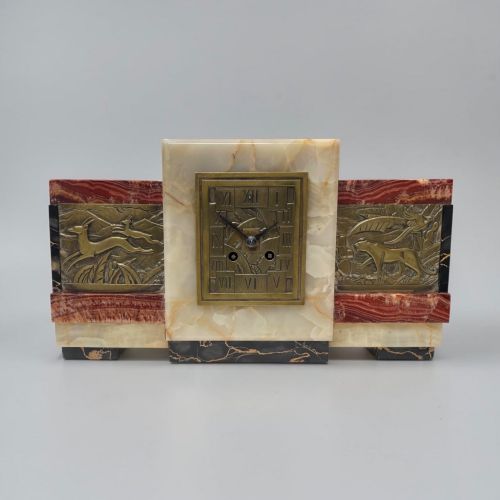
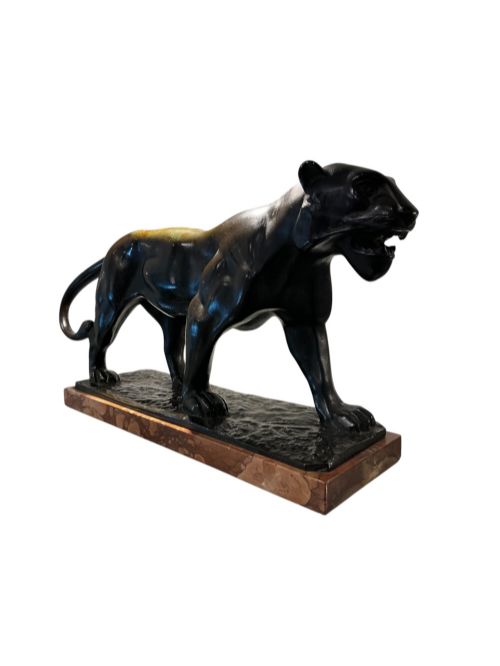
An antique bronze panther is a sculptural representation of the big cat, appearing across the nineteenth century and into the twentieth century in various dynamic poses. These figures capture the animal either prowling, stalking, or engaged in dramatic conflict with other creatures such as pythons. When searching for an antique bronze panther, buyers encounter works created during the height of the Animalier movement and later Art Deco periods.
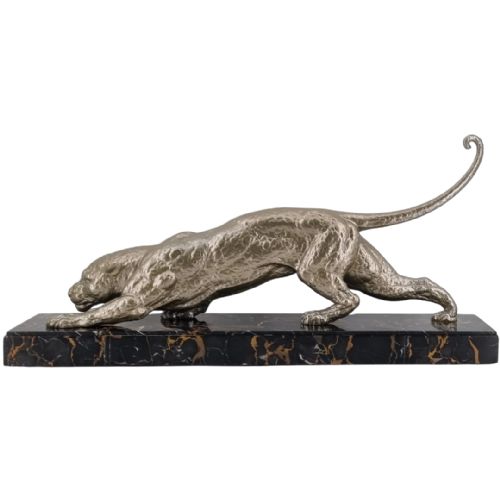
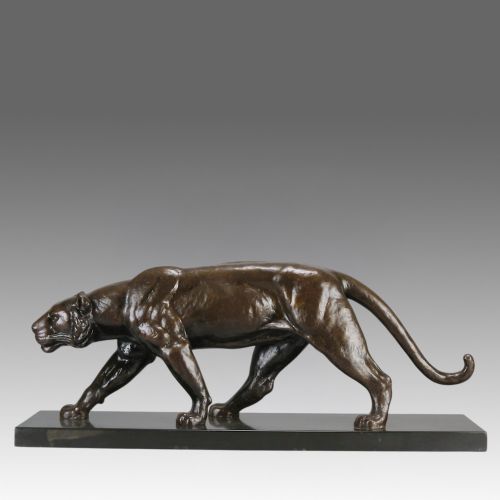
The pieces on this page span several decades, reaching from the late nineteenth century through to the 1940s. Many examples pair the cast metal cat with a substantial stone plinth, utilising polished black marble or onyx as a contrasting base. While the majority of these sculptures depict panthers directly, related big cat subjects such as jaguars, tigers, and lionesses also appear within the selection.
Stylistically, the works bridge nineteenth-century naturalism and twentieth-century geometric reduction. Early pieces focus on anatomical realism and dramatic narrative tension, whereas later twentieth-century iterations embrace sleek lines and stylised forms associated with the interwar years. This evolution gives collectors a clear choice between academic naturalism and modernist abstraction.
How they were made
The creation of these sculptures relies on traditional metal casting techniques combined with applied surface treatments. Foundries cast the figures using bronze or, in more economical contemporary alternatives, spelter. Molten metal flows into moulds to capture the musculature, tension, and texture of the animal's coat.
Makers finished the cast metal with distinct patination processes to create varied surface tones and depths. Patinated bronze yields dark, rich brown or black hues, while silvered bronze provides a bright, reflective metallic finish. Once cast and finished, the metal figures are mounted onto heavy stone bases made of marble or onyx to anchor the dynamic composition.
Antique Bronze Panther Retail Price Guide 2026
Typical asking prices for bronze panther among the pieces listed under this phrase on Sellingantiques today, from the lower quarter to the upper quarter. They describe what is for sale here now, not the wider market.
Listings feature works spanning the nineteenth century through the 1940s, uniting bronze, spelter, marble, and onyx.
What varies in quality
The choice and execution of the base material also mark the distinction between standard and superior works. High-end sculptures feature dense, finely polished marble or onyx bases that complement the weight and scale of the metal figure. Poorer examples utilise lower-grade stone with visible fissures or careless joints that fail to integrate the sculpture and its plinth.
Alexandre Ouline·Anna Vaughn Hyatt Huntington·Clovis Masson·Michel Decoux·Georges Gardet·Siot Foundry·Barbedienne·Thomas François Cartier
The Antique Bronze Panther Glossary
- Animalier
- A nineteenth-century artistic movement dedicated to the realistic portrayal of animals, particularly wild beasts in motion or combat. Sculptors in this tradition focused on deep anatomical study and dynamic poses.
- Spelter
- A zinc-based alloy frequently used as a cost-effective substitute for bronze in decorative figures. It takes patination well but possesses a lighter weight and softer durability than bronze.
- Patination
- The chemical or thermal treatment applied to the surface of bronze to alter its colour and texture. This process protects the metal while enhancing visual depth.
- Art Deco
- A design style of the 1920s and 1930s characterised by sleek lines, stylised geometry, and modern materials. Sculptures from this period often reduce natural forms into streamlined, elegant silhouettes.
- Plinth
- The solid base of marble or onyx upon which the metal sculpture rests. It provides physical stability and elevates the artwork for display.
Antique Bronze Panther: Frequently Asked Questions
How do I identify an antique bronze panther?
Examine the weight, surface finish, and casting quality of the metal figure. Genuine older bronzes exhibit a deep, stable patination and crisp anatomical detail developed through traditional foundry methods.
Look also for signature markings on the metal or the stone base, alongside the specific mounting style used to secure the sculpture to its marble plinth.
What is the difference between bronze and spelter?
Bronze is a durable copper alloy that accepts rich patination and holds fine sculptural detail over centuries. Spelter is a softer zinc-based alternative that feels lighter in the hand and appears more frequently in budget-conscious twentieth-century pieces.
Checking the underside or unexposed areas often reveals the paler grey metal beneath a worn spelter surface.
Where should I display an antique panther sculpture?
These sculptures require a sturdy surface such as a heavy sideboard, desk, or low display table where their weight and commanding presence can be appreciated safely. Placing them away from direct sunlight helps preserve the surface patination and the polish of the marble base.
Ensure the selected furniture can support the considerable combined weight of the metal figure and its stone plinth.
How do I clean an antique bronze panther?
Dust the sculpture gently with a soft, dry microfibre cloth to remove surface particles. Avoid chemical cleaners, abrasive cloths, or polishes that can strip away the original historic patination.
Consult a professional restorer if the metal requires deeper cleaning or if the protective wax coating needs renewal.