





Antique Bronze Knight
An antique bronze knight brings the heft and romance of medieval chivalry straight into a room, capturing centuries of armour and martial prowess in solid metal.
Antique Bronze Knight
When you search for an antique bronze knight, you enter a world of Victorian historicism, Gothic revival and Renaissance revival where military figures take physical form. These pieces range from monumental equestrian statues to fireside companion sets and mantel clock garnitures.
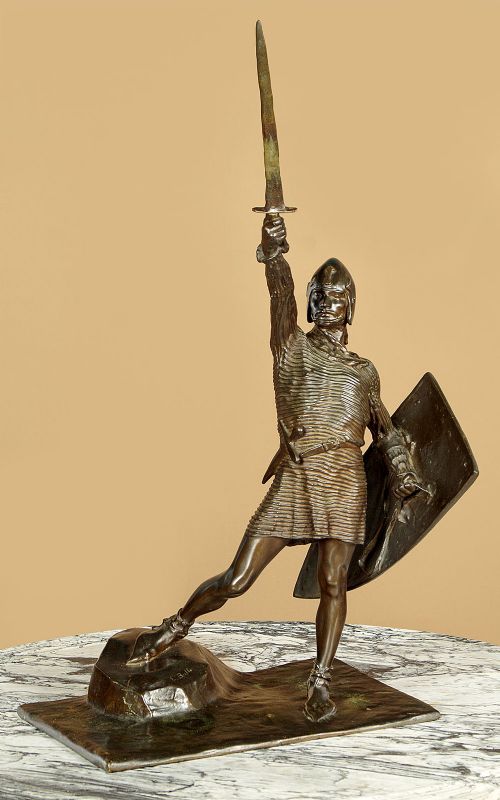
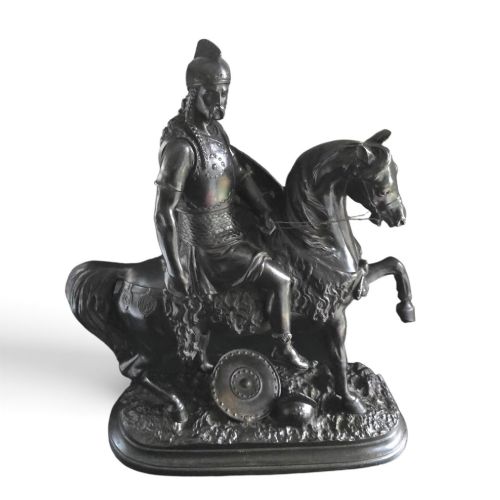
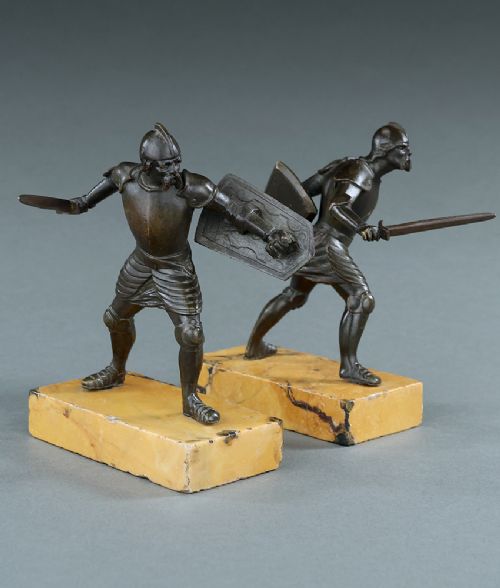
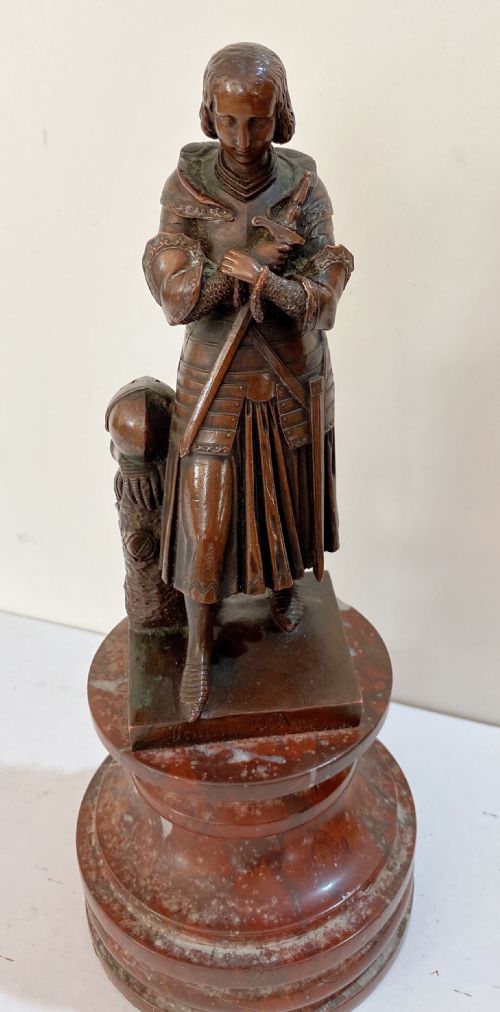
You are most likely to meet nineteenth-century figures on this page, often French or Austrian in origin. The selection includes duelling pairs, mounted monarchs like François I, and Jeanne d'Arc standing in full plate armour.
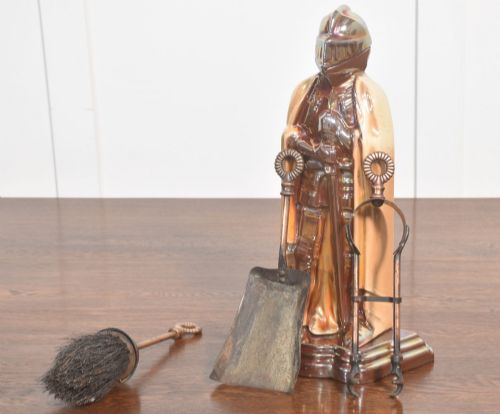
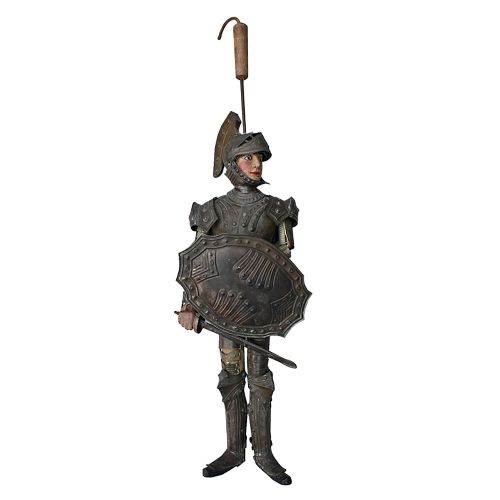
Forms vary significantly, encompassing cabinet bronzes, large decorative statues, and functional items like painted metal companion sets. Each piece reflects the nineteenth-century obsession with medievalism and historical costume.
Materials and construction methods
Foundries utilised traditional metalcasting techniques to render the intricate details of chain mail, plate armour and heraldic caparisons. Patinated bronze is predominant, complemented by cold-painted metal finishes, cast iron and copper details.
Many heavier sculptures are mounted on architectural bases of sienna marble or framed with ormolu mounts. Auxiliary elements such as bristles appear in utilitarian fireside sets alongside the primary metalwork.
Antique Bronze Knight Retail Price Guide 2026
Typical asking prices for bronze knight among the pieces listed under this phrase on Sellingantiques today, from the lower quarter to the upper quarter. They describe what is for sale here now, not the wider market.
One set equips a knight to sweep the hearth.
Distinctions in quality
The division between standard foundry production and superior quality rests upon the crispness of the chasing and the depth of the patination. Master sculptors and named makers achieved a lifelike tension in horses and riders that lesser commercial castings miss.
Base materials also dictate grade, with solid bronze and rich sienna marble outperforming painted base metals or simple cast iron. Signature placement and archival provenance further elevate certain nineteenth-century pieces above anonymous workshop output.
Louis François Frémiet·Emile Louis Picault
The Antique Bronze Knight Glossary
- Patinated bronze
- Bronze treated with chemical solutions to produce a specific surface colour or aged finish. This layer protects the underlying metal while adding depth to the armour and drapery.
- Ormolu
- Gilt bronze ornamentation applied to clocks and bases. The technique involves a mercury amalgam fired onto the metal surface to create a rich golden lustre.
- Sienna marble
- A yellow-brown decorative marble quarried in Italy. It provides a weighty and colourful plinth for nineteenth-century cabinet bronzes.
- Gothic Revival
- An architectural and decorative style drawing inspiration from medieval forms. It dominates nineteenth-century interpretations of knights and chivalric figures.
- Equestrian sculpture
- A statue depicting a rider on a horse. These demanding compositions capture both animal anatomy and human military bearing.
Antique Bronze Knight: Frequently Asked Questions
What periods do these figures come from?
The pieces listed originate principally from the nineteenth century, spanning from the eighteen-sixties through to nineteen-ten.
Maker dates and stylistic markers such as Victorian historicism help pinpoint the exact decades of manufacture.
Are all these pieces solid bronze?
The materials vary across the selection, including patinated bronze, painted metal, cast iron and copper finishes.
Heavier decorative sculptures often sit upon marble bases, while utilitarian items utilise alternative base metals.
What subjects do the statues depict?
The sculptures portray medieval knights, Renaissance cavaliers, Jeanne d'Arc and historical rulers on horseback.
Duelling pairs and military figures also appear as standalone statues or incorporated into clock cases.
How were these decorative items used?
Many stood as mantel or cabinet sculptures in nineteenth-century drawing rooms to display historical taste.
Others served practical domestic roles, such as figures mounted atop mantel clocks or incorporated into fireside companion sets.