
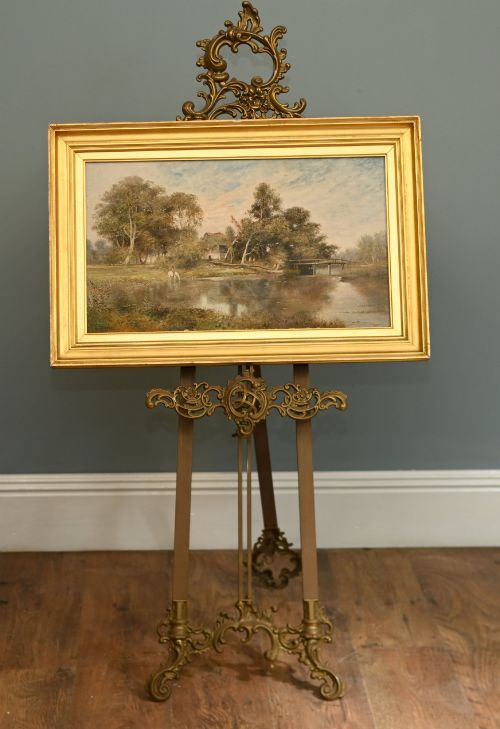
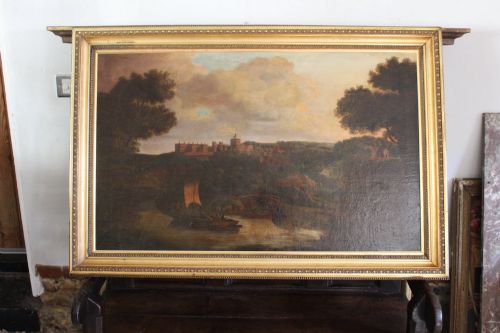
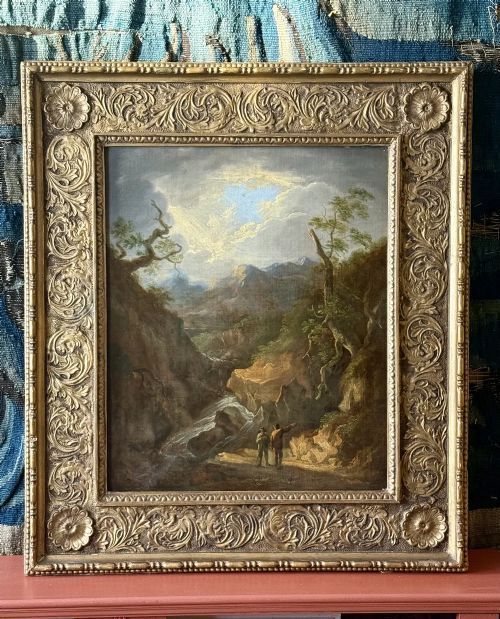
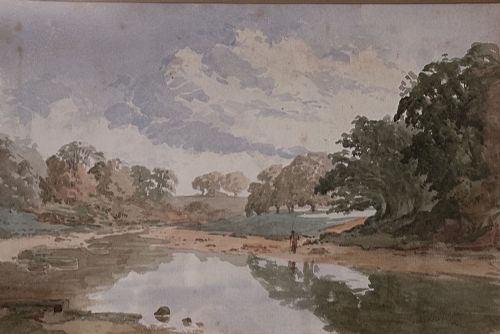



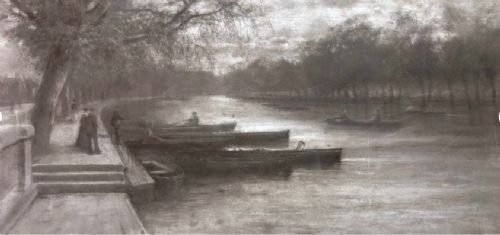
Antique British River Painting
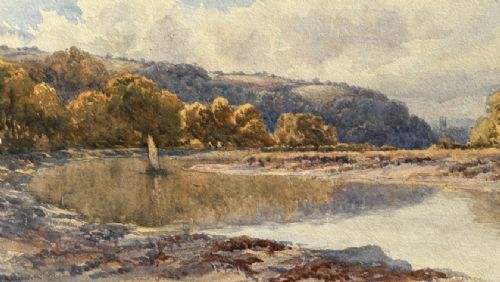
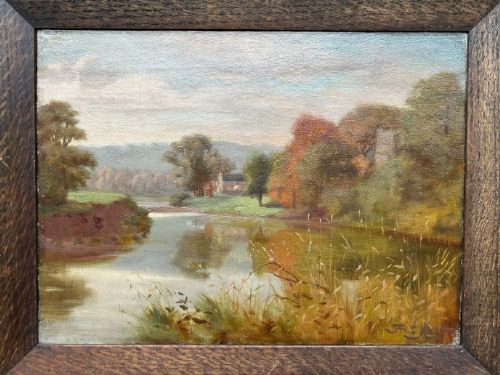
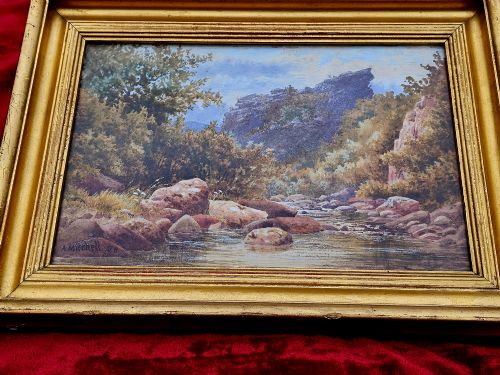
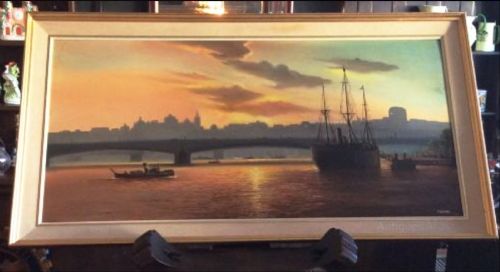
When you search for an antique british river painting, you enter a tradition that maps the streams, estuaries and bridges of these islands.
Antique British River Painting
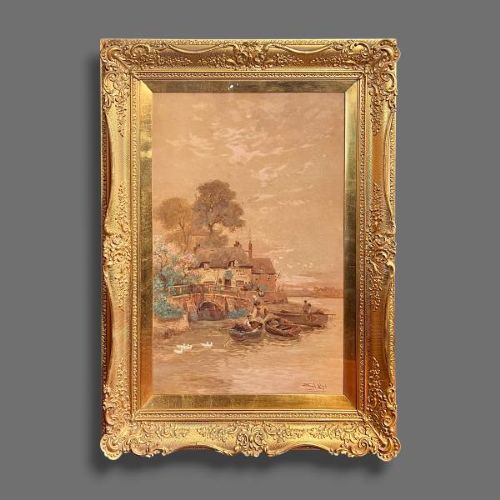
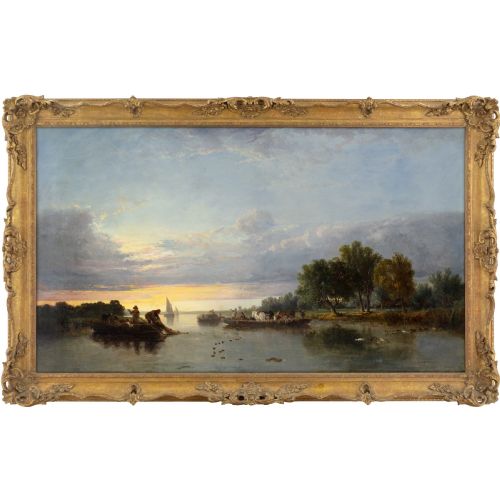
An antique british river painting records the waterways of England, Wales, Scotland and Ireland through the eyes of artists working from the late eighteenth century into the mid-twentieth century.
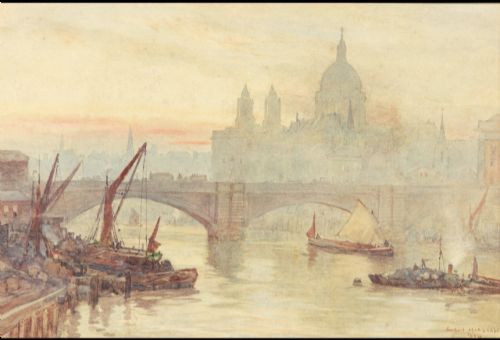
The selections available range from detailed watercolours of Welsh valleys and Yorkshire harbours to moody oil paintings of the Thames in London.
Makers in this category span provincial painters and Royal Academy exhibitors who captured rural banks, tidal pools and industrial reaches.
How They Were Made
Painters worked primarily with oil on canvas, oil on panel or watercolour on paper, supported by wooden stretchers and occasionally gesso frames with giltwood mouldings.
Watercolours rely on transparent washes and delicate pencil or charcoal underdrawing on paper, while oils build texture through layered brushwork on primed fabric or board.
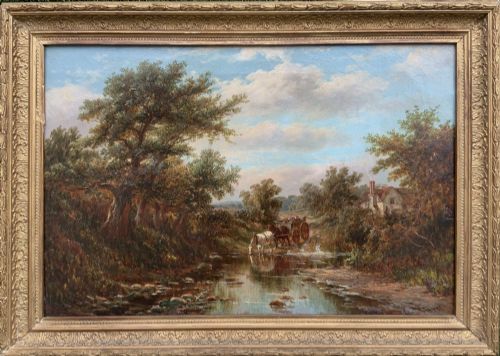
Artists frequently painted the Thames, yet horses also wandered into the river to cool their hooves in nineteenth-century oils.
What Varies in Quality
The strength of a composition rests on the handling of natural light, atmospheric distance and the fluid movement of water across the canvas or paper.
Finer examples demonstrate confident brush control and precise topography, whereas lesser works rely on formulaic foliage and static reflections.
George Graham·Alfred Young Nutt·Frederick Marriott·William Joseph Boyes·Frank William Scarbrough·Robert Thorne Waite·Francis Moltino·George Oyston·TB Hardy·Sir Alfred East·Herbert Royle·Robert Leslie Howey·Florence Adelina Hess·T C Hofland·Henry H Parker·Frederick Hines·Sydney Yates Johnson·John Horace Hooper·John Ferneley Senior·Hubert Wellington·William Frederick Settle·Alfred George Morgan·Charles William Wyllie·Cornelius Pearson·Sir David Murray
The Antique British River Painting Glossary
- Watercolour
- A paint consisting of pigment suspended in a water-soluble vehicle, typically applied to paper to create translucent washes.
- Giltwood
- Wood carved and coated with gold leaf or a gold-coloured metallic finish, frequently used for traditional picture framing.
- Gesso
- A plaster-like mixture applied to wood panels or canvases as a base before painting or gilding.
- Estuary
- The tidal mouth of a large river, where the tide meets the stream, offering artists shifting patterns of light and shipping traffic.
Antique British River Painting: Frequently Asked Questions
What periods do these paintings cover?
The works span from the eighteenth century through the Victorian and Edwardian eras up to the mid-twentieth century.
Most pieces date from the nineteenth and early twentieth centuries, reflecting the height of British landscape painting.
How were these river scenes used?
Artists painted them as studio pieces from field sketches or completed them on location along towpaths and bridges.
Collectors hung them in domestic interiors to bring pastoral and marine views into town houses and country homes.
How do I care for an antique painting?
Keep watercolours away from direct sunlight to prevent the pigments and paper from fading over time.
Protect oil paintings from damp environments and extreme temperature shifts that can crack canvas or wood panels.
How do I tell watercolours apart from oils?
Watercolours are painted on paper under glass, showing transparent layers and the grain of the sheet beneath.
Oils are painted on canvas or wood with heavier, opaque pigments that sit on the surface with visible brush texture.