





Antique Bridge Watercolour Artwork
These antique bridge watercolour artwork pieces capture rivers and architectural spans across Britain and Europe through delicate washes on paper.
Antique Bridge Watercolour Artwork
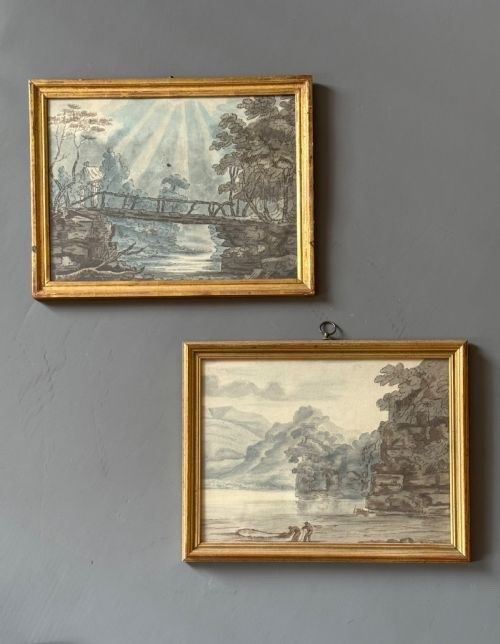
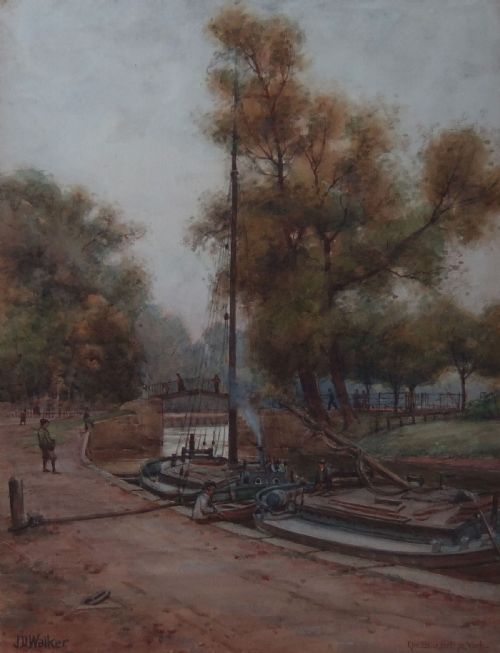
An antique bridge watercolour artwork presents pastoral scenes, urban river crossings, and cathedral backdrops recorded across the nineteenth and twentieth centuries. You encounter topographical landscapes and coastal views detailing structures like toll bridges, stone arches, and Venetian canals.
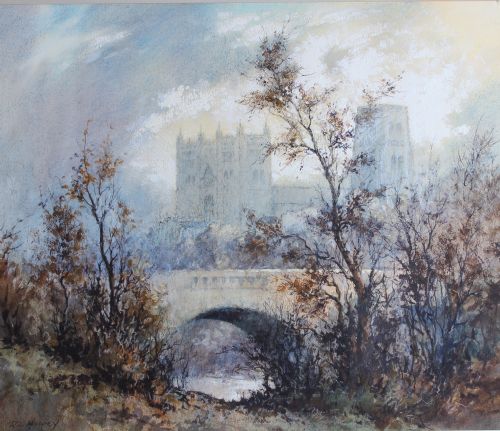
The pieces on this page span from the Georgian period through the Victorian era and into mid-twentieth century British impressionism. Works range from intimate pastoral landscape scenes to large cityscapes featuring recognizable landmarks such as Durham Cathedral, Westminster Bridge, and the Bridge of Sighs.
Artists often captured local waterways, castle ruins, and figures crossing rural bridges in England, Scotland, Italy, and Switzerland. These paintings serve as historical records of changing architecture and topography over the course of two centuries.
Distinctions in quality
Quality rests in the precision of the brushwork and the artist's ability to render light, shadow, and architectural perspective accurately across the paper. Superior compositions demonstrate a confident handling of pigment that brings transparency to water and solidity to stone bridge arches.
Provenance and documentation elevate certain works, particularly when the artist, specific location, and date are clearly recorded by the hand of a known painter. The retention of original framing and glass also contributes to the integrity of the piece.
Antique Bridge Watercolour Artwork Retail Price Guide 2026
Typical asking prices for bridge watercolour artwork among the pieces listed under this phrase on Sellingantiques today, from the lower quarter to the upper quarter. They describe what is for sale here now, not the wider market.
Listings feature works executed on paper using watercolour paint, housed within wood and gilt wood frames behind glass.
Robert Leslie Howey·Percy Lancaster·Vittore Zanetti Zilla·Thomas Lound·James H Hulse·Noel Harry Leaver·Lieutenant Harold E Frecker RNR·Frederick Tully Lott·Claude Muncaster·Fred Lawson·William A Macdonald·Carleton Grant·John D Walker·Herbert John Finn·Fred Stead·Frank William Scarbrough·George Graham·Helen Donald-Smith
The Antique Bridge Watercolour Artwork Glossary
- Topographical
- A genre of art focused on the accurate representation of specific real-world locations and buildings. These works serve as visual records of historical sites and landscapes.
- Wash
- A thin, fluid layer of watercolour pigment spread across paper to create transparent areas of colour. Artists use this technique for skies, water, and atmospheric background effects.
- Gilt wood
- Wood coated with a thin layer of gold leaf or metallic paint used for traditional picture frames. This finish adds a reflective border around the watercolour artwork.
- Impressionism
- A style of painting emphasising spontaneous brushstrokes and the shifting qualities of light rather than microscopic detail. British practitioners adapted these continental methods to local landscapes.
Antique Bridge Watercolour Artwork: Frequently Asked Questions
What periods do these bridge watercolours date from?
The listings include works created from the early nineteenth century through to the mid-twentieth century, encompassing Georgian, Victorian, Edwardian, and twentieth-century British periods.
Specific dates on pieces range across the 1820s, Victorian decades, and into the 1950s.
How should I display antique watercolours at home?
Watercolour paintings require protection from direct sunlight to prevent the pigments from fading over time. Hang them on interior walls away from moisture sources and direct heat.
Ensure the protective glass remains sealed to keep dust and humidity away from the paper surface.
How can I tell different bridge painting styles apart?
Nineteenth-century pieces often lean toward romanticism or detailed topographical accuracy, showing careful architectural rendering of stone arches and castles.
Twentieth-century works frequently employ looser impressionistic brushwork, focusing on atmospheric light and tonal qualities rather than strict line work.
Where were these bridge scenes usually painted?
Artists painted locations across Britain, including the River Thames in London, rivers in Yorkshire, Durham Cathedral, and Scottish landscapes.
European destinations also appear frequently, featuring Venetian canals, Swiss mountain streams, and Italianate countryside views.