

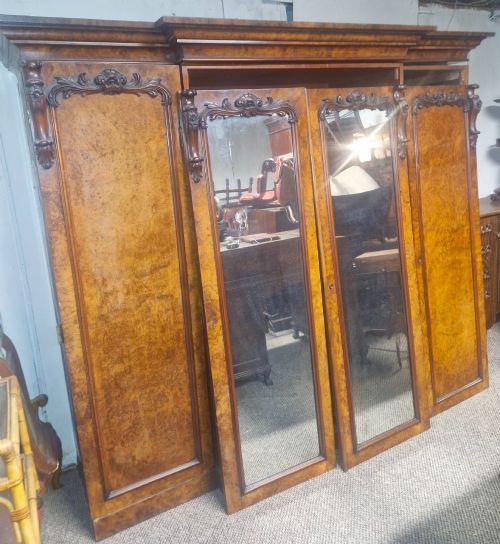
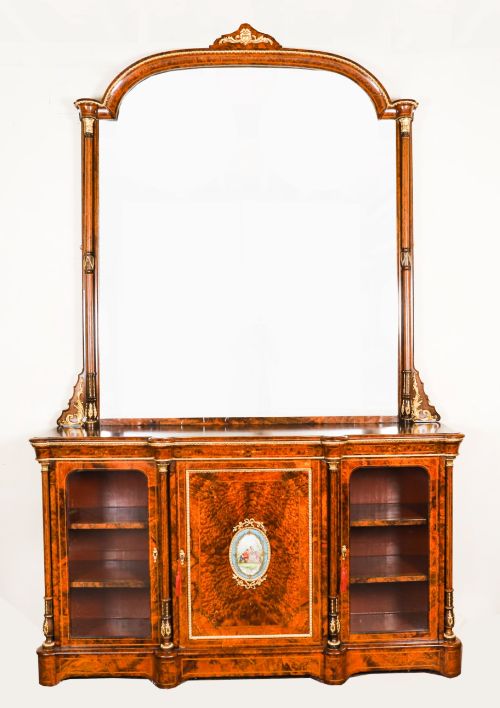
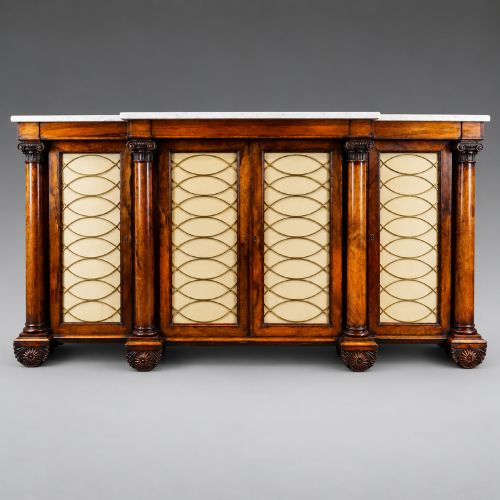
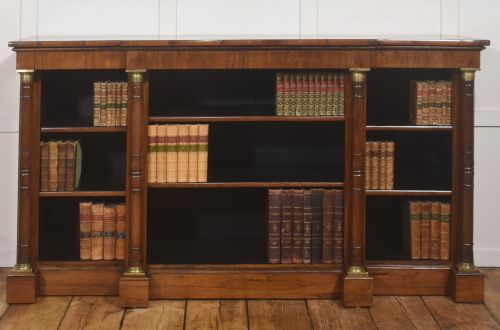
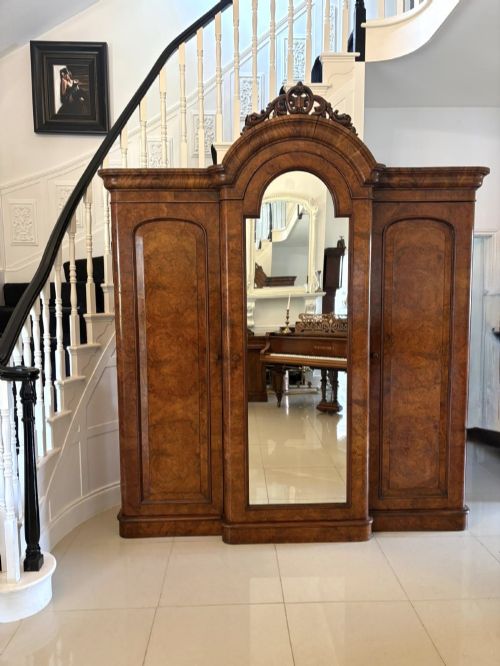
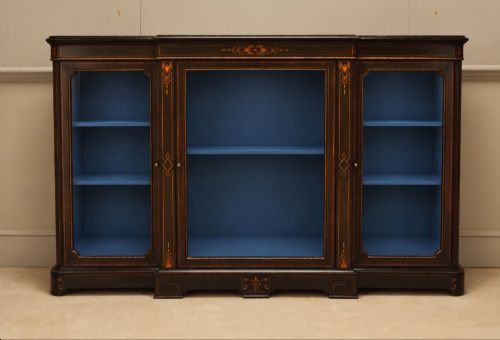
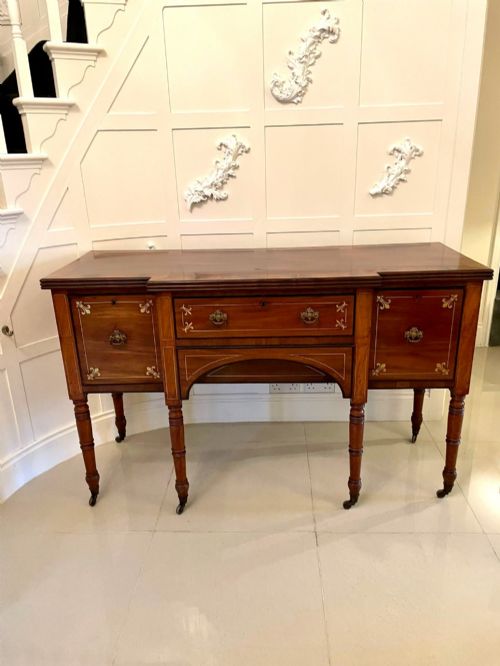
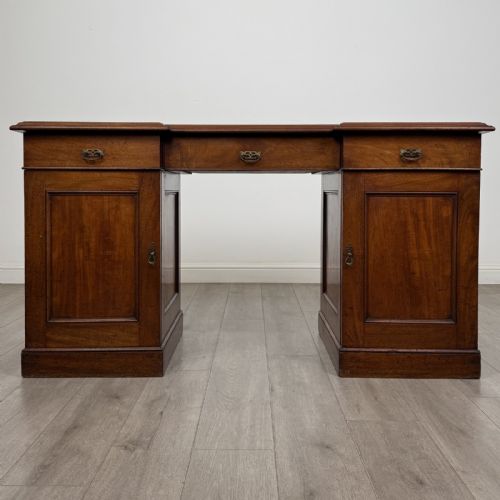
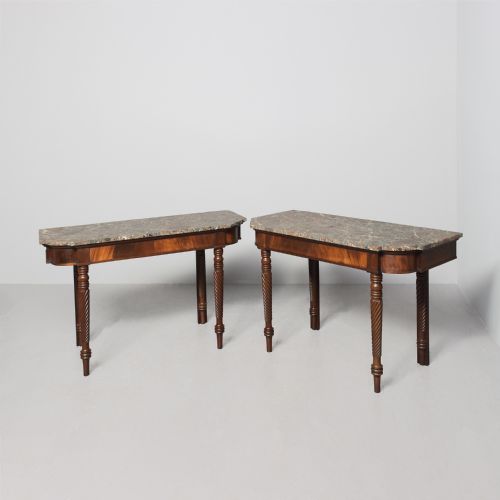
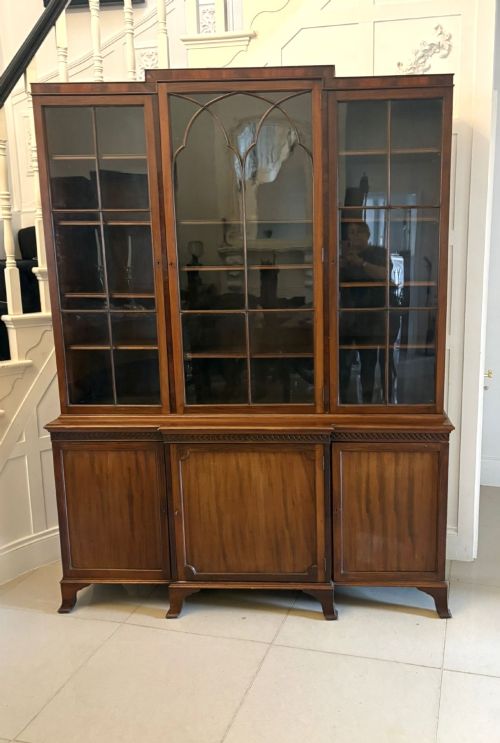
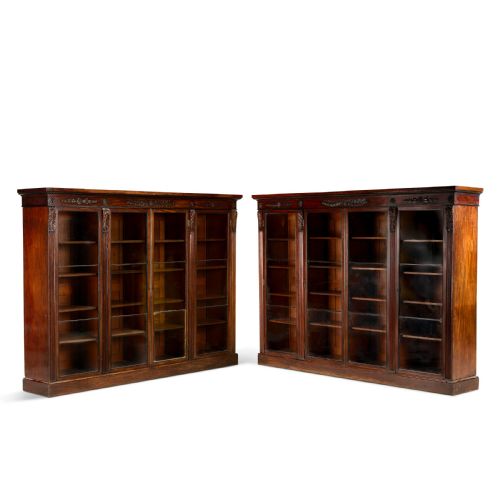
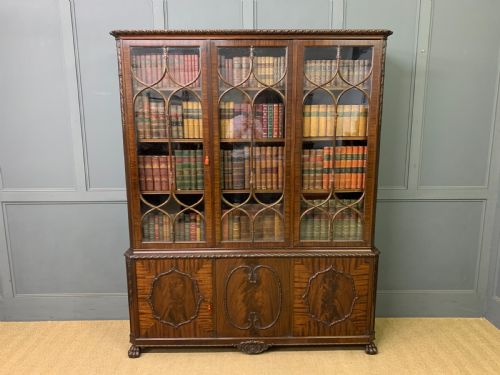
Antique Breakfront Furniture
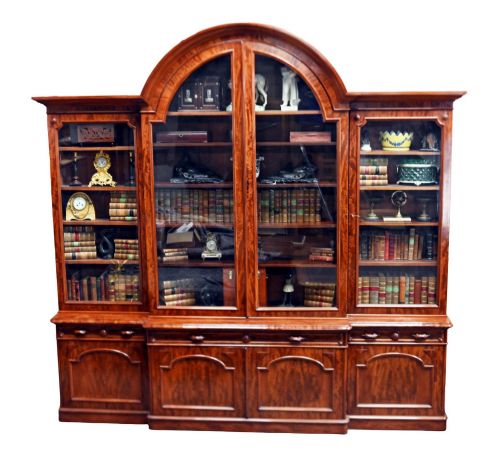
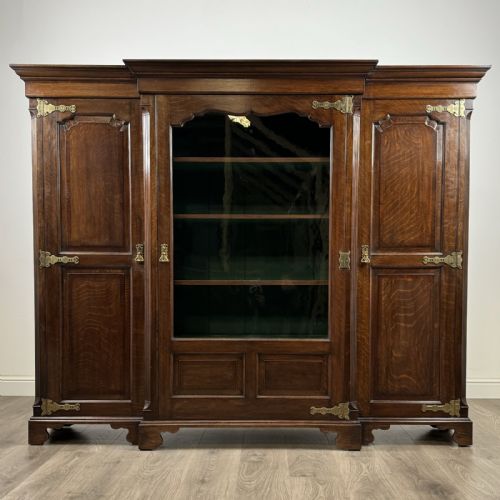
Antique breakfront furniture commands attention through its stepped facade, offering substantial storage and display within classic period forms.
Antique Breakfront Furniture
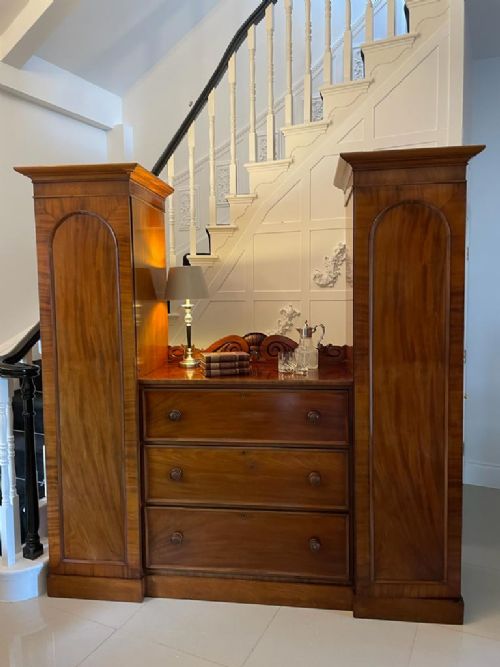
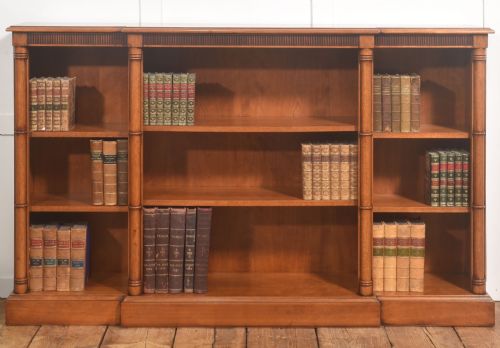
Antique breakfront furniture comprises large functional storage and display items, most commonly bookcases, sideboards, and wardrobes, defined by a central section that projects forward from the flanking wings. The pieces on this page span the nineteenth and early twentieth centuries, encompassing Victorian, Regency, William IV, and Edwardian eras.
Bookcases and display cabinets dominate the selection, frequently featuring glazed doors, adjustable shelving, and substantial library proportions. Sideboards and credenzas provide lower-profile storage options, whilst wardrobes and credenzas offer specialised bedroom and entertaining utility.
Stylistic variation runs from strict classical Regency and William IV designs through to revival aesthetics such as Sheraton, Queen Anne, and Gothic. Makers utilise these historical references to create imposing architectural silhouettes suitable for principal rooms.
How they were made
Cabinetmakers constructed these substantial frames primarily using dense hardwoods like mahogany, walnut, and rosewood, frequently selecting figured veneers such as flame mahogany and burr walnut for primary visual surfaces. Secondary structural elements incorporate oak and pine.
Surface enrichment relies on brass inlay, marquetry, and ormolu mounts, paired with specialised glazing bars on display cabinets and bookcases. Interior fittings include fabric linings, adjustable wooden shelves, and painted decorations.
Antique Breakfront Furniture Retail Price Guide 2026
Typical asking prices for breakfront furniture among the pieces listed under this phrase on Sellingantiques today, from the lower quarter to the upper quarter. They describe what is for sale here now, not the wider market.
Listings span multiple historical periods from Regency through to Edwardian, utilising mahogany, walnut, rosewood, and oak across various forms.
What varies in quality
The degree of refinement in timber selection and veneer matching defines the visual impact of the piece, with figured grain patterns commanding greater artisan attention. Elaborate ormolu mounts, detailed marquetry, and stamped maker attributions elevate the standard of individual cabinets.
Structural integrity depends upon the weight of the timber and the precision of the joinery, particularly within large library bookcases and wardrobes that must support heavy internal loads. Original glass, hardware, and interior fittings preserve the integrity of the original design.
Gillows·Hille·Hewetsons London·Johnstone and Jeanes·Lamb of Manchester
The Antique Breakfront Furniture Glossary
- Breakfront
- A cabinet design where the central section projects forward past the flanking sections. This architectural arrangement creates depth and visual rhythm across the facade.
- Ormolu
- Gilded bronze used for decorative mounts and fittings. It provides metallic contrast against dark hardwoods like mahogany and walnut.
- Marquetry
- The art of applying pieces of veneer to a structure to form decorative patterns and pictures. Makers utilise contrasting timbers to achieve pictorial depth.
- Astral glazing
- Door glazing divided by thin wooden bars into geometric panes. This technique lightens the visual weight of large bookcase doors.
- Compactum
- A multi-functional wardrobe providing hanging space, drawers, and shelves within a single unit. It represents a concentrated approach to bedroom storage.
Antique Breakfront Furniture: Frequently Asked Questions
How do I style a breakfront bookcase?
Position the bookcase against a principal wall in a study, library, or drawing room to anchor the space.
Maximise interior visibility by adjusting shelving heights to accommodate books and display objects without overcrowding the glazed sections.
What timbers were used?
Cabinetmakers primarily utilised mahogany, walnut, and rosewood, often enhancing surfaces with figured flame mahogany or burr walnut veneers.
Secondary woods like oak and pine appear in internal linings and structural framework.
How do I identify the period?
Period identification relies on observing structural proportions, decorative motifs, and wood types associated with specific eras like Regency or Edwardian.
Revival styles from later decades frequently incorporate earlier classical elements.