
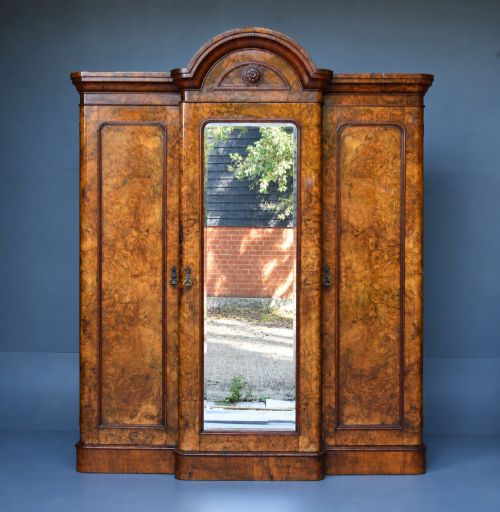
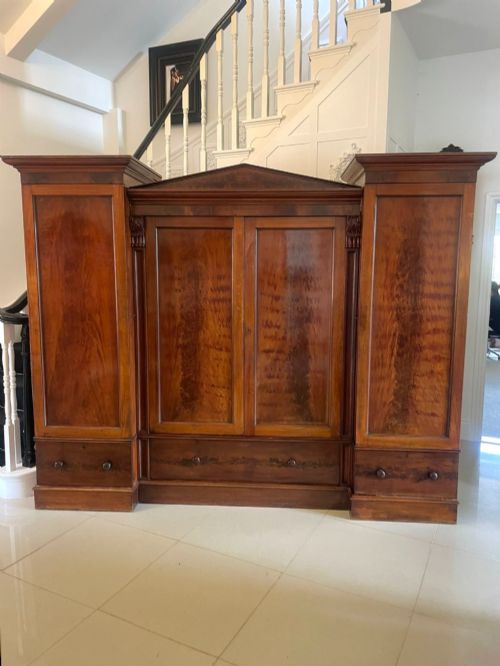
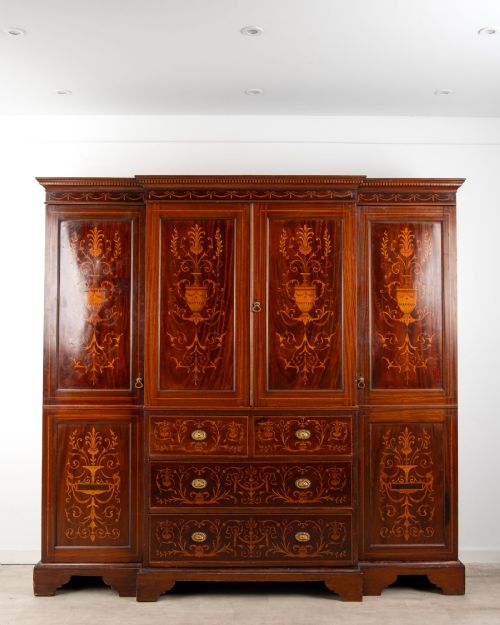
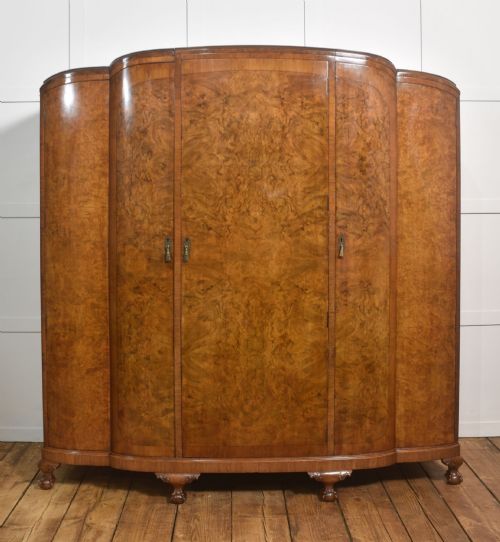
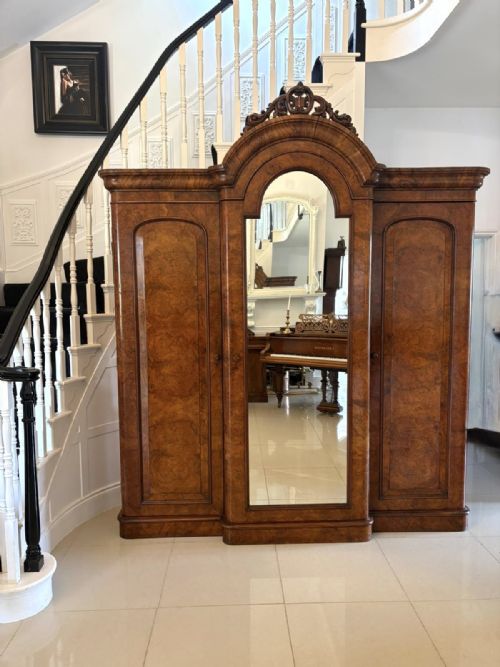


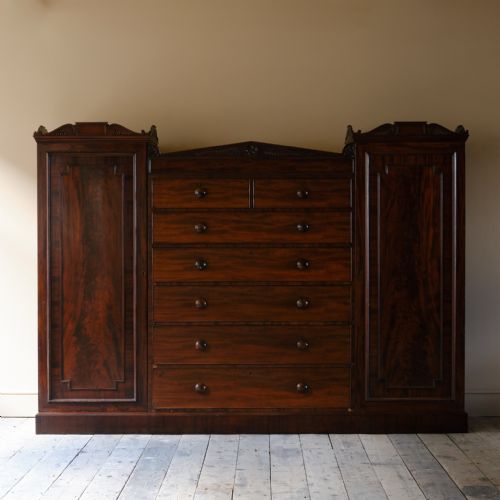
Antique Breakfront Armoire
An antique breakfront armoire offers substantial storage through a stepped architectural facade, bringing imposing scale and rich timber grain to a bedroom.
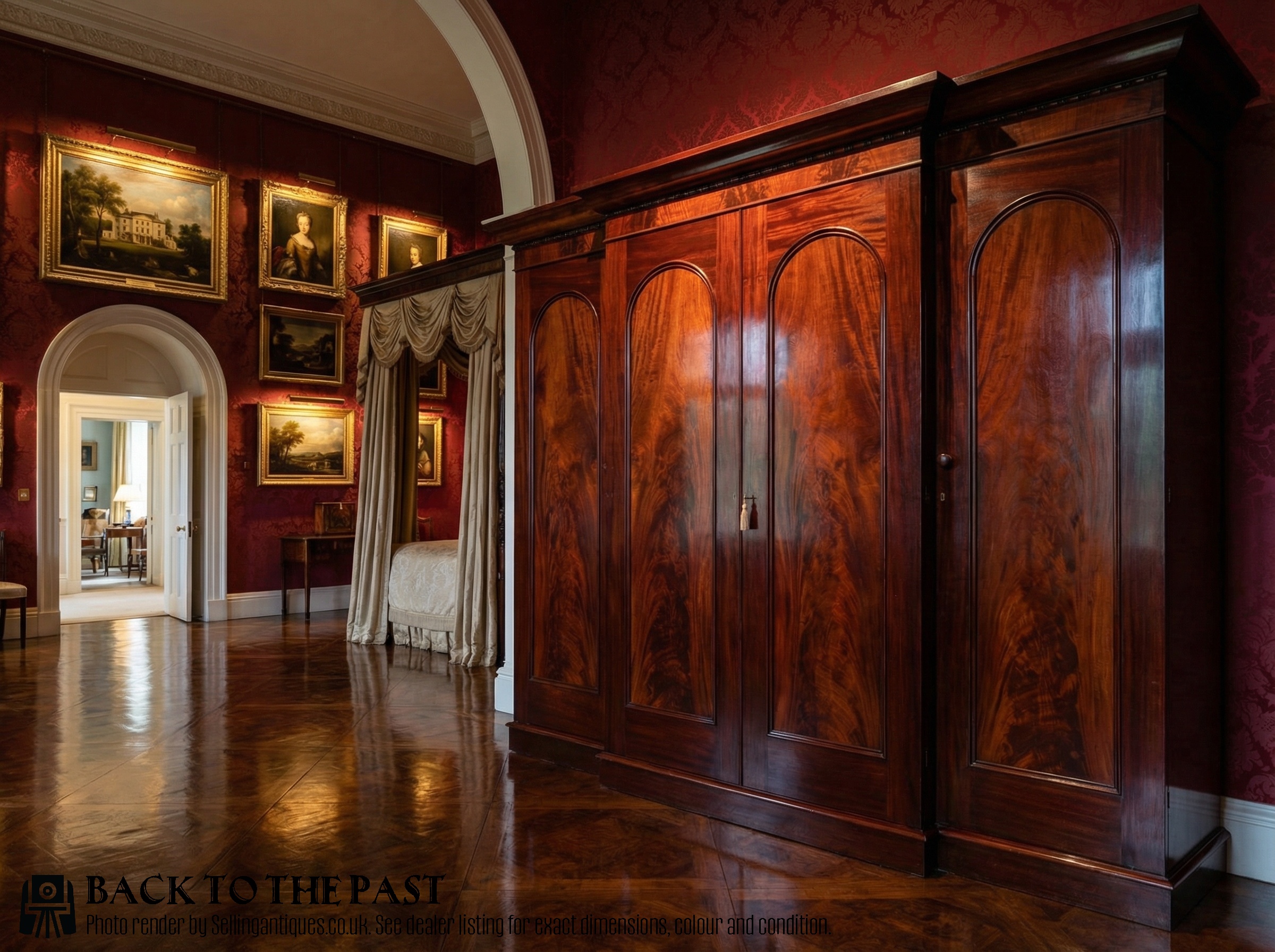
Antique Breakfront Armoire
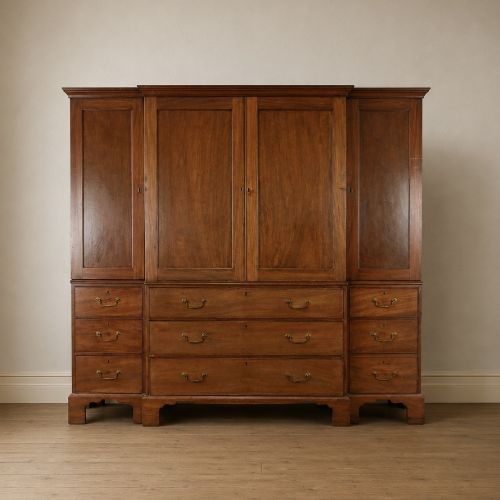
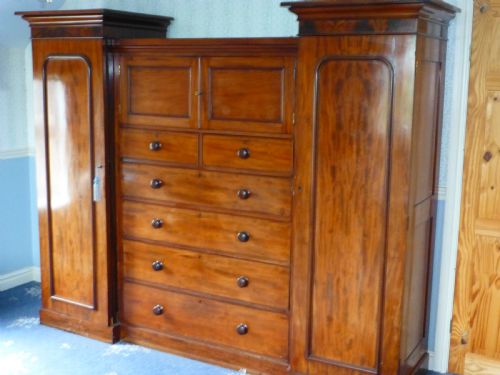
An antique breakfront armoire appears primarily as a large wardrobe, compactum, or clothes press originating from the Victorian, Edwardian, and Georgian eras. These pieces combine substantial hanging space with interior drawers and linen shelves, often structured in multiple sections to accommodate large chambers.
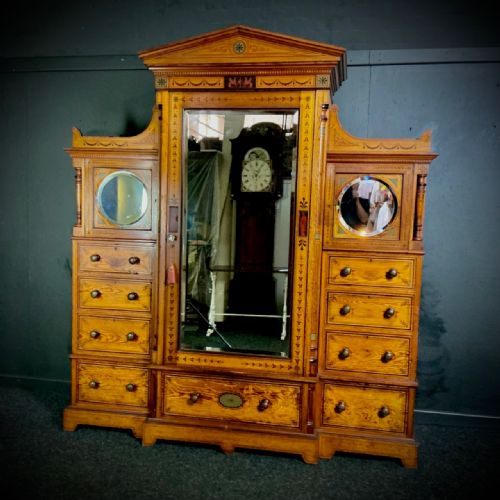
The layout relies on a central projection flanked by recessed wings, creating the signature breakfront silhouette. Most examples date from the nineteenth century, though variations extend into the Edwardian period and the twentieth century with Art Deco interpretations.
Makers utilised diverse timbers such as mahogany, walnut, rosewood, and satinwood to construct these monumental storage items. Buyers encounter regional English work alongside French provincial and Empire-influenced designs.
Materials and construction
Cabinetmakers built the carcass using sturdy secondary woods like pine before applying decorative veneers of flame mahogany, burr walnut, or rosewood to the prominent exterior surfaces. Inlays of lighter satinwood and boxwood frequently accent the door panels and cornices.
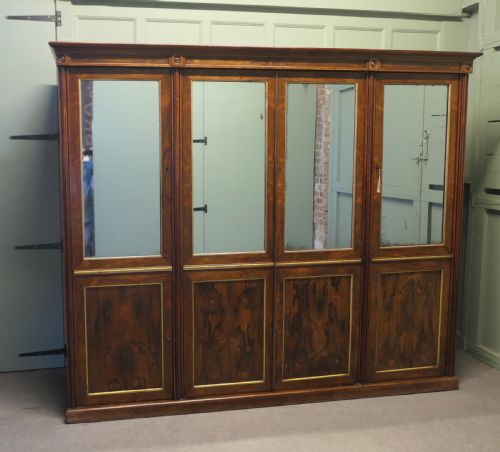
Larger examples incorporate break-down construction with modular sections and pegged joints to allow transportation through domestic doorways. Brass hardware secures internal compartments, while glazed doors appear on associated bookcases and display cabinets.
Some gentlemen's wardrobes hide sliding trouser presses behind their central mirrored doors.
Judging the piece
Gradations in quality rest upon the selection of timber veneers and the crispness of architectural mouldings. Highly figured flame mahogany or matching burr walnut grain across multiple doors indicates superior material selection by the cabinetmaker.
Internal configuration also separates standard production from finer commissions, with fitted linen slides, sliding trays, and mahogany-lined drawers showing careful interior design. The integration of functional locking mechanisms and well-fitted panel doors demonstrates competent workshop execution.
Gillows·Lamb of Manchester·Robert Strahan·Edwards & Roberts·Maples & Son·Harry and Lou Epstein
The Antique Breakfront Armoire Glossary
- Breakfront
- A cabinet facade where the central section projects forward from the flanking wings. This architectural arrangement creates depth and shadow across the front elevation.
- Compactum
- A multi-functional wardrobe fitted with a combination of hanging space, shelves, and internal drawers. It offers comprehensive clothing storage within a single footprint.
- Flame mahogany
- Timber cut from the fork of the mahogany tree to produce a distinct flickering flame pattern in the grain. Cabinetmakers prized this veneer for principal display surfaces.
- Burr walnut
- Wood harvested from walnut tree growths that display complex, swirling knot patterns. It forms highly decorative surfaces on Victorian and Art Deco cabinetry.
- Clothes press
- A tall piece of furniture designed for storing folded garments on interior sliding trays or shelves above lower drawer sections. It predates the widespread use of full-length hanging wardrobes.
Antique Breakfront Armoire: Frequently Asked Questions
How do I dismantle a large wardrobe?
Many large pieces use a modular construction system featuring pegged cornices, plinths, and detachable side wings that separate from the central section.
Working with a assistant allows you to lift the upper sections away from the base and unbolt the internal partitions safely.
What is a compactum wardrobe?
A compactum is a specialised storage cabinet that divides its interior space between hanging rails, linen shelves, and multiple internal drawers.
This design provides organised storage for diverse garments within a single integrated structure.
How do I maintain wood veneer surfaces?
Polishing timber surfaces with traditional beeswax preserves the moisture and natural lustre of mahogany and walnut veneers over time.
Keep the cabinet away from direct sunlight and radiators to prevent the delicate wood veneers from drying out and lifting.