





Antique Brass Writing Accessory
An antique brass writing accessory brings functional elegance to a desk, uniting period craftsmanship with the warm gleam of cast metal and polished wood.
Antique Brass Writing Accessory
An antique brass writing accessory encompasses desk sets, inkstands, inkwells, stationery boxes, and writing slopes produced primarily during the nineteenth century. These objects served the daily correspondence needs of Victorian, Edwardian, and earlier households, holding ink, pens, stamps, and paper in organised compartments.
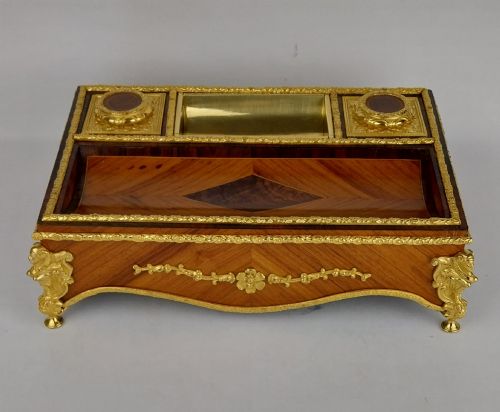
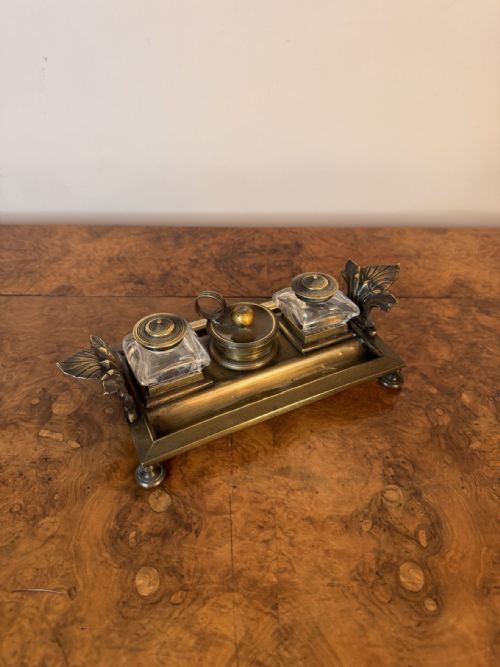
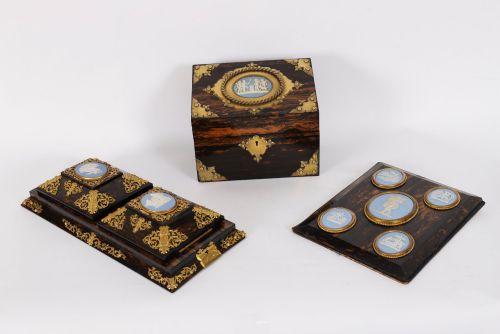
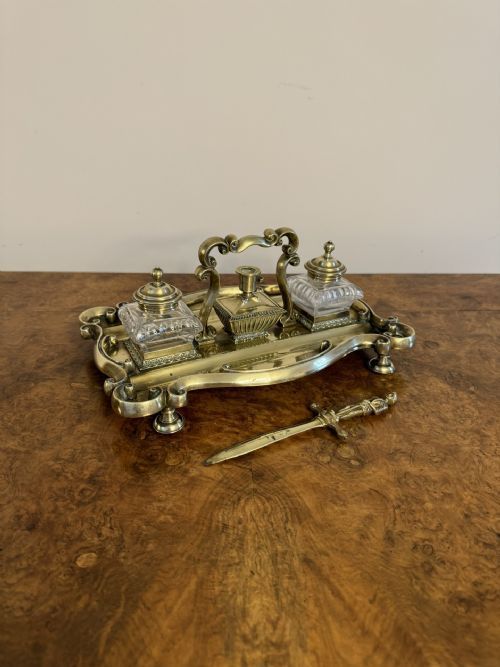
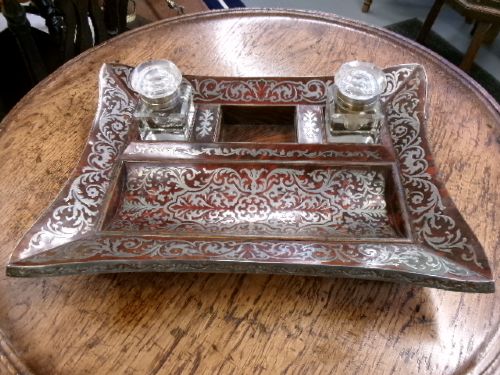
The version most commonly met on this page is the Victorian desk stand or inkstand, often combining heavy brass framework with cut-glass ink bottles and exotic timbers like walnut or coromandel. Such pieces range from compact single inkwells to elaborate double-sided desk sets equipped with drawers and pen trays.
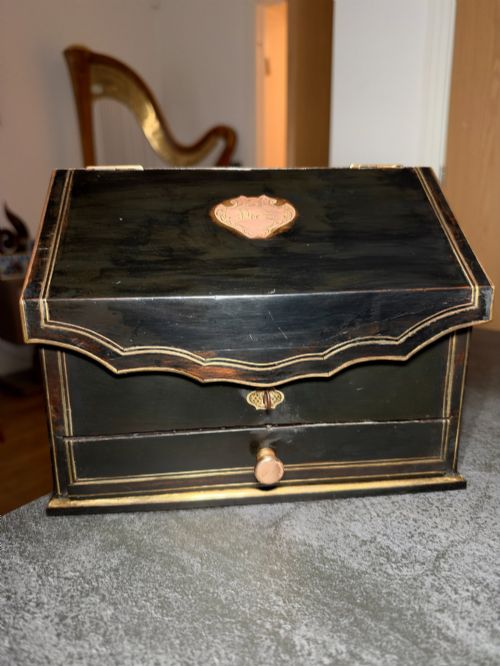
Originating across England and Continental Europe, these items reflect diverse stylistic movements from Regency restraint and Victorian Gothic Revival to ornate French Napoleon III boulle work and flowing Art Nouveau contours.
How they were made
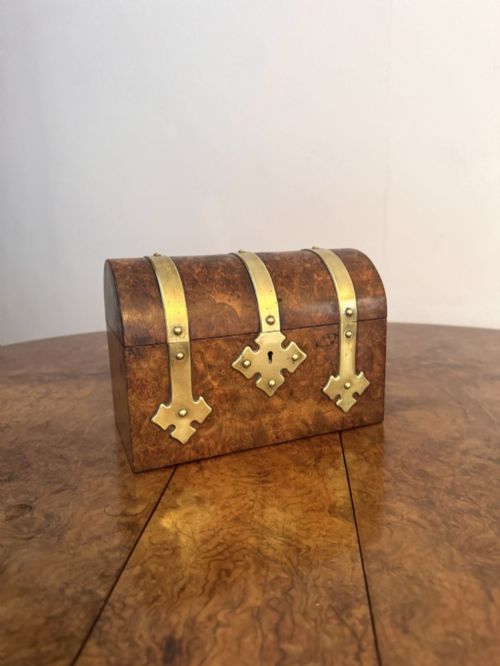
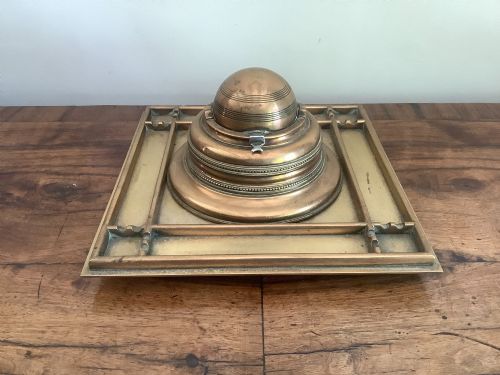
Brass formed the structural backbone of these accessories, utilised for cast frames, hinges, locks, and decorative mounts, frequently complemented by gilt bronze or ormolu highlights. Artisans combined this metalwork with dense hardwoods such as walnut, mahogany, burr walnut, and coromandel, often enhanced by brass inlay or tortoiseshell.
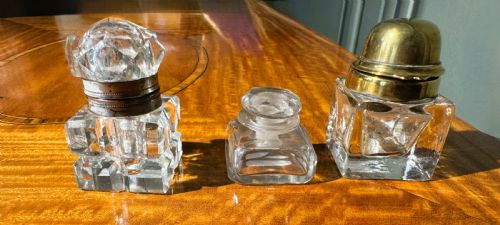
Glass components, particularly heavy cut-glass and crystal ink pots, were shaped to fit snugly into metal collars, preserving ink and withstanding daily dipping. Stoneware, marble bases, porcelain inserts, and tooled leather surfaces further diversified the construction of these desk appointments.
Antique Brass Writing Accessory Retail Price Guide 2026
Typical asking prices for brass writing accessory among the pieces listed under this phrase on Sellingantiques today, from the lower quarter to the upper quarter. They describe what is for sale here now, not the wider market.
Current listings demonstrate a strong presence of Victorian and nineteenth-century pieces, combining brass with walnut, coromandel, and cut glass.
What varies in quality
The standard of an antique brass writing accessory depends heavily on the crispness of the brass casting and the precision of the joinery in the fitted wooden bodies. Finer examples display deeply chased ornamentation, securely mounted galleries, and robust hinges that maintain alignment over generations.
Material selection dictates much of the distinction between grades, separating standard brass-mounted timber from pieces employing intricate boulle work, matched burr veneers, or heavy Siena marble and ormolu mounts. The presence of original fitted glass ink bottles with matching collars preserves the integrity and desirability of the set.
James Cartland and Sons
The Antique Brass Writing Accessory Glossary
- Inkstand
- A portable tray or stand holding one or more inkwells, pen holders, and sometimes a sander or wafer box. It served as the central station for a household's correspondence.
- Boulle work
- A style of marquetry using brass and tortoiseshell inlaid in intricate patterns, named after the French cabinetmaker André-Charles Boulle. It frequently embellished luxury nineteenth-century desk sets.
- Writing slope
- A portable slant-topped box that opened to reveal a sloping writing surface, compartments for stationery, and secret drawers. They were essential for travel and home use before fitted desks became universal.
- Ormolu
- Gilded bronze used extensively for decorative mounts on furniture and desk accessories during the eighteenth and nineteenth centuries. The technique involved applying a mercury and gold amalgam to bronze.
- Standish
- An alternative term for an inkstand or desk set, often denoting a more substantial or formal desk accessory fitted with multiple compartments and writing implements.
Antique Brass Writing Accessory: Frequently Asked Questions
What is an antique inkstand?
An inkstand is a desk accessory designed to hold inkwells, pens, and related writing tools on a stable tray or base. These pieces kept necessary writing materials organised and ready for use.
They range from simple wooden trays with a single glass ink pot to elaborate brass and marble master sets featuring stamps and drawers.
How do I date a brass desk set?
Dating relies on observing stylistic markers, manufacturing techniques, and materials characteristic of specific periods like the Victorian era or Art Nouveau movement. Details such as screw types, hinge construction, and lock mechanisms also provide chronological clues.
Makers' marks or registration stamps stamped onto the brass can sometimes offer a precise year of production.
What woods were used for writing slopes?
Cabinetmakers utilised dense, richly figured timbers such as walnut, mahogany, coromandel, and burr walnut to construct durable writing slopes. These woods were chosen both for their structural stability and their striking grain patterns.
Exotic veneers were frequently accented with brass stringing, inlay, or Boulle work to enhance their visual appeal.
How do I care for brass desk accessories?
Maintenance involves dusting with a soft, dry cloth and avoiding harsh chemical polishes that can strip away historic patination. Preserving the natural surface honours the age and handling history of the metal.
Wooden elements benefit from occasional feeding with appropriate furniture wax to keep the timber from drying out.