




Antique Brass Teapot
An antique brass teapot is a vessel for heating water or serving tea, prized for its warmth of metal and period character.
Antique Brass Teapot
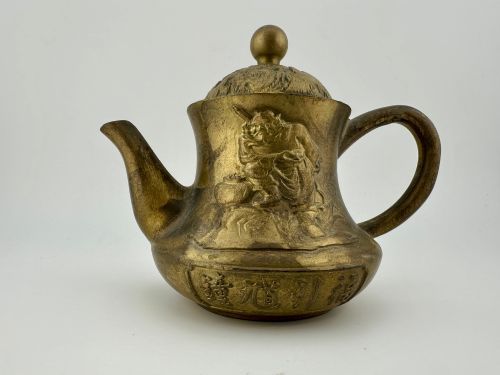
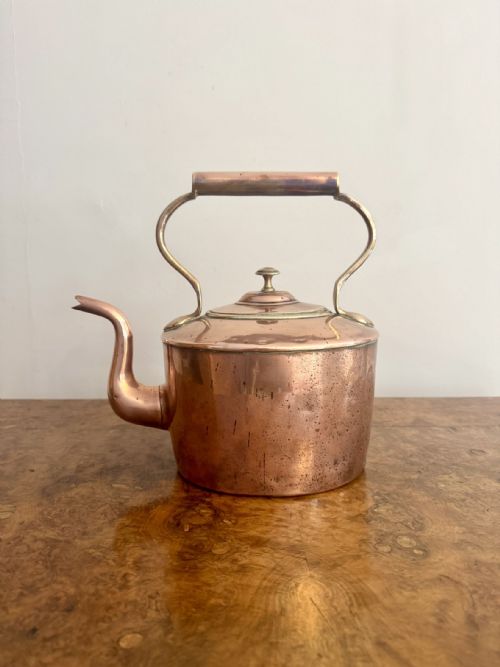
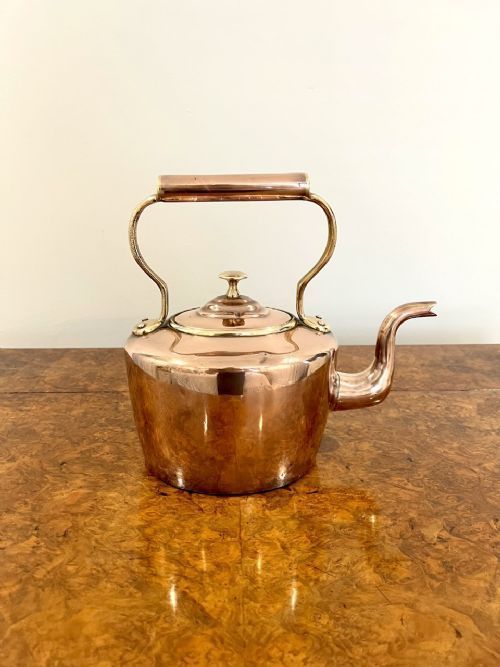
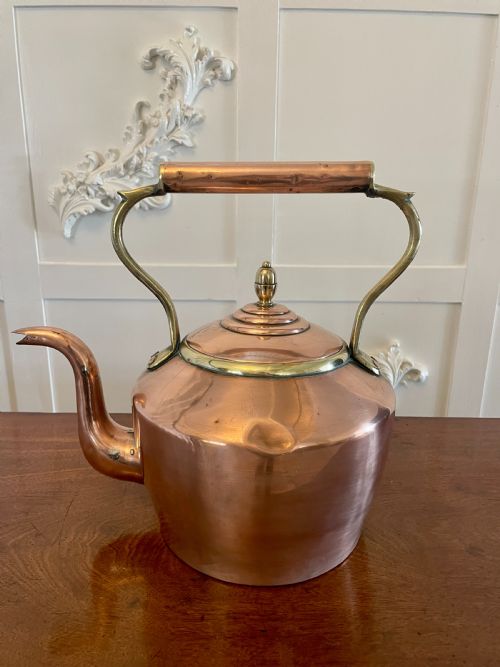
An antique brass teapot covers domestic tea and water vessels produced across the Georgian, Victorian, and later periods, alongside related vessels like kettles, spirit kettles, ewers, and trivets. When searching for an antique brass teapot, buyers encounter variations shaped by English, Chinese, Tibetan, and Dutch traditions.
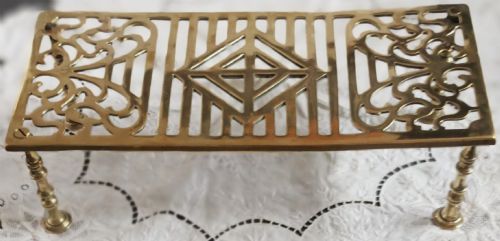
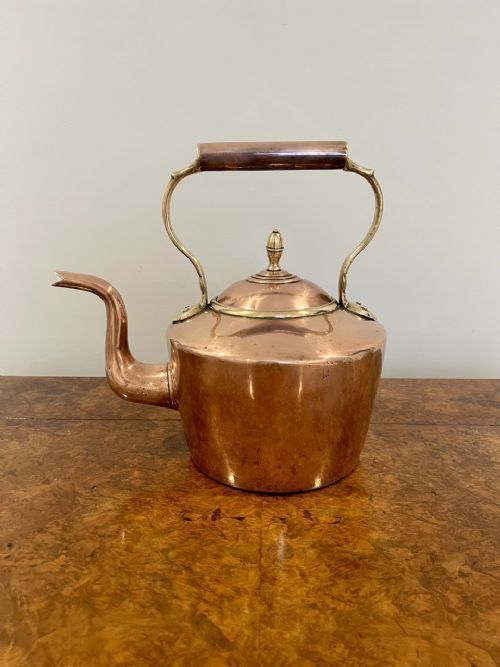
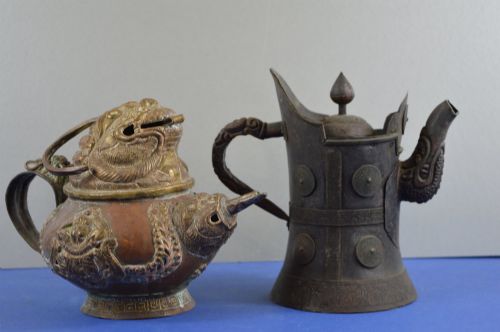
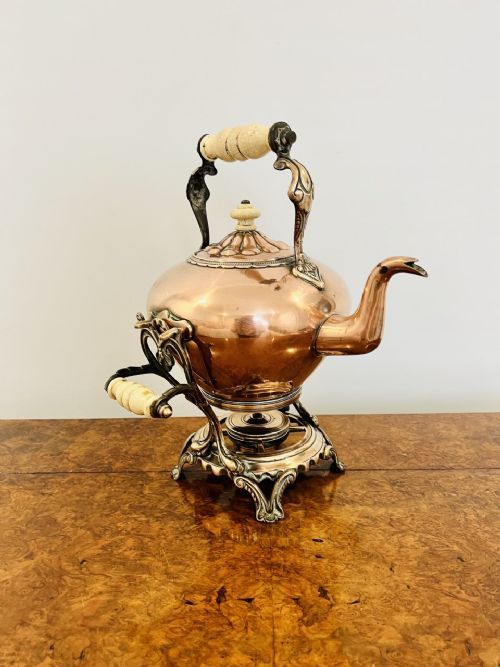
The pieces on this page span diverse forms, including round and oval copper and brass kettles, ceremonial monks' ewers, cloisonne enamel tea pots, and two-tier trivets. Many feature contrasting materials such as wood, bone, or ebonised handles, reflecting the practical domestic and ceremonial uses of their respective eras.
How they were made
The construction of these vessels relies primarily upon combinations of brass and copper, shaped into round, oval, or pear profiles. Artisans incorporated secondary materials such as wood, bone, and ebonised wood for handles and insulators, ensuring the user could handle the vessel safely while hot.
Surface finish and decoration vary widely, taking in polished metal, applied bronze details, and intricate cloisonne enamel work in navy blue and gold. Makers also utilised specific regional techniques, from Tibetan traditional smithing to traditional Chinese iconography and English domestic sheet metal construction.
Antique Brass Teapot Retail Price Guide 2026
Typical asking prices for brass teapot among the pieces listed under this phrase on Sellingantiques today, from the lower quarter to the upper quarter. They describe what is for sale here now, not the wider market.
The listings span periods from Georgian and George III to the Victorian era, the late Qing Dynasty, and mid-twentieth century designs.
What varies in quality
Quality rests upon the crispness of form, the integrity of construction where spout, body, and handle meet, and the choice of materials. Pieces retaining original stands, burners, or matching trivets command greater interest from collectors.
The fineness of decorative elements, such as dragon and phoenix motifs or cloisonne enamel work, separates standard utility items from finer workshop productions. The balance of the piece and the quality of the brass and copper sheet metal define the upper end of the range.
William Soutter & Sons
The Antique Brass Teapot Glossary
- Spirit kettle
- A tea kettle mounted on a metal stand above a small spirit burner used to keep water hot at the table. These often date from the Victorian period and include matching stands.
- Cloisonne enamel
- A decorative metalwork technique where enamel paste is applied within compartments created by soldered wires. This finish appears on pieces from the mid-twentieth century.
- Trivet
- A metal stand designed to support a hot kettle or teapot above a table or hearth. They take forms such as two-tier brass stands from the Victorian era.
- Ewer
- A large jug with a spout, used historically for carrying water. Ceremonial examples include Tibetan monk vessels paired with yak butter tea pots.
- George III
- The stylistic period spanning the reign of George III from seventeen sixty to eighteen twenty, noted here for copper and brass kettles.
Antique Brass Teapot: Frequently Asked Questions
How do I clean an antique brass teapot?
Maintenance depends on the surface finish and whether the metal is polished or patinated. Most owners prefer to preserve the aged surface rather than polishing it to a bright shine.
Avoid harsh chemical dips that strip away historical depth. Gentle cleaning with a soft cloth removes dust without harming the metal.
Can I use an antique brass teapot to boil water?
Many of these vessels were designed for functional domestic use, particularly the heavy copper and brass kettles from the Georgian and Victorian eras. Spirit kettles on stands were built specifically to heat water at the table.
It is wise to inspect the internal lining and joints for soundness before exposing an older vessel to direct heat.
What is the difference between a kettle and a teapot?
A kettle is primarily designed for boiling water over a heat source, featuring a sturdy handle and a fixed lid. A teapot is traditionally used for steeping and serving tea from leaves.
In older terminology, the two terms sometimes overlap, particularly when describing vessels intended for spirit stands or ceremonial use.
How do I date an antique brass teapot?
Dating relies on stylistic clues, construction methods, and materials such as ebonised wood handles or cloisonne enamel decoration. Georgian pieces often display different proportions and joining techniques compared to Victorian examples.
Makers' marks, when present, provide a direct link to specific firms or periods of production.