




Antique Brass Stationery Set
These antique brass stationery set pieces bring order to a correspondence desk with period weight and material.
Antique Brass Stationery Set
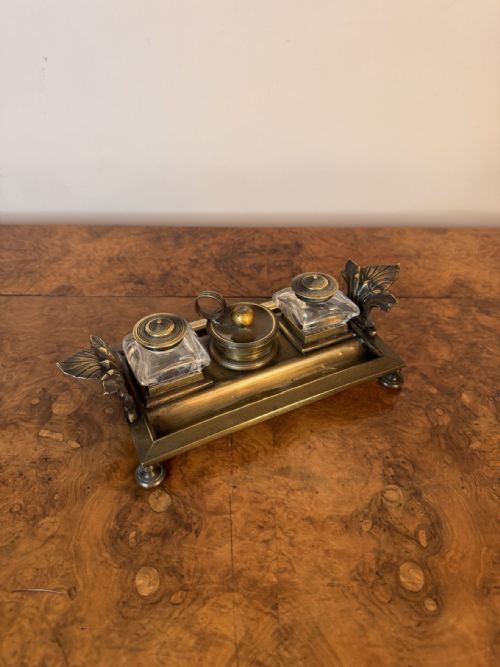
An antique brass stationery set comprises desk accessories designed to hold writing instruments, ink, and paper. The pieces you encounter on this page span the nineteenth century through the Edwardian era, incorporating various companion items.
The objects frequently appear in forms such as inkstands, desk tidies, and writing slopes. Brass serves as the primary structural or decorative metal across these nineteenth-century and Edwardian examples.
Victorian and Edwardian workshops produced these sets to organise correspondence materials upon a library or writing table. Walnut, coromandel, and marble often provide a contrasting base for the metalwork.
How they were made
Maker's workshops cast brass components and mounted them onto wooden bases formed from walnut, oak, coromandel, or rosewood. Ormolu, glass, porcelain, and leather frequently accompany the metal elements within a single set.
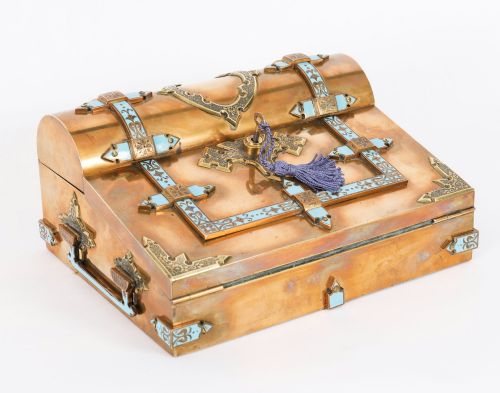
Surface decoration relies on techniques such as enamelling, agate cabochon mounting, and hand-painted porcelain insets. Wood surfaces receive precise inlay work, while bronze elements take on gilded finishes.
Antique Brass Stationery Set Retail Price Guide 2026
Typical asking prices for brass stationery set among the pieces listed under this phrase on Sellingantiques today, from the lower quarter to the upper quarter. They describe what is for sale here now, not the wider market.
Cats at play watch over your correspondence in at least one gilded bronze desk set.
What varies in quality
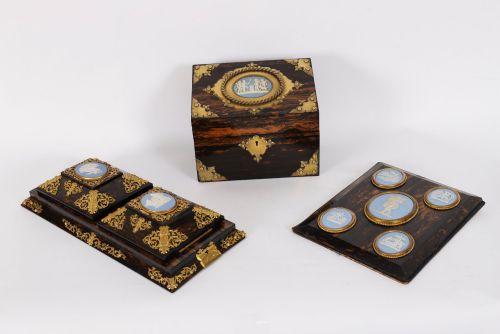
The distinction between standard desk accessories and finer examples rests in the complexity of the materials and the integration of components. Sets incorporating coromandel wood, jasperware, or hand-painted porcelain demonstrate higher manufacturing ambition.
Detailing in the brass casting and the inclusion of matched multi-piece configurations elevate certain desk stands. The presence of secondary materials like mother-of-pearl or fitted drawers distinguishes the more elaborate productions.
Edwards and Jones
The Antique Brass Stationery Set Glossary
- Ormolu
- Gilded bronze or brass applied to furniture and desk accessories. This decorative treatment provides a bright golden finish to metal mounts.
- Coromandel
- A dense, dark timber imported from Asia, often used for luxury nineteenth-century desk boxes. Its distinctive grain contrasts sharply with brass mounts.
- Inkstand
- A tray or stand holding inkwells and sometimes pen trays or sanders. These pieces formed the centrepiece of a writing desk.
- Writing Slope
- A portable desk with a slanted writing surface that opens to reveal compartments for paper and pens. They often incorporate brass banding and lock mechanisms.
- Jasperware
- A type of fine stoneware developed by Josiah Wedgwood, frequently set into brass or ormolu frames on desk pieces. It is recognisable by its matte relief figures.
Antique Brass Stationery Set: Frequently Asked Questions
What items belong in a desk set?
A desk set typically includes inkwells, letter holders, and pen trays arranged on a shared base or mat. Additional items like blotters and small drawers often accompany these pieces.
These collections were designed to keep correspondence tools orderly on a nineteenth-century writing table. Individual pieces often match in material and decorative style.
How do I date a brass stationery set?
Dating relies on stylistic clues, manufacturing methods, and the combination of secondary materials like coromandel or porcelain. Victorian sets often display heavier cast ornamentation, while Edwardian pieces lean towards lighter proportions.
Material choices also offer chronological guidance, with specific woods and ceramic insets pointing to particular decades of the nineteenth or early twentieth century.
What woods were used for bases?
Walnut, oak, rosewood, and coromandel frequently serve as the foundational base for brass desk accessories. Exotic timbers like coromandel were reserved for more luxurious productions.
These woods provide weight and visual contrast to the polished brass and ormolu mounts. Inlays of lighter woods or brass stringing often decorate the wooden surfaces.
Were these sets used at home or in offices?
These stationery sets belonged primarily to domestic libraries, private studies, and drawing rooms. They served households where letter writing was a daily social and administrative duty.
Their decorative quality ensured they remained visible on top of a desk rather than stored away. Wealthier households utilised sets incorporating marble, porcelain, and precious timbers.