

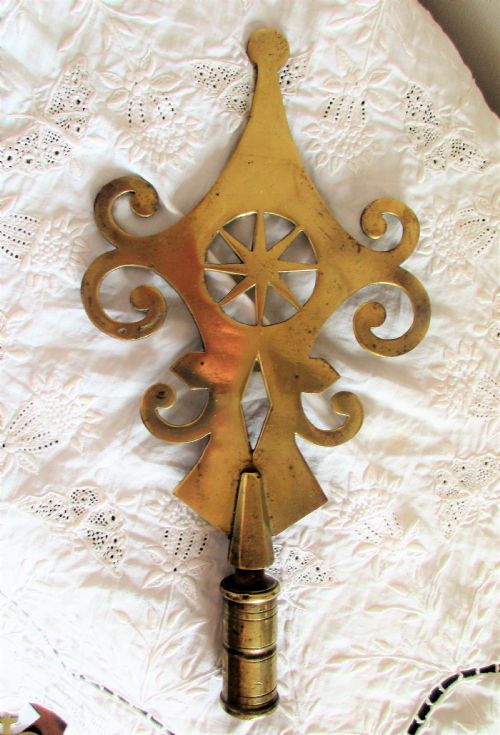


Antique Brass Pole
An antique brass pole supports an adjustable screen or lamp, offering both warmth control and refined decoration for a period room.
Antique Brass Pole
An antique brass pole forms the vertical shaft of fire screens, standard lamps, and candle shields designed to regulate heat or light in traditional interiors. These functional supports rise from heavy weighted bases to hold sliding panels of needlework, embroidery, or gilt metal.
The pieces appearing on this page span the Georgian, Regency, William IV, and Victorian periods, showcasing a mix of polished brass, gilt bronze, and turned timber. Buyers will most frequently encounter pole screens featuring rosewood or mahogany stands paired with wool needlepoint panels.
Makers utilised the central brass rod to allow height adjustment, a mechanical feature that remains central to the utility of these surviving objects. Alongside standard screens, variations include converted standard lamps and decorative banner hangers from the nineteenth century.
Materials and construction
Makers combined turned timber shafts of rosewood or mahogany with cast brass poles and mounts, securing the central rod to heavy weighted bases for stability. Gilt brass and giltwood elements provided decorative contrast on formal Regency and Victorian examples.
Panels suspended on the poles display intricate wool needlepoint, embroidery, or poker work held within timber or metal frames. Mechanical thumb screws and sliding collars enabled users to raise or lower the shield to block hearth heat or candlelight.
Antique Brass Pole Retail Price Guide 2026
Typical asking prices for brass pole among the pieces listed under this phrase on Sellingantiques today, from the lower quarter to the upper quarter. They describe what is for sale here now, not the wider market.
Judging quality and execution
Superior examples distinguish themselves through the crispness of the brass turning and the integrity of the adjustable sliding mechanism. Finely chased mounts and original gilding elevate a piece above standard production.
The needlework panel serves as a primary indicator of quality, where hand-stitched wool needlepoint or detailed poker work displays superior artistic execution. Retaining the original pole and panel combination without later adaptations preserves the integrity of the object.
The Antique Brass Pole Glossary
- Pole screen
- A standing firescreen featuring an adjustable vertical brass pole that holds a sliding needlework or tapestry panel. This device allowed occupants to shield their faces from the intense heat of an open coal fire.
- Standard lamp
- A tall floor lamp utilising a central pole to support a light source, occasionally adapted from earlier lighting or heating implements. These fixtures provide ambient illumination in period settings.
- Needlepoint
- A type of canvas work embroidery executed with wool yarn, commonly mounted within the frames of nineteenth-century screens. This textile art often depicts floral motifs or historical scenes.
- Poker work
- The technique of decorating wood or leather by scorching the surface with a heated metal tool. Surviving panels demonstrate precise shading and linear detail.
- Gilt brass
- Metal treated with a thin layer of gold or gold-coloured alloy to impart a bright, reflective finish. This treatment protects the underlying brass from tarnishing.
Antique Brass Pole: Frequently Asked Questions
What is an antique brass pole used for?
These poles support adjustable screens, banners, or lamps designed to control hearth heat and direct light in historic interiors.
Occupants slid the mounted panel up or down the metal shaft to protect their faces from open fires or candlelight.
How do you adjust the height?
A thumb screw or friction collar fitted to the collar of the panel allows the screen to slide along the vertical brass rod and lock into position.
This mechanism requires gentle handling to prevent wear on the original metal threads.
Can these be used as modern lamps?
Certain pieces originate as period pole screens that have undergone careful conversion to standard lamps.
These adaptations integrate electrical wiring while retaining the antique brass shaft and timber base.