


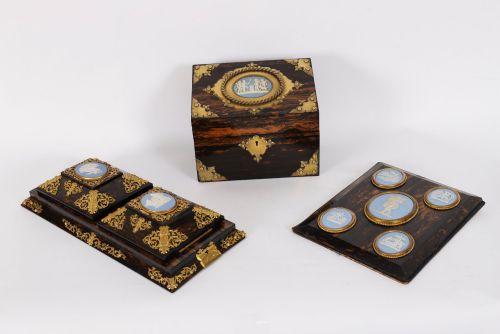


Antique Brass Plaque Box
These antique brass plaque box examples are solid metal-bound containers that collectors prize for their substantial weight and period craftsmanship.
Antique Brass Plaque Box
When you search for an antique brass plaque box, you are looking at sturdy metal-bound containers and strongboxes that often date from the Victorian and Georgian periods. These pieces utilise robust construction methods designed to secure valuables or documents.
The versions most likely to be met on this page include iron-bound silver boxes, heavy safes, and wooden presentation chests reinforced with brass fittings and decorative plaques. They reflect a practical era of domestic and institutional security.
How they were made
Maker workshops built these containers using heavy cast iron, oak, and coromandel timbers, combining them with solid brass fittings and ormolu mounts. The structural integrity relies on substantial metal banding and secure internal locking mechanisms.
Surface decoration frequently incorporates cast iron elements, gilt metal relief work, and velvet linings. Artisans secured plaques and mounts with precision to ensure both durability and decorative appeal.
Antique Brass Plaque Box Retail Price Guide 2026
Typical asking prices for brass plaque box among the pieces listed under this phrase on Sellingantiques today, from the lower quarter to the upper quarter. They describe what is for sale here now, not the wider market.
The listings span the eighteenth, nineteenth, and twentieth centuries, incorporating materials like jasperware, coromandel, and cast iron.
What varies in quality
The distinction between standard utility boxes and exceptional pieces lies in the complexity of the internal mechanisms and the refinement of the metal plaques. Heavier gauge brass and intricate casting separate utilitarian containers from high-status presentation items.
The integration of precious secondary materials, such as coromandel wood or fine ormolu mounts, indicates higher workshop standards. Better examples retain their original operational locks and unpolished surface patination.
Edwards & Jones·Milners of Liverpool
The Antique Brass Plaque Box Glossary
- Ormolu
- Gilded bronze or brass applied to decorative objects and furniture. It provides a bright golden finish that resists tarnishing over time.
- Coromandel
- A dense, dark cabinet wood imported from Asia, often used for luxury nineteenth-century boxes. Its striking grain makes it easily identifiable.
- Jasperware
- A type of fine stoneware developed by Josiah Wedgwood, characterised by a matte surface and classical raised figures. It frequently appears inset into nineteenth-century desk sets and boxes.
- Toleware
- Enamelled or japanned metalware produced in imitation of Asian lacquer techniques. It offers a durable painted surface often found on military hats and utility boxes.
- Patent safe
- A heavy iron security container manufactured under a specific industrial patent. These feature specialised locking mechanisms designed to protect valuables from fire and theft.
Antique Brass Plaque Box: Frequently Asked Questions
What are antique brass plaque boxes made from?
These containers are constructed from robust materials including cast iron, oak, coromandel, and heavy brass. Artisans often added velvet interiors and gilt metal plaques for visual contrast.
The combination of structural wood or iron with bright brass fittings ensured both physical security and a handsome appearance suitable for a desk or drawing room.
How do I identify a Victorian box?
Victorian examples frequently display heavy iron banding, specific institutional inscriptions, or inset brass maker plaques. The use of coromandel wood and ormolu mounts also points directly to this era.
Examining the internal hinges and the style of the lock mechanism helps confirm the nineteenth-century manufacturing period.
Were these boxes used for travel?
Many of these metal-bound chests and presentation boxes served as secure receptacles for transport or safe home storage. Military hat boxes and regiment presentation cases were built to withstand rigorous movement.
Their heavy construction protected valuable documents, silver, and jewellery during transit across the British Empire and at home.
How should I care for brass and iron?
Maintain the metal surfaces by dusting them gently with a dry, soft cloth to prevent the accumulation of moisture. Avoid harsh commercial polishes that can strip the historic patination from the brass plaques and iron banding.
Keep the wood or leather elements conditioned in stable room temperatures away from direct sunlight.