






Antique Brass Jar
These antique brass jar selections bring together metalwork and lidded forms from the eighteenth to the early twentieth century.
Antique Brass Jar
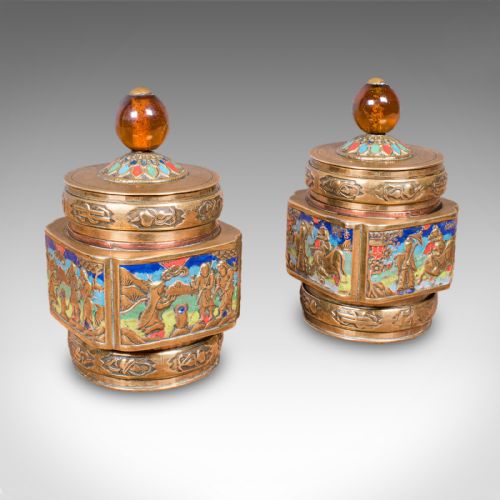
When searching for an antique brass jar, buyers encounter lidded vessels, tea caddies, spice pots, and decorative containers originating from Victorian, Edwardian, and earlier periods. The selection spans domestic English metalware alongside items influenced by Qing Dynasty, Meiji Period, and Chinoiserie styles.
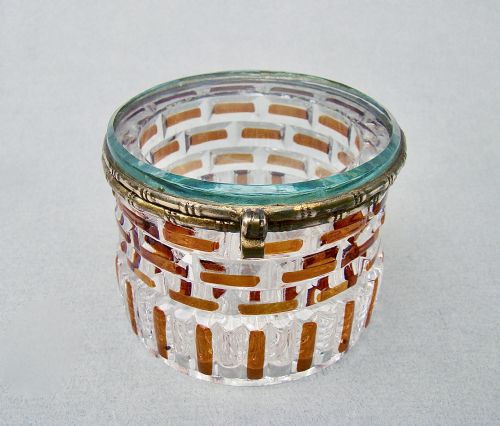
Vessels constructed from brass frequently share space in this category with glass, enamel, porcelain, and bronze pieces that serve similar lidded or container functions. These objects reflect the varied material tastes of the nineteenth century, ranging from utilitarian apothecary displays to ornamental receptacles.
Materials and Construction
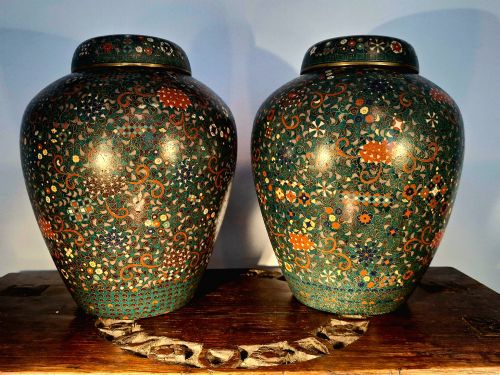
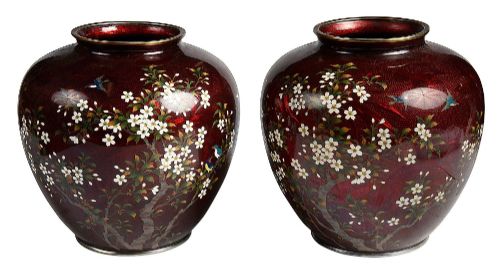
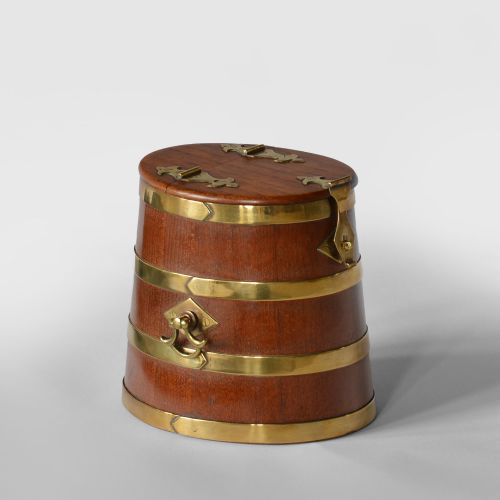
Metal vessels utilise brass and bronze, shaped through casting, hammering, and turning, sometimes paired with wooden coopered elements or brass binding. Enamel work, cloisonné, and lacquer introduce applied colour and pattern onto metal or wood foundations.
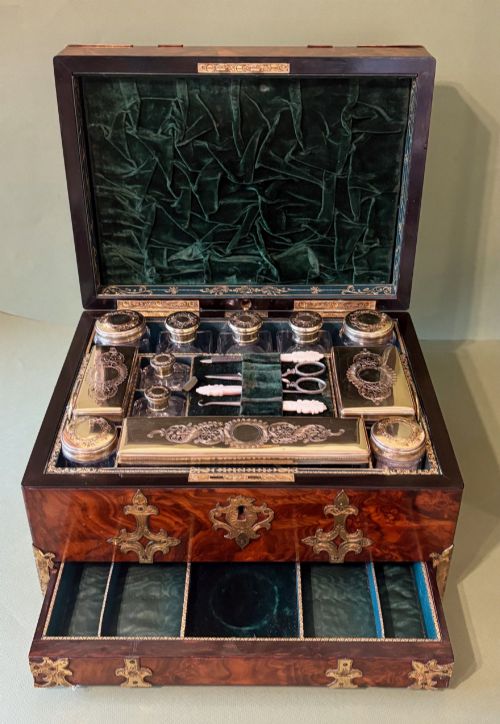
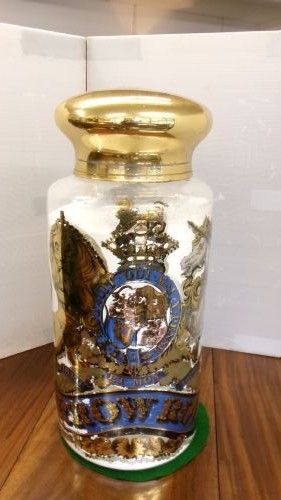
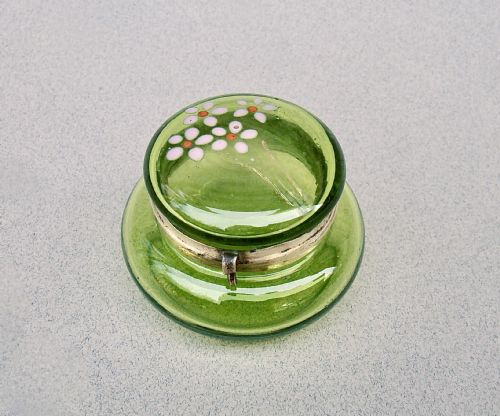
Glass components rely on hand-blown and moulded techniques, visible in apothecary displays, spirit dispensers, and lidded trinket boxes. Porcelain and ceramic elements incorporate underglaze blue and famille verte decoration.
Antique Brass Jar Retail Price Guide 2026
Typical asking prices for brass jar among the pieces listed under this phrase on Sellingantiques today, from the lower quarter to the upper quarter. They describe what is for sale here now, not the wider market.
A carved linden wood tobacco box takes the exact shape of a brown bear holding its daily humidor.
Distinctions in Quality
Quality rests upon the crispness of casting in the metal mounts, the precision of cloisonné wirework, and the clarity of hand-blown glass. Finer examples maintain original lids, matching pairs, and intact surface decoration without excessive wear.
The sophistication of decorative detail, such as hand-painted enamel or finely carved motifs, separates standard utility items from superior cabinet pieces.
The Antique Brass Jar Glossary
- Cloisonne
- Enamel decoration applied within soldered wire compartments on a metal base. This technique creates detailed patterns of birds, mosaics, and floral motifs.
- Apothecary jar
- A utilitarian vessel designed to hold medical ingredients or drugs in a shop setting. These often feature glass bodies with matching covers.
- Ginger jar
- A lidded ceramic or metal container originally used for storing spices. They typically feature rounded bodies and flat or domed lids.
- Champleve
- An enamel technique where troughs are gouged out of a metal surface to hold coloured paste. The resulting piece shows thick metal lines dividing the enamelled areas.
- Mortar and pestle
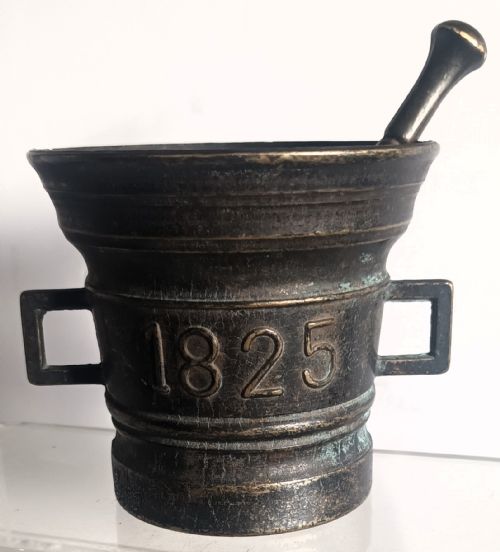
- A heavy bowl and club-shaped tool used for grinding substances. Examples in the evidence are cast in bronze or brass during the Georgian period.
Antique Brass Jar: Frequently Asked Questions
What were antique brass jars used for?
These vessels served various domestic and commercial storage needs, holding dry goods, spices, or tobacco. Many functioned as decorative mantel pieces or container boxes in nineteenth-century rooms.
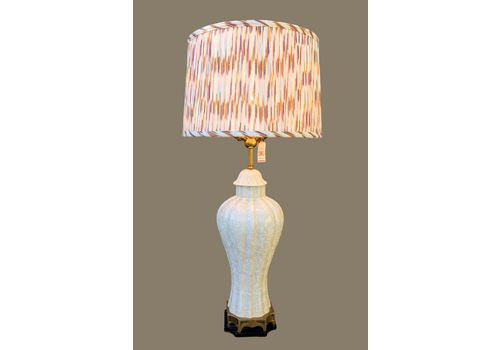
Over time, some lidded jars and tobacco containers were adapted into table lamps by wiring them for electricity while retaining their original form.
How do I date a Victorian brass piece?
Dating relies on stylistic markers, manufacturing techniques, and material combinations typical of the reign between eighteen thirty-seven and nineteen zero one. Victorian items often mix brass mounts with glass, wood, or enamel.
Assessing the wear patterns, construction seams, and any accompanying hallmarks helps narrow down the decade of production.
Are these jars made entirely of brass?
While the search term highlights brass, the actual material palette includes bronze, copper, glass, porcelain, and wood. Many pieces combine brass with other mediums, such as brass-bound wooden boxes or brass mounts on glass jars.
Enamel and lacquer are frequently applied to metal or wooden cores to add decorative colour.
How should I clean an antique brass jar?
Maintenance requires gentle dusting with a soft cloth to protect the surface finish and any applied patina. Aggressive chemical polishes should be avoided because they strip away age and historical character.
If the piece incorporates enamel, glass, or lacquer, care must be taken to keep cleaning agents away from those delicate areas.