
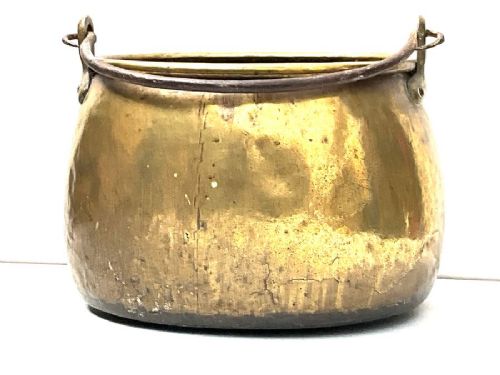
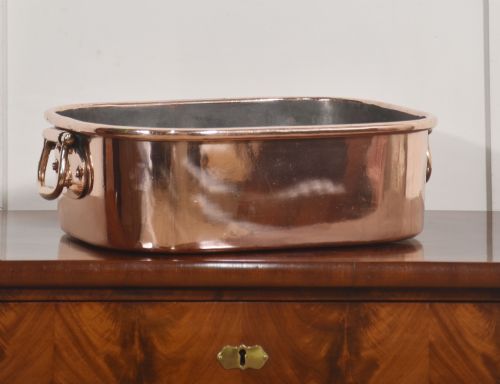


Antique Brass Handled Pan
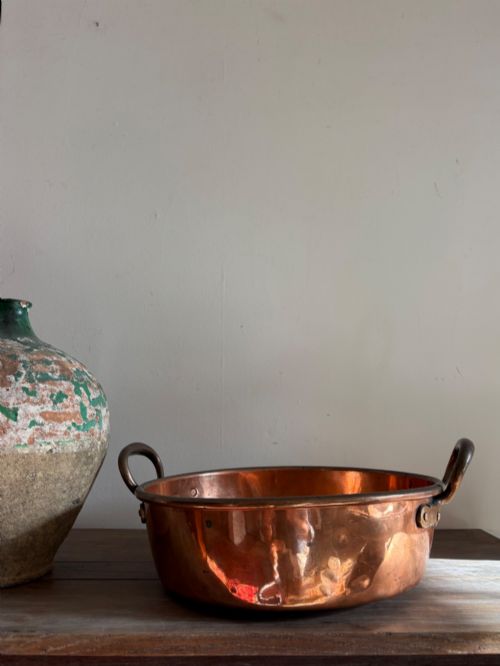
These antique brass handled pan pieces are robust metal domestic utensils crafted for the kitchen and hearth across the eighteenth and nineteenth centuries.
Antique Brass Handled Pan
An antique brass handled pan encompasses utility vessels ranging from preserving pans and jam pales to fish kettles and chestnut roasters. You will most frequently encounter nineteenth-century copper and brass kitchen vessels alongside heavier Georgian display pieces and iron-handled skillets.
Makers shaped these utilitarian objects for serious domestic work before they found their way into fireside and rustic farmhouse settings. The forms include swing-handled cauldrons, cream setting pans, and warming pans featuring sturdy metal handles designed for hanging or carrying.
The materials span cast brass, bronze, and copper paired with iron and wrought iron fittings, reflecting the practical needs of period kitchens. Victorian country and French provincial styles dominate the selection, showing clear marks of heavy use over generations.
Materials and construction
Artisans hammered and riveted sheet copper and brass to form deep bodies for preserving pans and kettles, often adding sturdy cast brass handles with iron fixings. Bronze and cast brass served for heavier skillets and chambersticks, poured into moulds before finishing by hand.
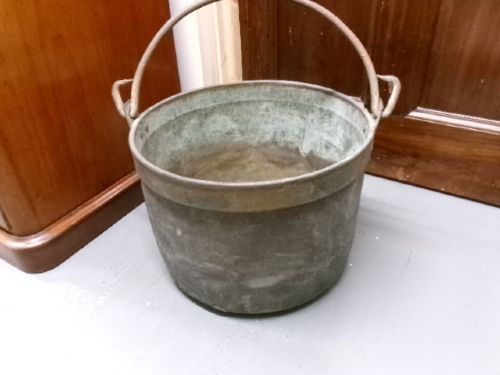
Iron and wrought iron supplied the durable drop handles and hanging bails necessary to lift heavy loads of boiling jam or hot coals. Tinsmiths occasionally lined interiors to protect foodstuffs from reactive metals during cooking.
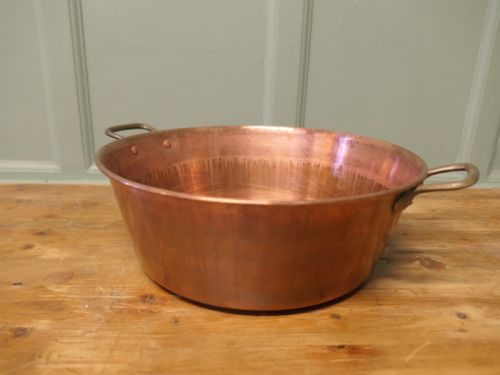
Many a Victorian kitchen maid relied on these heavy swing-handled copper pans to boil enough jam to sweeten a very large household.
Assessing quality in metal vessels
Wall thickness and weight dictate the durability and status of a vessel, with heavy gauge metal separating utilitarian workshop pieces from decorative items. Skilful hand-beating and clean riveting indicate superior workshop production rather than hurried mass output.
Original handles, fixings, and unpolished patinas preserve the integrity of a piece, whereas modern replacements diminish historical value. Surviving maker marks or balanced proportions elevate simple kitchenware into desirable collector specimens.
The Antique Brass Handled Pan Glossary
- Preserve pan
- A wide, open vessel designed for boiling fruit and sugar. These pans feature rounded bases to facilitate even stirring and prevent burning.
- Chestnut roaster
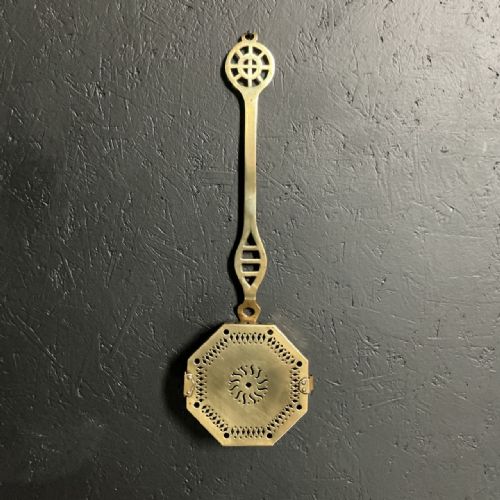
- A long-handled pan with a pierced lid used over open coals. This utensil allowed safe roasting of nuts without scorching.
- Fish kettle
- An elongated vessel equipped with a lid and internal drainer. It accommodated whole fish for poaching in domestic kitchens.
- Skillet
- A short-legged metal cooking pot with a long side handle. It stood directly in the hearth coals for frying and stewing.
- Warming pan
- A lidded metal pan filled with hot embers and swept between bedsheets. Long wooden or metal handles kept the user safe from burns.
Antique Brass Handled Pan: Frequently Asked Questions
How were these pans originally used in the home?
These vessels served essential daily duties in the kitchen and hearth, from boiling large batches of fruit preserves to heating beds and roasting chestnuts over open fires.
Heavier pans managed heavy liquids and preserves, while specialised items like fish kettles and skillets handled specific culinary tasks before modern stoves changed domestic cooking habits.
Can I still cook with an antique brass handled pan?
While many of these vessels remain physically robust, modern use requires careful inspection of the interior metal lining and cleaning history.
Unlined copper or exposed brass can react negatively with certain foods, meaning many collectors prefer to display these items as fireside accessories rather than active cookware.
How do I clean and maintain antique brass and copper?
Maintenance usually involves gentle washing with warm soapy water and drying thoroughly to prevent spotting or active corrosion.
Harsh chemical abrasives strip away the dark historical patina that collectors value, so gentle care preserves both the appearance and the metal surface.
How do I tell an 18th century pan from a Victorian one?
Georgian pieces often display heavier cast construction, hand-beaten surfaces, and specific hearth forms like skillets and warming pans.
Victorian pieces frequently include mass-produced copper jam pales, swing-handled cauldrons, and stamped maker details that reflect industrial manufacturing advances.