

Antique Brass Floor Chime
An antique brass floor chime provides deep acoustic resonance through suspended metal tubes or bells housed inside tall wooden clock cases.
Antique Brass Floor Chime
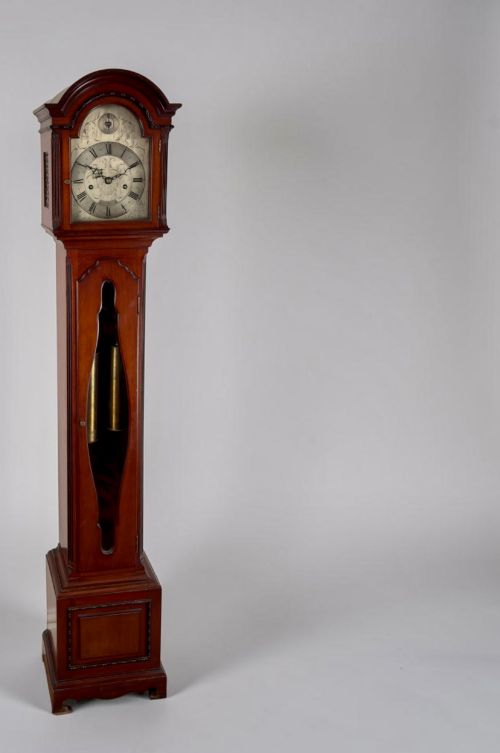
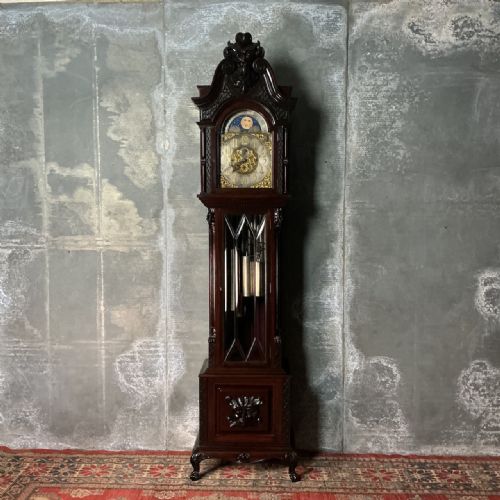
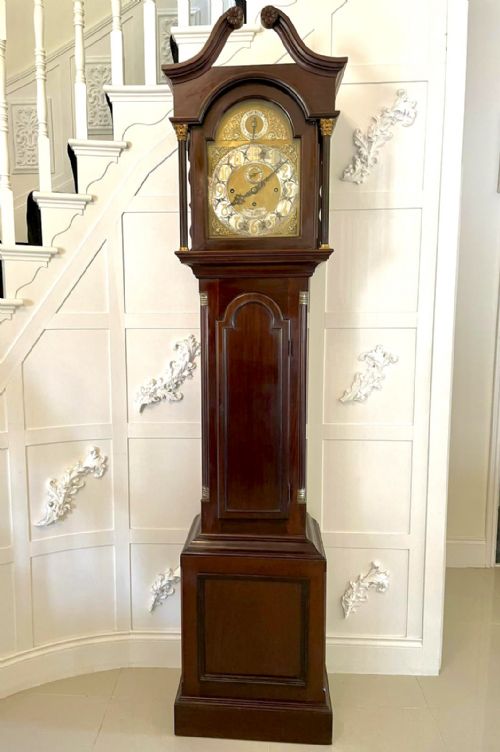
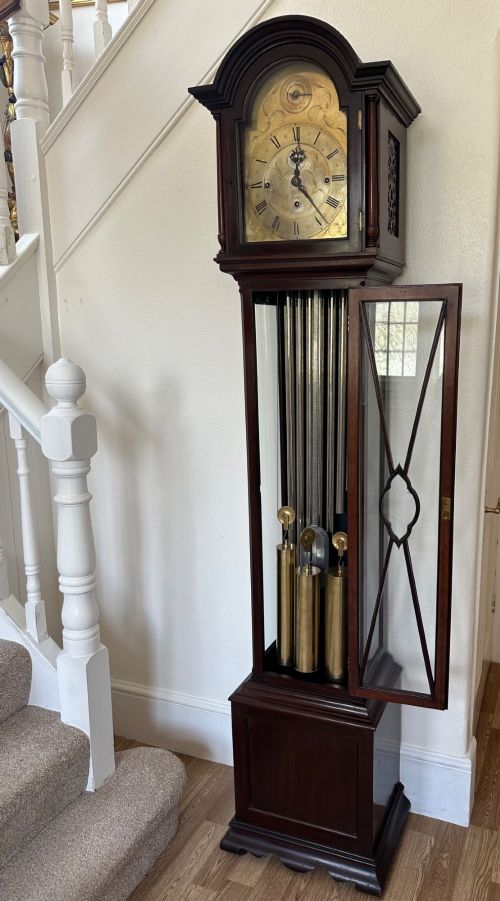
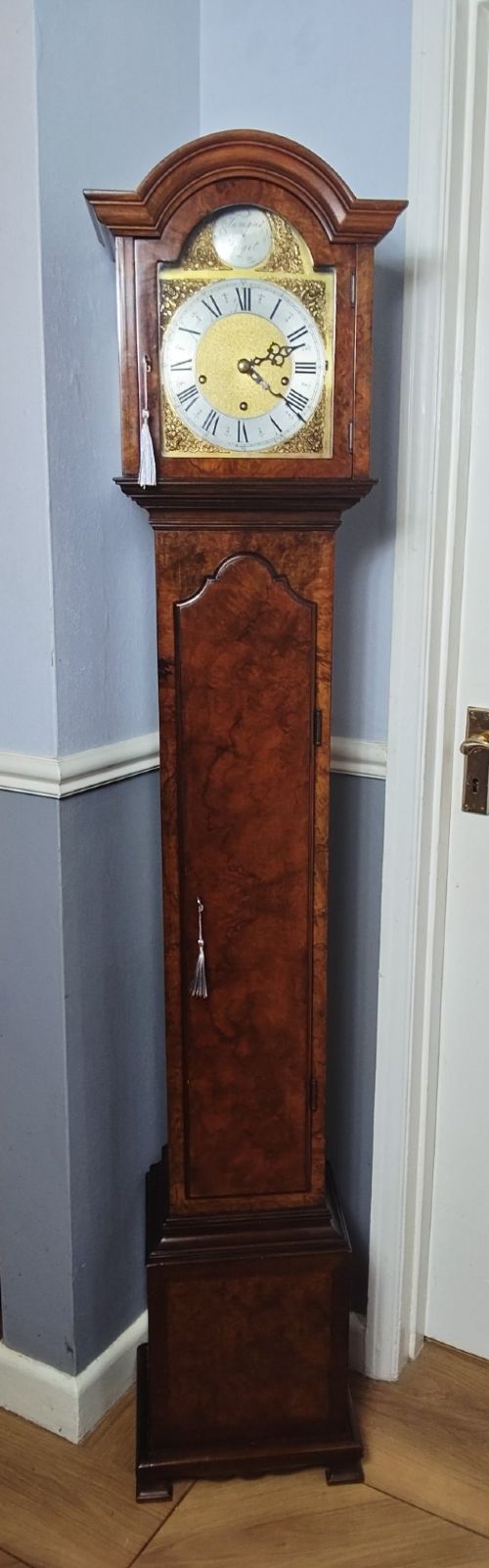
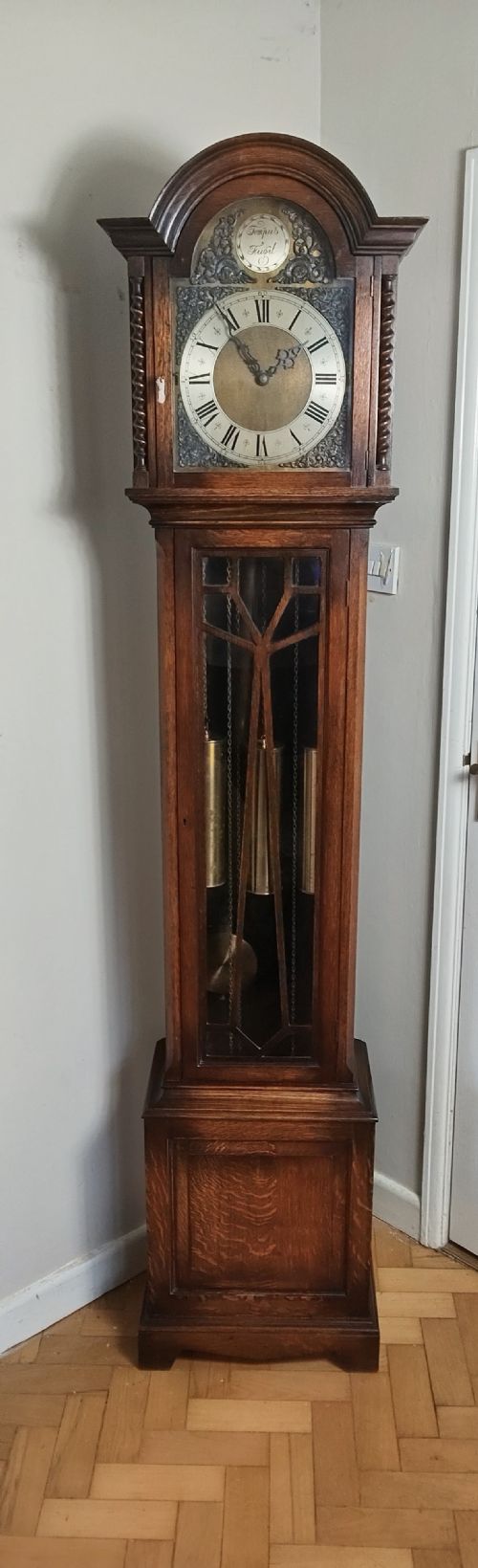
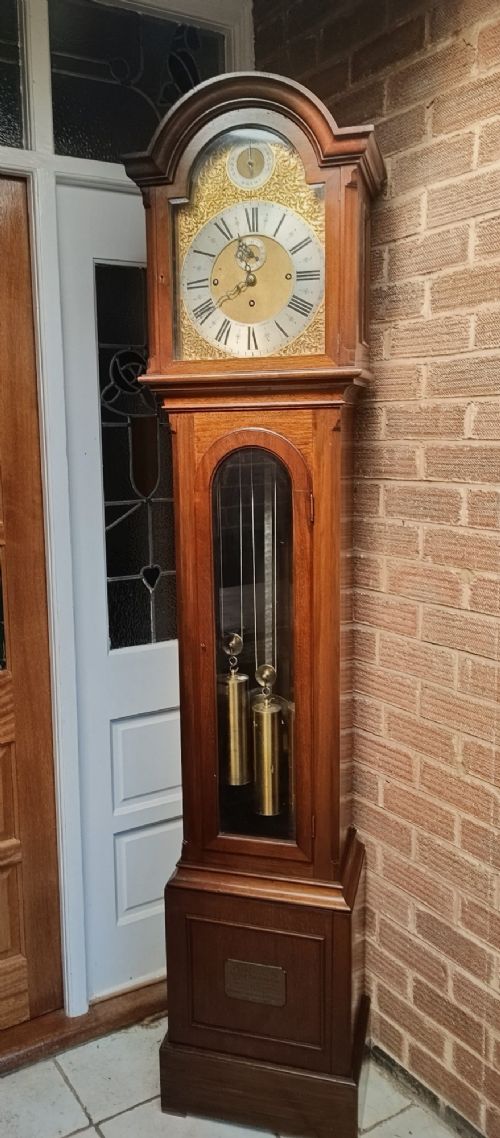
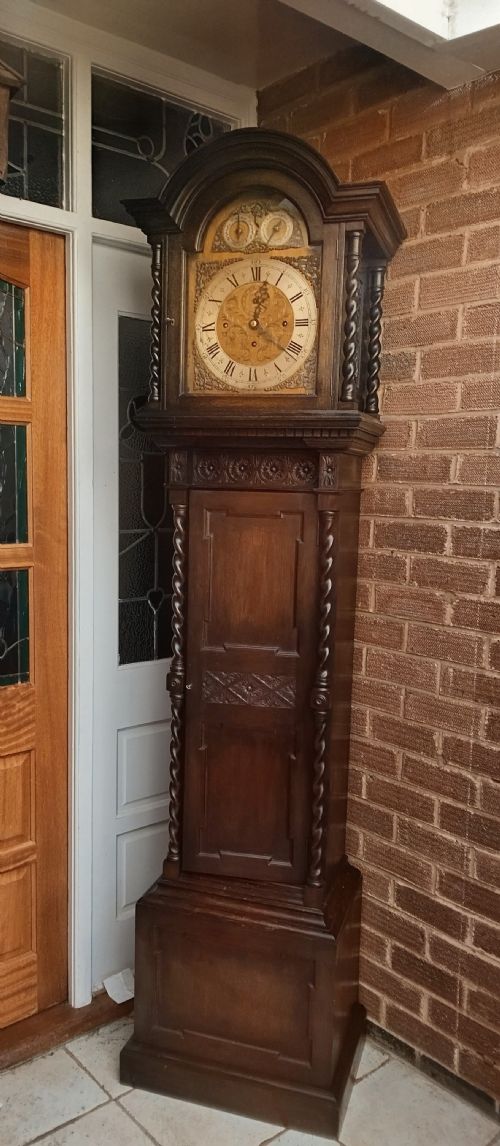
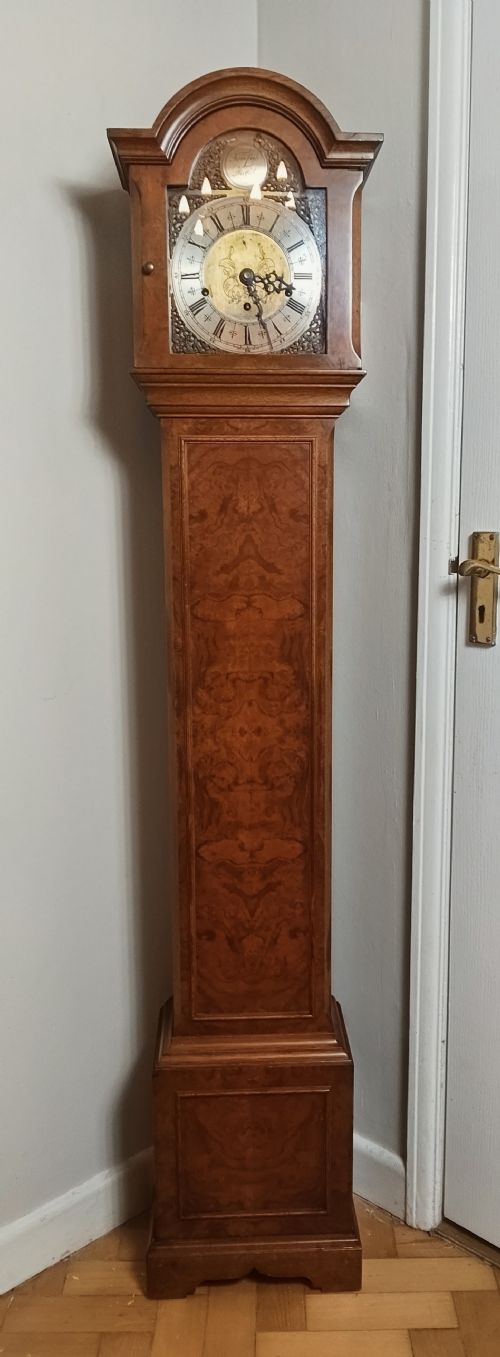
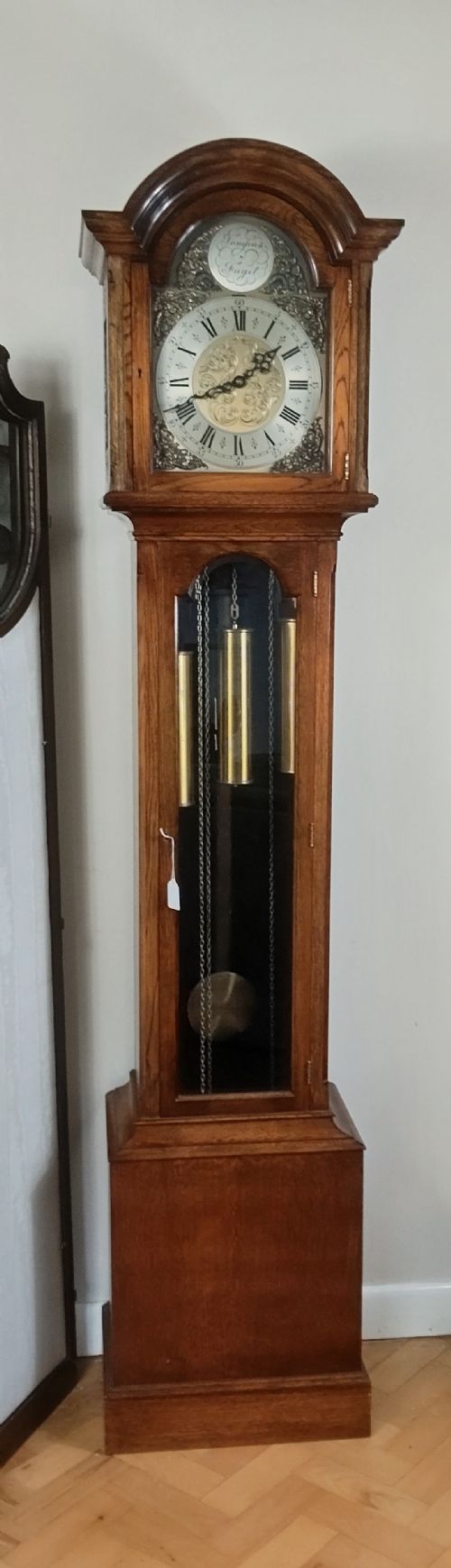
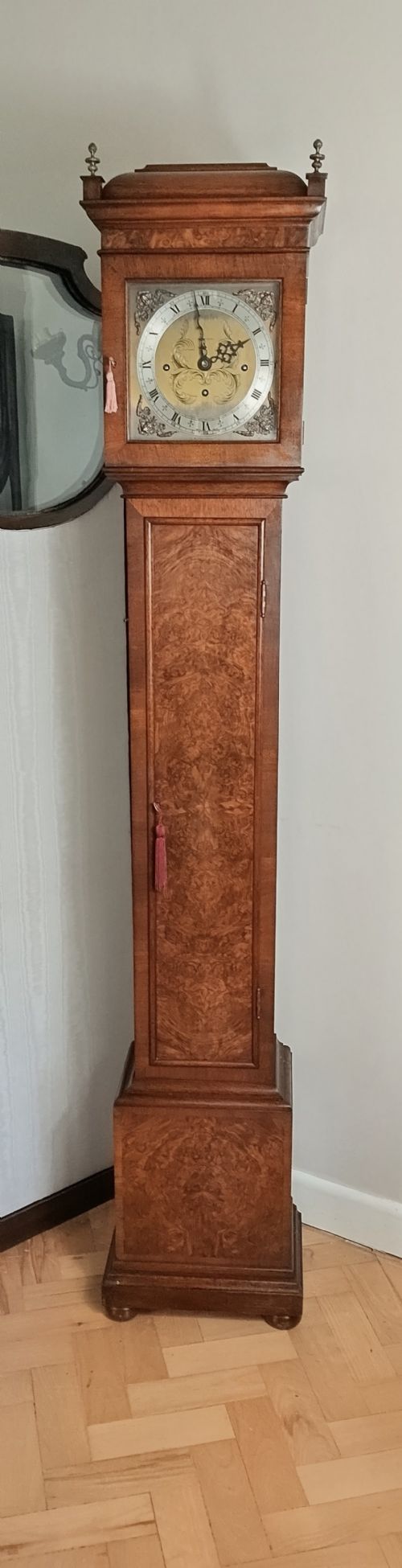
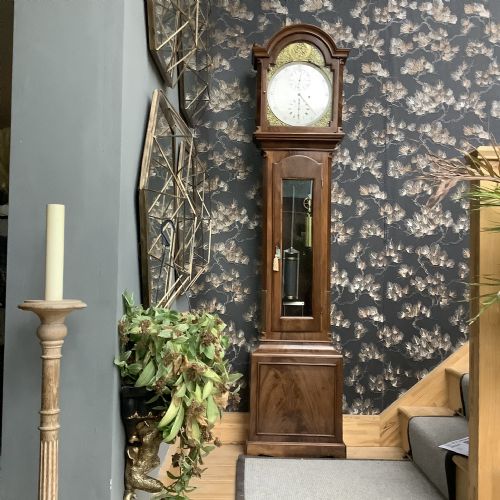
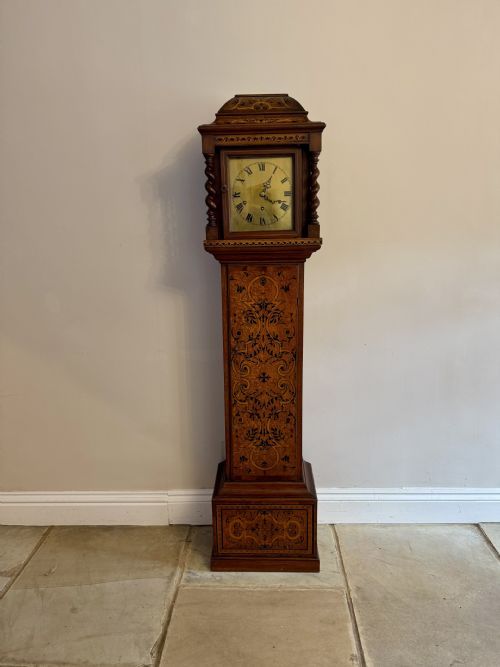
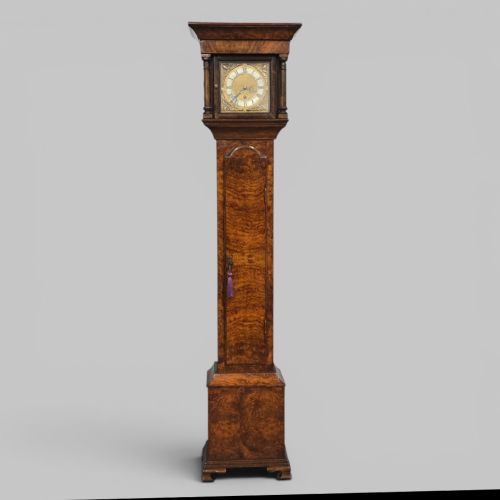
An antique brass floor chime brings together tall standing timepieces and resonant acoustic gongs, appearing most often here as Edwardian and Victorian longcase clocks, grandfather clocks, and grandmother clocks. These floor-standing pieces combine precision gear movements with musical chime mechanisms designed to sound the hour or quarter-hour using tuned brass tubes and bells.
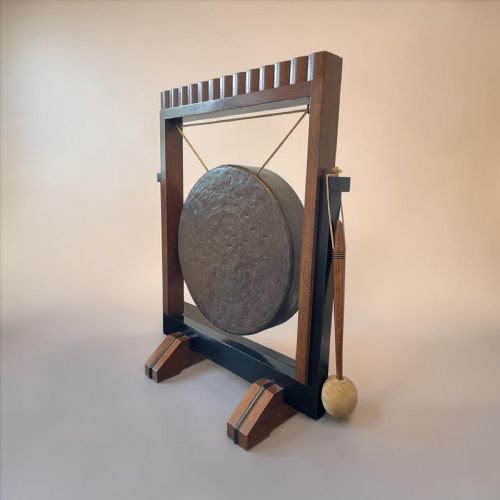
The selection also encompasses floor-standing dinner gongs mounted in heavy frames, serving the same sonic purpose within domestic spaces. Buyers encountering this search phrase find substantial floor pieces that merge cabinet-making with metal bell founding.
Originating across the nineteenth and twentieth centuries, these floor chimes reflect shifting interior scales from monumental Victorian and Gothic Revival cases down to slender Edwardian and Art Deco proportions.
Materials and construction
Cases combine structural timbers such as oak, mahogany, walnut, and burr walnut, frequently ornamented with satinwood inlay, quarter veneering, and marquetry. These woods house intricate mechanical movements driven by heavy weights and brass gears.
Sound production relies upon solid brass bells, tubular bell assemblies, and gong bars struck by internal hammers linked to musical trains. Frames for floor gongs also incorporate wrought iron alongside carved wood elements.
Some dinner gongs come equipped with matching mallets, ready to summon reluctant household members to the dining table.
Evaluating quality and execution
Excellence in these pieces rests upon the sophistication of the chime movement and the complexity of its musical capabilities, such as multi-tune cylinders or multiple tubular bells. Maker reputation and specialist retail provenance elevate individual examples.
Cabinetwork standards distinguish the better pieces, seen in figured burr walnut veneers, meticulous marquetry inlay, and substantial proportions that maintain structural integrity around heavy mechanical works.
Gillett & Johnston of Croydon·Winsor Bishop Norwich·Elliott·Bravingtons·Enfield·Camerer Cuss & Co
The Antique Brass Floor Chime Glossary
- Longcase clock
- A tall pendulum clock enclosed in a wooden case that stands directly on the floor. These items are frequently called grandfather clocks.
- Grandmother clock
- A smaller, more slender version of the traditional longcase clock developed in the twentieth century. They fit lower ceiling heights while retaining weight-driven movements.
- Tubular bell
- A hollow metal cylinder suspended within a clock case to produce a deep chime when struck by a hammer. Sets of these tubes replaced traditional cast bells in many twentieth-century designs.
- Dinner gong
- A freestanding metal disc or tube suspended in a decorative wooden or wrought iron frame, struck with a mallet to announce meals. Victorian examples often adopt Gothic Revival styling.
- Marquetry
- Decorative inlay work using various coloured wood veneers to create pictorial or geometric patterns on the clock case. Edwardian makers utilised this technique extensively on mahogany surfaces.
Antique Brass Floor Chime: Frequently Asked Questions
How do I wind an antique floor chime?
Winding requires using a specific crank key inserted into winding holes on the dial face to pull up the internal weights slowly. Care must be taken not to overwind the springs or weights.
Most eight-day movements need attention weekly, while triple-weight models require all three trains maintained to keep the chime and strike functioning properly alongside the timekeeping.
Where should I place a floor chime at home?
Position these tall instruments against a stable, load-bearing interior wall away from direct sunlight, dampness, and heavy foot traffic. A level floor is essential for the pendulum to beat evenly.
Allow sufficient clearance around the case for the acoustic resonance of the brass tubes or bells to project fully into the room.
How do I tell an Edwardian clock from a Victorian one?
Victorian pieces tend to be heavier and taller, often featuring dark carved oak or mahogany cases with Gothic Revival or robust classical styling. Their dials are frequently brass-faced and richly ornamented.
Edwardian and later twentieth-century examples lean towards slender proportions, lighter mahogany with marquetry inlay, or figured burr walnut surfaces reflecting Art Deco tastes.
What is the difference between a grandfather and grandmother clock?
Grandfather clocks are the traditional full-size longcase clocks dating primarily from the nineteenth century and earlier, standing well over six feet tall with large weight drops. They require substantial floor space.
Grandmother clocks are scaled-down versions produced through the Edwardian period and the 1920s to 1930s, offering similar mechanical complexity in a shorter, narrower case.