



Antique Brass Altimeter
An antique brass altimeter brings precision engineering into the study, offering a tangible link to Victorian and Edwardian exploration.
Antique Brass Altimeter
When you search for an antique brass altimeter, you encounter portable scientific instruments designed to measure altitude and barometric pressure. These pieces span from the late nineteenth century through to the interwar period, capturing an era of rapid scientific advancement and field exploration.
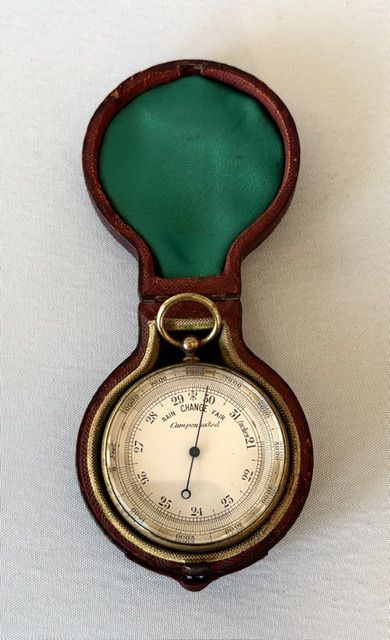
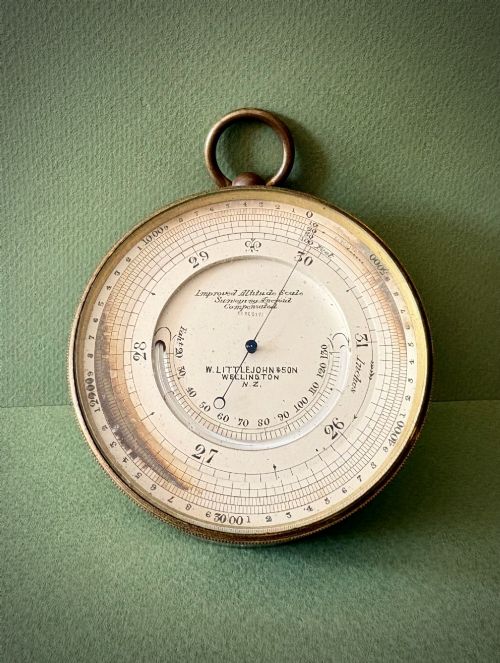
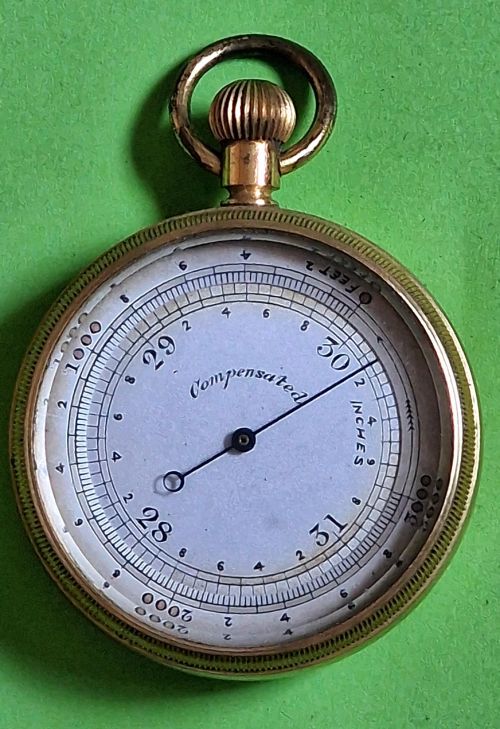
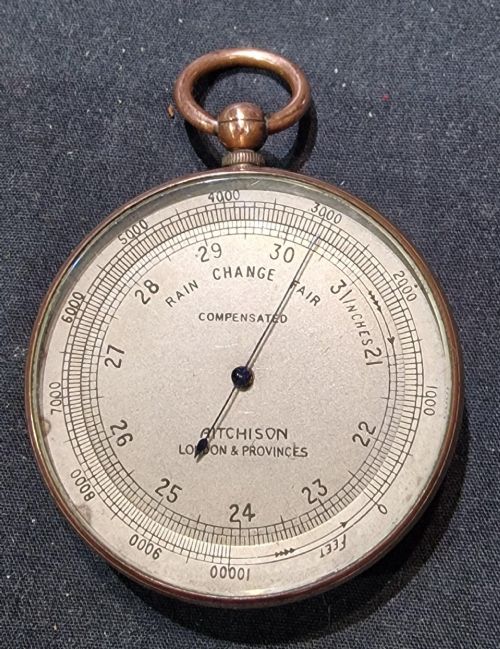
The versions you are most likely to meet on this page are pocket-sized barometers and pocket barometers housed in fitted leather cases, alongside larger instruments associated with military observation or surveying. They combine heavy brass construction with delicate silvered metal dials, often reflecting scientific manufacture from the Victorian and Edwardian periods.
How they were made
These instruments rely on brass for their robust outer cases, providing durability for field use while maintaining a bright metallic finish. Inside, delicate mechanisms of steel and brass work in tandem with silvered metal dials to record precise atmospheric measurements.
Many portable examples feature protective leather outer cases, occasionally lined with velvet or silk to cushion the sensitive glass and metal components. Specialist workshop production involved precise engraving on the dials and meticulous calibration of the internal aneroid barometer movements.
Antique Brass Altimeter Retail Price Guide 2026
Typical asking prices for brass altimeter among the pieces listed under this phrase on Sellingantiques today, from the lower quarter to the upper quarter. They describe what is for sale here now, not the wider market.
Object forms on this page range from small pocket barometers to large calibration pressure chambers and surveying instruments.
What varies in quality
The standard of an instrument is defined by the reputation of its maker, with signed pieces from established scientific houses representing the peak of precision work. Workshop execution matters deeply, distinguishing standard commercial production from bespoke surveying instruments.
Quality also rests in the preservation of the original fitted case and the legibility of the engraved silvered metal dial. Instruments that retain their original glass and unpolished brass surfaces hold greater integrity for the collector.
Primavesi·Aitchison·James Murray·Negretti and Zambra
The Antique Brass Altimeter Glossary
- Altimeter
- An instrument used to measure altitude relative to a fixed level. These devices operate by sensing atmospheric pressure changes.
- Aneroid barometer
- A device that measures atmospheric pressure without using liquid, relying on a flexible metal box. This mechanism forms the core of portable pocket altimeters.
- Silvered metal
- A metal surface treated with a silver compound to achieve a bright, reflective finish. Dials utilise this treatment for clear legibility.
- Compensated surveying barometer
- An advanced barometer fitted with a temperature compensation mechanism to ensure accurate readings outdoors. Such instruments were essential for serious geographical mapping.
Antique Brass Altimeter: Frequently Asked Questions
What is an antique brass altimeter?
It is a portable scientific instrument designed to measure height above sea level using atmospheric pressure. These devices were vital tools for mountaineers, surveyors, and military observers.
Most examples date from the Victorian and Edwardian eras, combining robust brass cases with precise internal barometer movements.
How were these pocket barometers used?
Travellers and field surveyors carried them in fitted leather cases to calculate altitude changes during expeditions. By reading the barometric scale alongside the altitude scale, users could also predict local weather shifts.
They served as essential navigational aids before electronic instruments became standard.
How do I date an antique altimeter?
Dating relies heavily on the maker's signature, style of lettering, and the materials used in the case and dial. Instruments from the nineteenth century often feature ornate engraving and specific retailer signatures.
Later pieces from the twentieth century tend toward more utilitarian designs suited for specific military or aerial observation.
Are these instruments still accurate?
While many retain their mechanical movement, antique altimeters are collected primarily for their craftsmanship and historical value rather than daily meteorological use. Changes in ambient conditions over decades mean they often require professional calibration to read correctly.
Most buyers appreciate them as examples of historical scientific engineering.