






Antique Brass Altar Sticks
These antique brass altar sticks bring heavy ecclesiastical presence to a room, cast from durable metals across centuries of design.
Antique Brass Altar Sticks
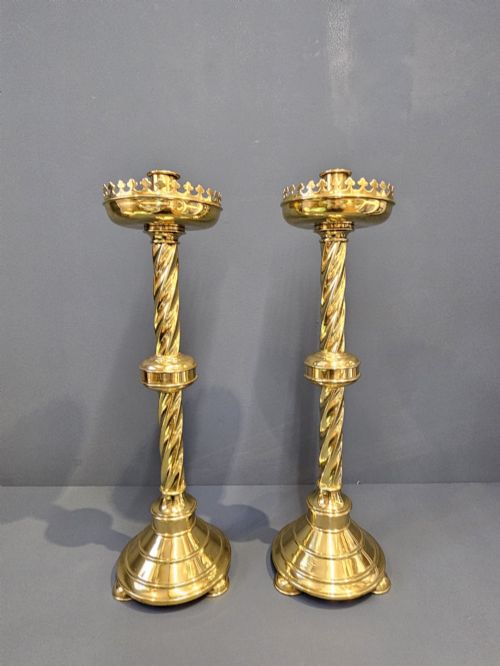
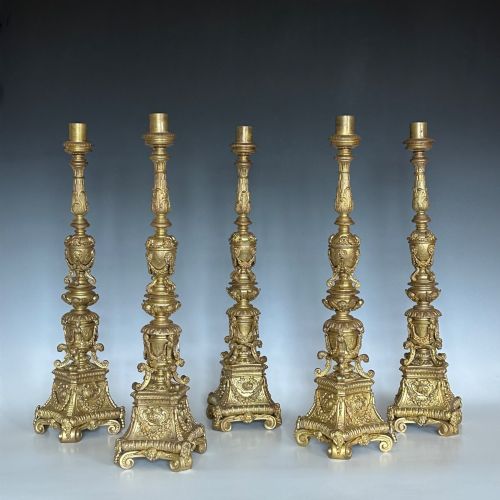
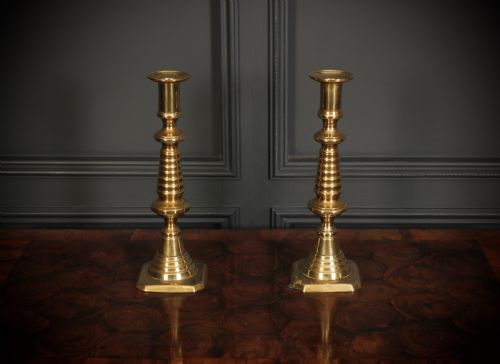
When you search for antique brass altar sticks, you encounter ecclesiastical lighting pieces designed for church altars and chapels, ranging from simple domestic adaptions to monumental church candlesticks. The examples you meet on this page span several centuries, with the majority belonging to the Victorian era and the nineteenth century alongside earlier seventeenth and eighteenth-century forms.
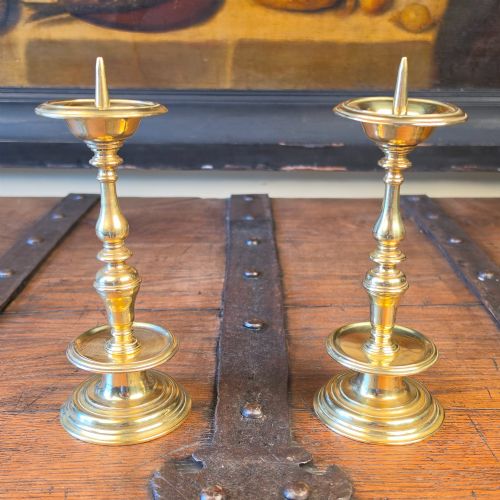
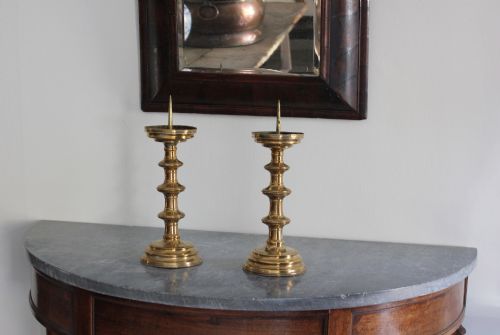
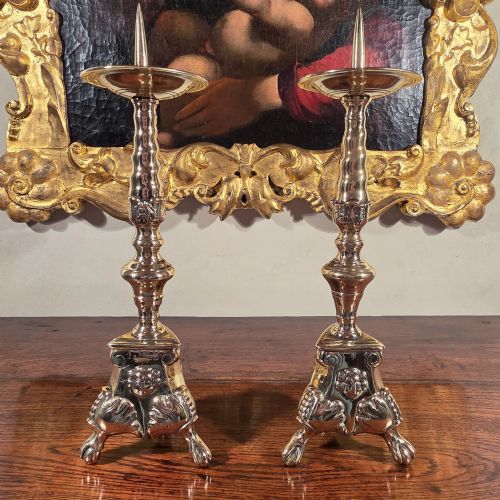
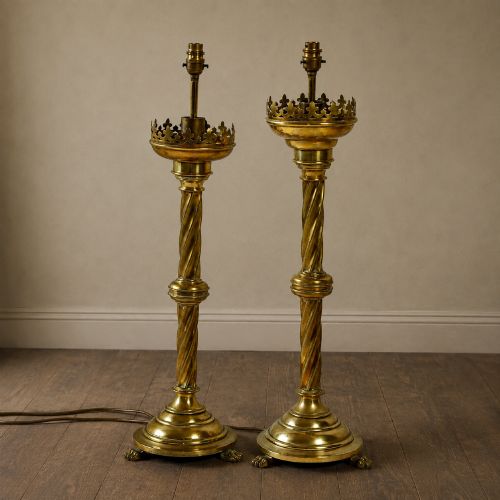
The selection includes standard candlesticks, pricket candlesticks with spikes to hold large candles, and occasional table lamps converted from church hardware. Styles draw heavily on Gothic Revival, Baroque, and Rococo traditions, often reflecting the architectural tastes of their original ecclesiastical settings.
How they were made
These pieces are primarily shaped from cast brass, bronze, and gilt metal, utilising traditional foundry methods that produce substantial weight and durability. Surface treatments vary, with some items displaying polished metal while others retain traces of gilt bronze or ormolu finishing.
Construction techniques involve heavy casting sections joined to form sturdy bases, stems, and drip pans, occasionally paired with later adaptations such as fabric shades or silk fringe on converted lamp versions.
Listings span periods from the sixteenth century through to the 1930s, featuring materials such as brass, bronze, gilt metal, and ormolu.
What varies in quality
Quality in these ecclesiastical pieces rests upon the crispness of the casting detail and the proportional balance of the base and stem. Heavier, more substantial metalwork generally indicates superior workshop standards from periods like the Gothic Revival and earlier centuries.
The sophistication of the surface finish and the integrity of the original components further separate standard production items from finer examples produced for prominent liturgical use.
T Thomason & Co
The Antique Brass Altar Sticks Glossary
- Pricket candlestick
- A candle holder featuring a sharp metal spike, or pricket, designed to impale the base of a large candle rather than a socket that surrounds it.
- Gothic Revival
- An architectural and decorative style popular during the nineteenth century that revived medieval forms, pointed arches, and ecclesiastical motifs.
- Ormolu
- Finely ground high-carat gold applied to a bronze base, creating a rich golden surface finish seen on select continental pieces.
- Baroque
- A flamboyant and ornate European style spanning the seventeenth and eighteenth centuries, characterised by dramatic curves and rich surface ornamentation.
Antique Brass Altar Sticks: Frequently Asked Questions
What is a pricket candlestick?
A pricket candlestick uses a sharp central spike to secure a candle instead of a traditional hollow socket. This design is typical of older ecclesiastical lighting.
Such sticks were standard on church altars before socket designs became widespread in domestic settings.
How do I date antique brass sticks?
Dating relies on examining the casting techniques, wear patterns, and stylistic markers such as Gothic Revival or Baroque ornament. Nineteenth-century examples often show heavier machine finishing compared to earlier hand-cast pieces.
Documented maker marks, where present, provide precise production windows.
Are these suitable for daily use?
Most pieces function well with standard candles or as structural lamp conversions on sturdy tables. Their considerable weight gives them excellent stability.
Care should be taken with delicate finishes and antique metal surfaces during cleaning.
What styles are most common?
Victorian Gothic Revival dominates the selection, reflecting nineteenth-century ecclesiastical architecture and church restoration projects. Earlier seventeenth and eighteenth-century Baroque and Rococo designs also appear.
These varied styles reflect the changing aesthetic demands of liturgical spaces over hundreds of years.