

Antique Boxed Flatware
These antique boxed flatware sets bring together fitted storage and silver dining implements from the Georgian, Victorian, Edwardian and Art Deco eras.
Antique Boxed Flatware
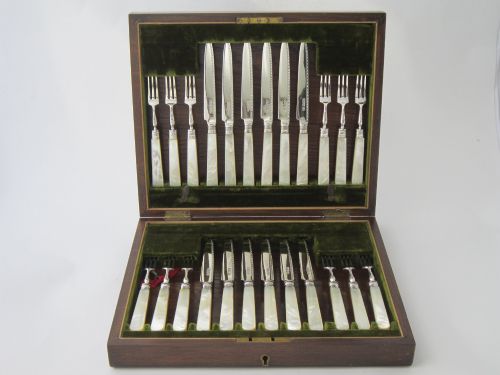
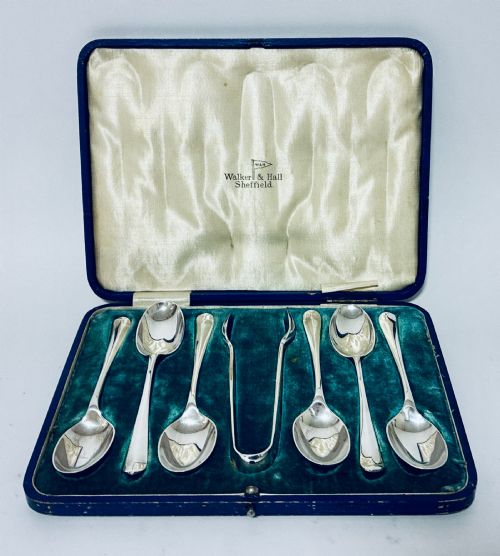
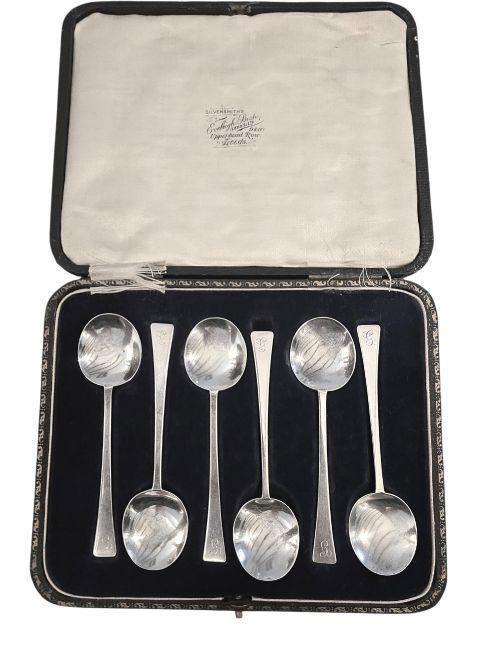
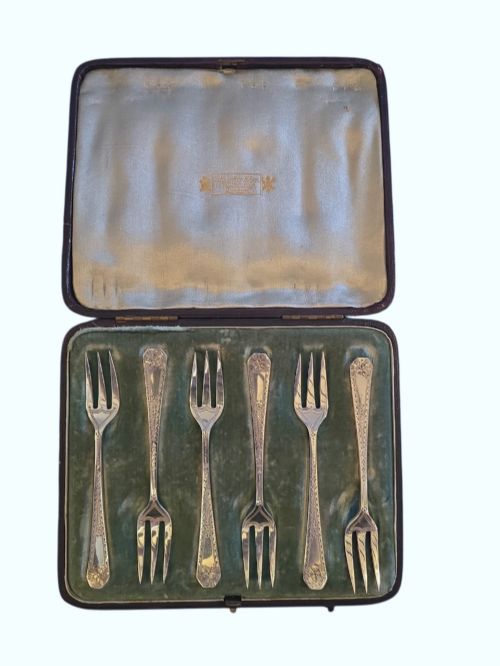
When someone searches for antique boxed flatware, they encounter fitted containers holding matched cutlery, serving spoons, teaspoons, or specialised dining implements. The sets span from the Georgian period through the Victorian, Edwardian, and Art Deco eras.
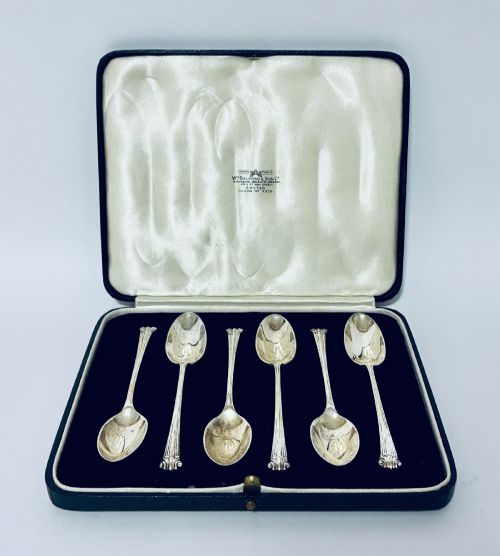
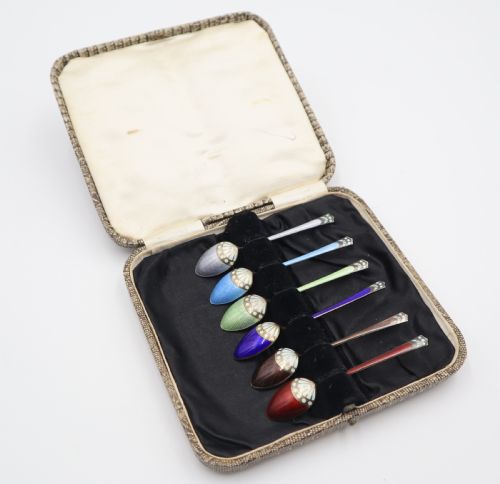
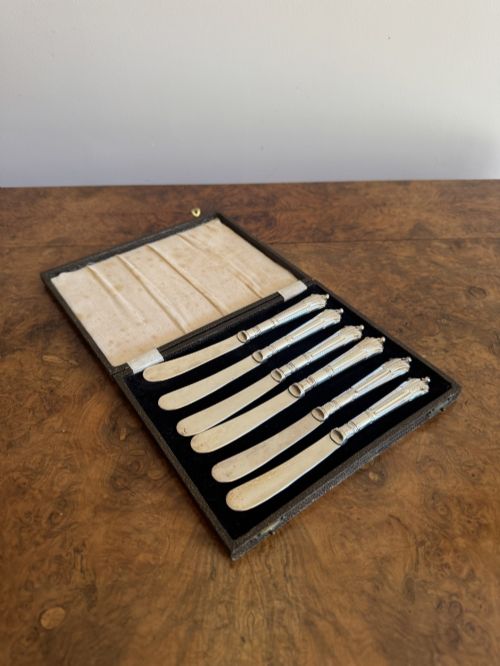
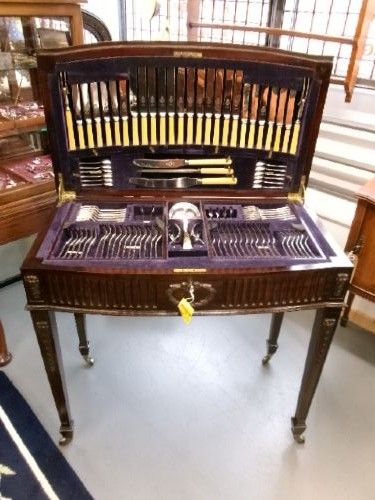
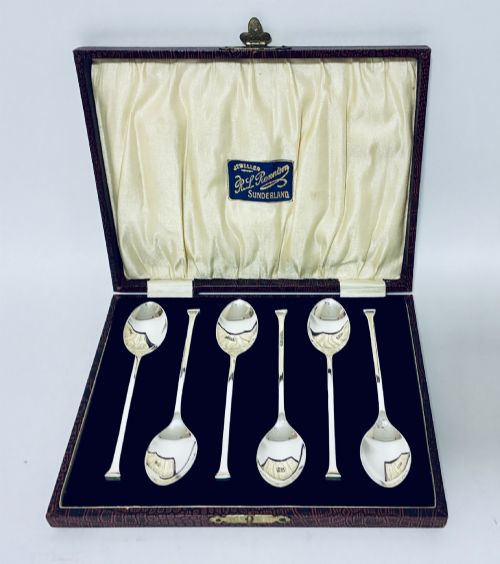
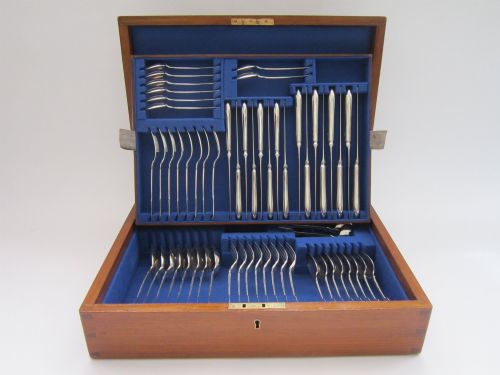
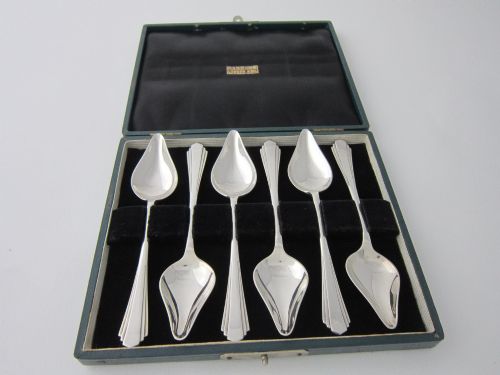
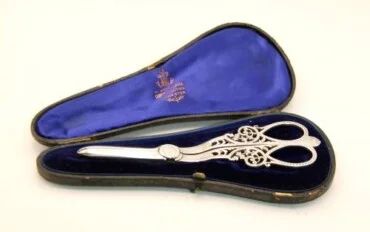
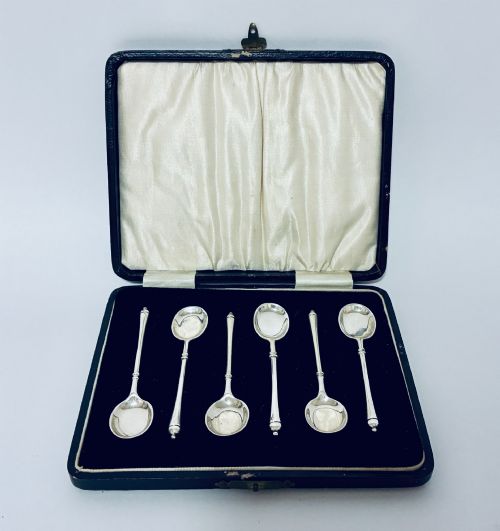
Sets frequently comprise small specialty groups such as christening sets, butter knives, coffee spoons, grapefruit spoons, or fruit serving knives rather than large dining services. Larger canteens and fitted cutlery boxes also appear, housing places for multiple diners.
The objects originate from English, Scottish, and continental makers, reflecting the dining customs of the eighteenth, nineteenth, and early twentieth centuries.
Materials and construction
Implements are forged from sterling silver or silver plate, sometimes paired with steel blades, enamel, or handles formed of alternative materials. Crafting techniques involve cast silver blades, hand-shaped handles, and engraved decoration.
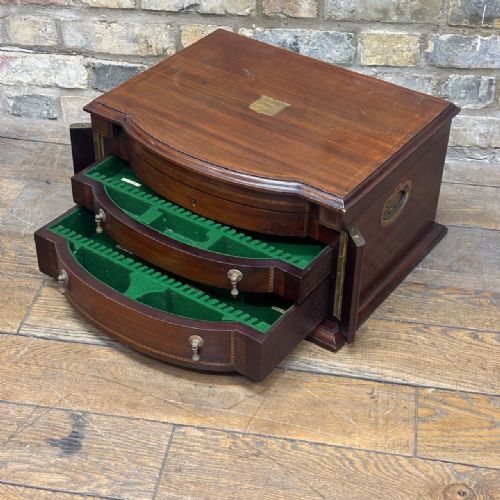
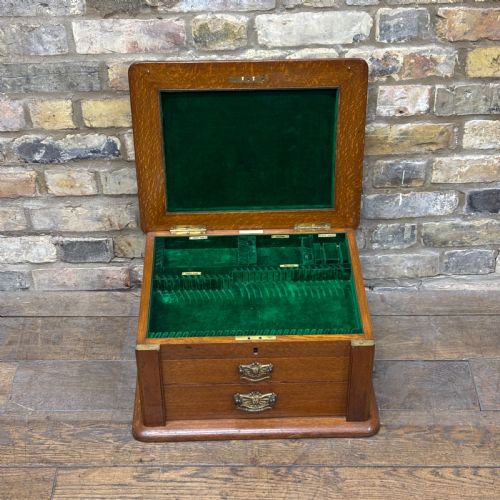
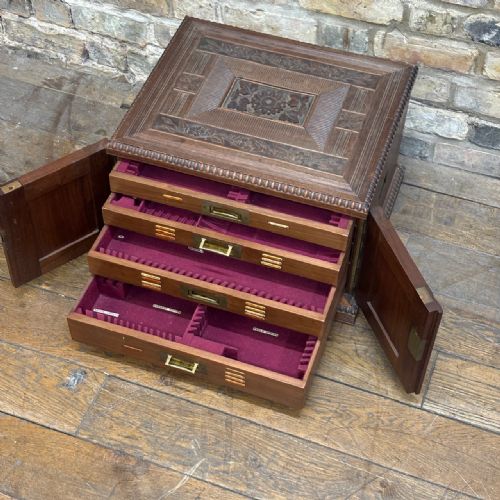
The protective cases and canteens employ woods like mahogany and oak, fitted with brass hardware, and lined with velvet, silk, satin, or leatherette to cushion the metalwork.
Antique Boxed Flatware Retail Price Guide 2026
Typical asking prices for boxed flatware among the pieces listed under this phrase on Sellingantiques today, from the lower quarter to the upper quarter. They describe what is for sale here now, not the wider market.
Listings feature materials including sterling silver, silver plate, velvet, silk, leatherette, and mahogany across pieces dating from the Georgian period to the Art Deco era.
Assessing quality and preservation
Quality rests in the weight and gauge of the silver, the crispness of chased or engraved detail, and the integrity of the maker's marks. Comprehensive sets retaining all original matching pieces command greater attention than assembled groups.
The construction of the accompanying box matters significantly, particularly the preservation of internal fabric linings, functional hinges, and fitted interior dividers that secure each utensil.
Walker and Hall·Christofle·Georg Jensen
The Antique Boxed Flatware Glossary
- Flatware
- Table utensils used for eating and serving, including spoons, forks, and knives. These implements are often housed in dedicated wooden or leatherette cases.
- Canteen
- A fitted box or chest designed to hold a complete set of cutlery securely. These cabinets range from tabletop boxes to substantial furniture pieces.
- Sterling silver
- An alloy containing a high proportion of pure silver by weight, standard in quality British dining implements. Assay marks typically stamp this standard onto the metal.
- Silver plate
- A base metal coated with a layer of silver, utilised in larger canteens and decorative service sets. This technique offered the appearance of solid silver at a different cost.
- Fiddle pattern
- A nineteenth-century cutlery handle design featuring a distinctive tapered shape resembling a violin. This style appears frequently on Victorian flatware.
Antique Boxed Flatware: Frequently Asked Questions
What is included in a christening set?
Christening sets typically comprise a small knife, fork, and spoon designed for a child. These pieces often feature Victorian or Edwardian sterling silver construction and ornate decoration.
Such sets were preserved in fitted presentation boxes lined with silk or velvet, serving as traditional gifts for infants.
How do I store antique boxed cutlery?
Keep the cutlery inside its original fitted case in a stable environment away from direct sunlight and excessive humidity. Proper enclosure helps protect silver surfaces from tarnishing rapidly.
Ensure the velvet or satin lining remains dry and clean to preserve the condition of both box and metal.
What periods do these sets cover?
The pieces span from the Georgian era through the Victorian and Edwardian periods into Art Deco designs of the twentieth century. Each era brought distinct handle patterns and box construction methods.
Georgian examples often feature mahogany boxes, while later Edwardian and Art Deco sets incorporate varied linings and specialised serving pieces.
Are all sets made of solid silver?
No, while many pieces utilise sterling silver, others employ silver plate over a base metal. Canteens and larger dining services frequently relied on silver plating to manage weight and cost.
Examining the hallmarks or stamps on the metal helps identify the exact material composition of individual items.