


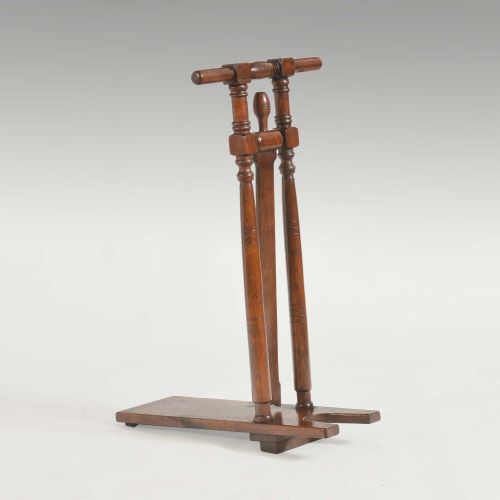
Antique Boot Pull Stand
An antique boot pull stand brings sturdy practicality to an entrance hall, offering a reliable way to remove muddy footwear without bending.
Antique Boot Pull Stand
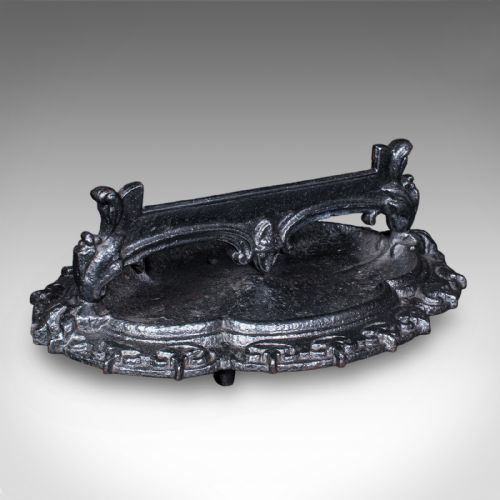
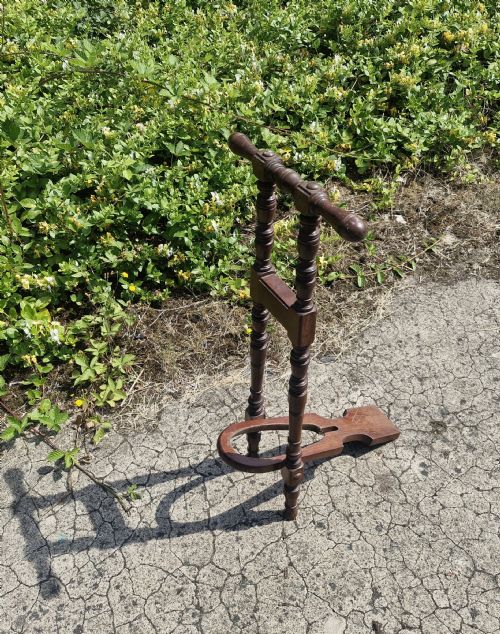
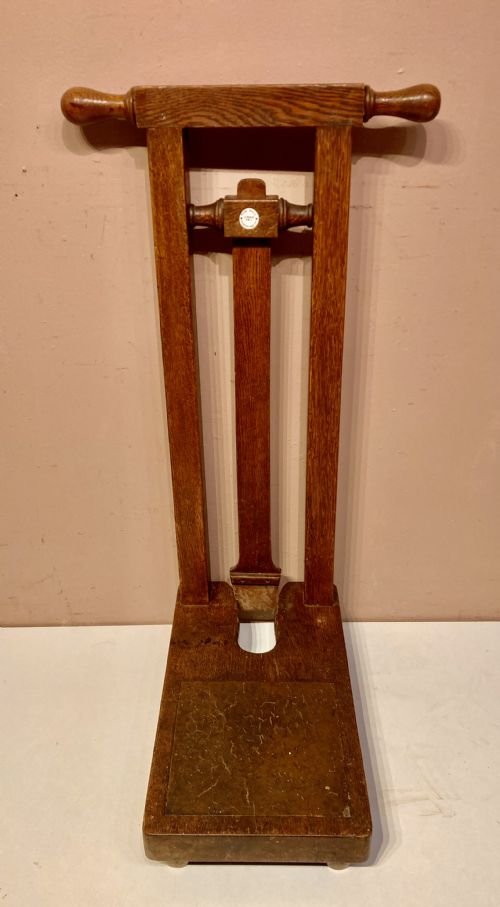
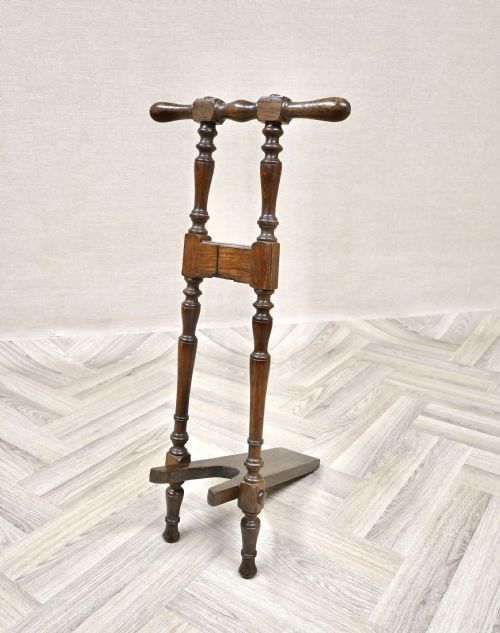
When searching for an antique boot pull stand, you are looking at practical hallway accessories designed to assist in removing footwear after time spent outdoors. These items incorporate sturdy timber frames and integrated metal mechanisms to grip the heel while the wearer steps away.
Many examples utilise folding designs or combine wood with brass mounts for domestic hallways and boot rooms. Their forms range from simple folding timber boards to fitted oak structures with brass hardware.
How they were made
Makers constructed these pieces using dense hardwoods such as oak, walnut, and mahogany, chosen for their ability to withstand heavy daily use in entrance halls. Workshops often paired these timber frames with robust cast iron or polished brass components to create the gripping V-shape necessary for pulling off boots.
Joinery techniques focus on sturdy construction, utilising solid boards and secure metal fastenings to endure the physical leverage applied during shoe removal. Folding mechanisms feature simple hinges and stays that allow the board to stow flat when not in use.
Materials recorded across these items include stained timber, leather, and polished brass.
What varies in quality
Quality in these pieces depends upon the selection of timber and the solidity of the mechanical joints that endure the physical strain of boot removal. Finer examples display carefully polished oak or walnut surfaces alongside substantial brass mountings rather than purely utilitarian iron fittings.
The distinction between standard country house items and more refined specimens lies in the crispness of the woodworking and the integration of folding mechanisms. Better pieces maintain stability through years of use while retaining the rich grain of the mahogany or ash.
Tom Hill
The Antique Boot Pull Stand Glossary
- Boot jack
- A V-shaped device designed to hold the heel of a boot while the wearer pulls the foot free. It removes footwear without the need to bend down.
- Boot scraper
- An iron implement fixed near a doorway to remove heavy mud from the soles of shoes before entry. These items are often associated with entrance hall furniture.
- Folding shoe pull
- A hinged timber board that collapses flat for storage when not in use. This mechanism allows the accessory to be tucked away in smaller boot rooms.
- Country house
- A term denoting domestic items made for large English rural estates. These pieces emphasise functional durability and traditional timber construction.
Antique Boot Pull Stand: Frequently Asked Questions
What is an antique boot pull stand used for?
An antique boot pull stand provides a stable platform and gripping mechanism to remove muddy footwear after outdoor pursuits.
Placed in entrance halls and boot rooms, these devices allow someone to slide their heel out of a tight boot without needing to bend down or soil their hands.
How do you date an antique boot pull stand?
Dating relies on identifying the timber species, the construction methods, and stylistic cues associated with periods like the Victorian era or Georgian times.
Examining the hinges, the type of brass or cast iron used, and the wear patterns on the wood helps confirm the age of the piece.
Where were these pieces placed in a home?
These items traditionally sat in entrance halls, boot rooms, and doorways where outdoor footwear was removed before entering the main living areas.
Their practical design suited spaces dedicated to country pursuits and daily arrivals.
What woods were used for boot pull stands?
Workshops built these accessories using sturdy domestic timbers capable of withstanding heavy daily physical pressure.
Oak, walnut, mahogany, and ash appear frequently in these listings, often paired with brass or cast iron fittings.