



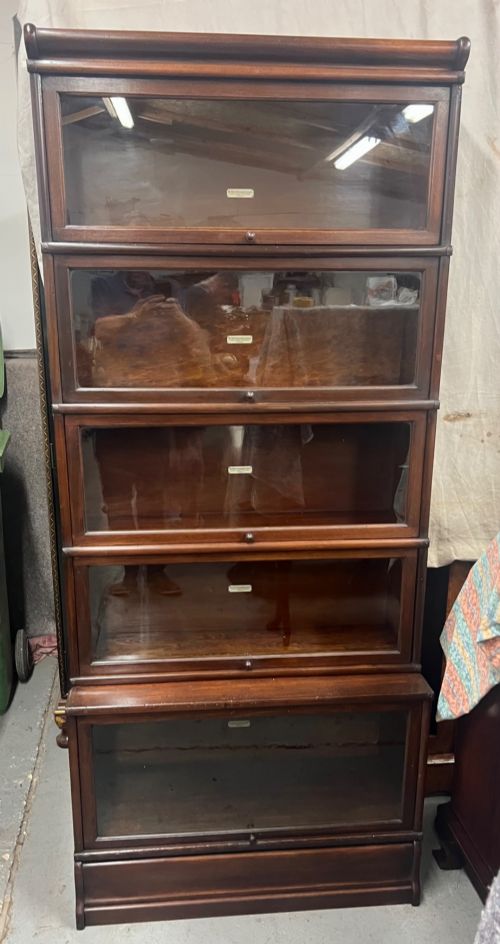





Antique Book Stack
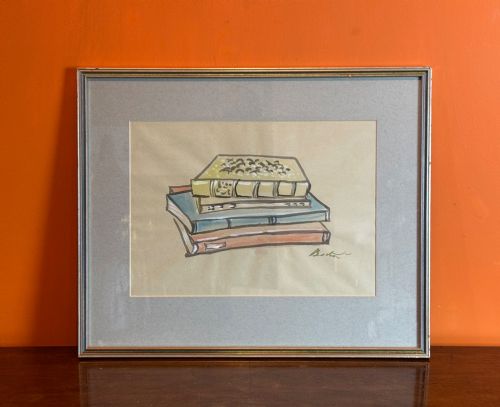
When you search for an antique book stack, you encounter clever sectional furniture alongside gathered volumes bound in leather, vellum, and cloth.
Antique Book Stack
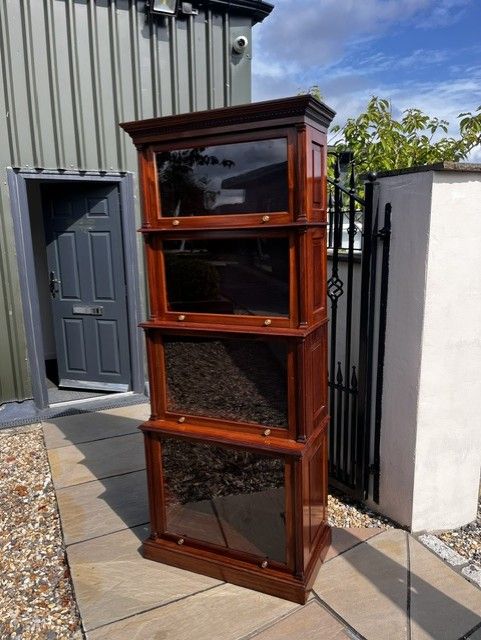
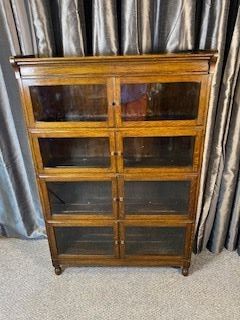
An antique book stack comprises both the modular barrister bookcases designed to hold literature in rising tiers and the physical collections of antiquarian volumes grouped by subject or uniform binding.
The modular bookcases span Oak and Mahogany timbers, often featuring glazed lift-up doors, while the book stacks themselves include multi-volume sets of novels, histories, and reference works.
Origins stretch from the Victorian and Edwardian eras through the Georgian period, encompassing English cabinetmakers and French workshops.
How they were made
Cabinetmakers utilised solid Oak and Mahogany for the sectional stacking frames, incorporating brass hardware and glazed glass panels into the rising tiers.
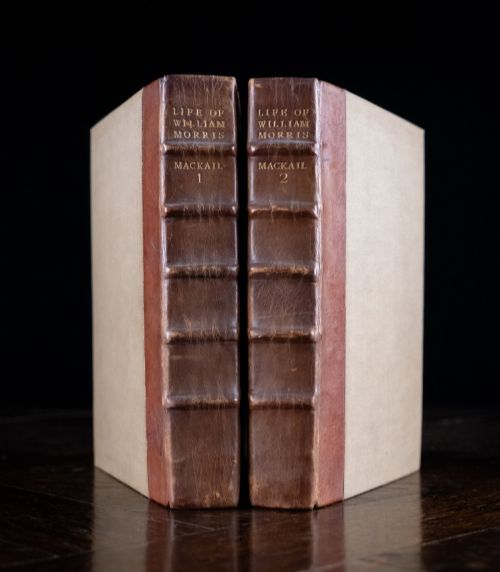
Binders constructed the book sets using leather, vellum, and cloth over paper, finishing spines and covers with gold leaf tooling and detailed ink printing.
Listings feature modular stacking bookcases in Oak and Mahogany alongside multi-volume book sets dating from the eighteenth to the twentieth century.
What varies in quality
The sophistication of the timber joinery and the precision of the stacking mechanism dictate the standard of modular bookcases, particularly in the movement of glazed doors.
For bound volumes, quality rests in the uniformity of the set, the preservation of original leather or vellum bindings, and the clarity of the gold leaf and ink lettering.
Minty of Oxford·Globe Wernicke·Simpoles of Manchester·Gunn·Lebus·Heal and Sons
The Antique Book Stack Glossary
- Barrister bookcase
- A sectional wooden bookcase with glass-fronted tiers that lift and slide back to allow access to the books inside.
- Vellum
- A fine parchment material prepared from calfskin, frequently utilised for durable and luxurious book bindings.
- Globe Wernicke
- A prominent maker and style of modular stacking bookcase popular across the late nineteenth and early twentieth centuries.
- First edition
- The earliest printed iteration of a book, highly sought after by collectors of antiquarian literature.
- Tooling
- The decorative impression of designs or lettering onto leather book bindings, often highlighted with gold leaf.
Antique Book Stack: Frequently Asked Questions
How do sectional bookcases work?
Sectional bookcases consist of individual modular tiers stacked on top of a base and beneath a top cornice. Each tier usually contains a glass door that lifts upward on pivots and slides into the cabinet above the books.
This design allows owners to add or remove sections as their library grows. The separate boxes make relocation significantly easier than moving a single massive cabinet.
Were book sets published together?
Many multi-volume sets were printed and bound uniformly from the start, such as novels by Sir Walter Scott or historical reference series. Publishers offered these to buyers who wanted a cohesive appearance on their library shelves.
Other collections were gathered later by owners who prized matching leather or cloth bindings. Uniformity in these sets depends entirely on the publisher's original run or a binder's subsequent work.
How should I clean leather bindings?
Leather book bindings require gentle care to prevent the natural material from drying out and cracking over time. Dust them lightly with a soft, dry cloth rather than using liquid cleaners.
Keep them away from direct sunlight and excessive heat sources to preserve the original leather, paper, and gold leaf. Stable room humidity prevents the bindings and pages from warping.
What defines a barrister bookcase?
A barrister bookcase is a specific type of stacking cabinet designed for travelling lawyers who needed to transport their working libraries easily. The individual shelves lock together and protect the contents during transit.
Over time, this utilitarian office furniture moved into domestic studies and libraries. The stacking format remains practical for organising various book sizes within a vertical footprint.