



Antique Boat Watercolours
Antique boat watercolours capture maritime life and coastal harbours through delicate washes of pigment on paper.
Antique Boat Watercolours
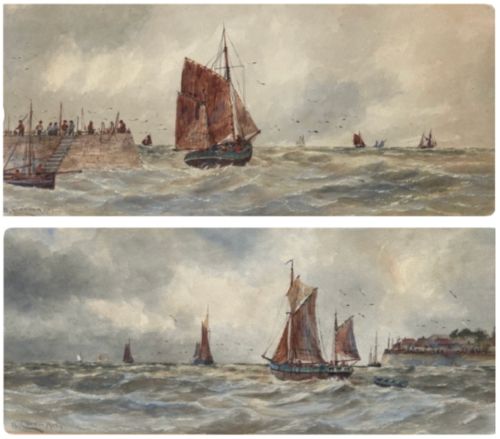
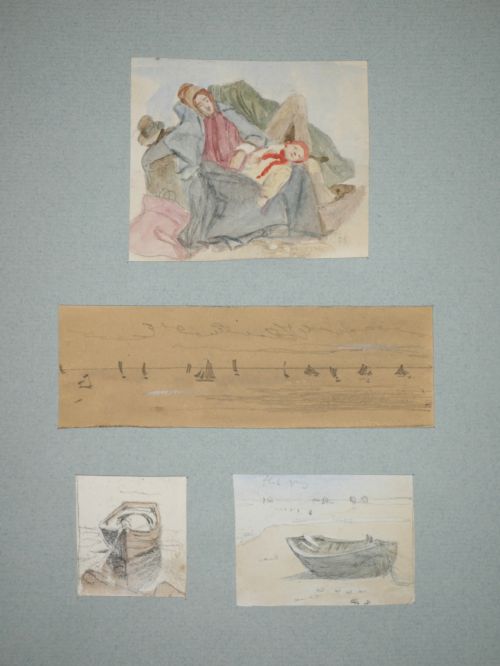
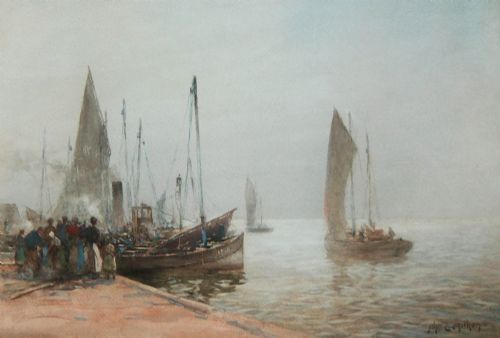
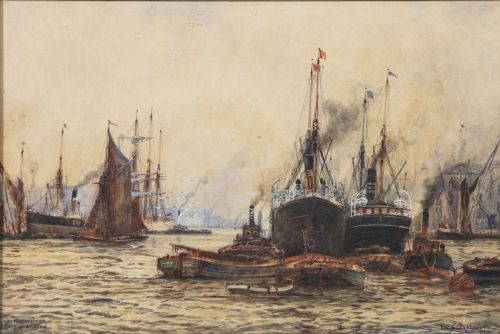
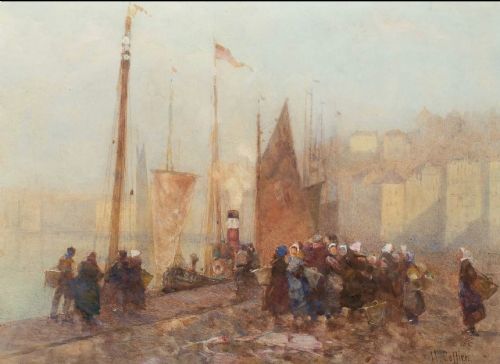
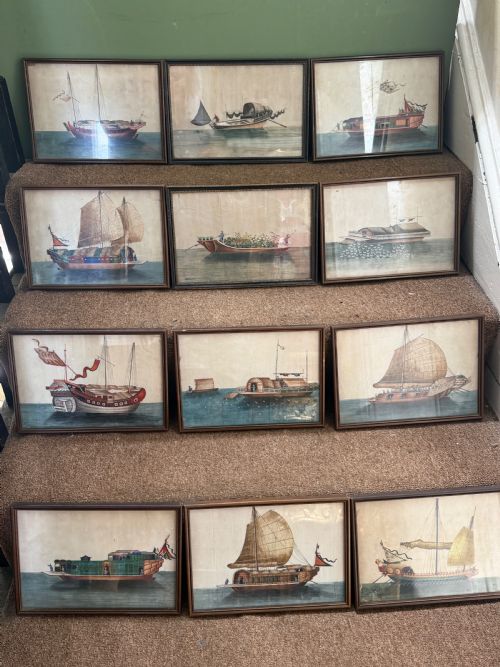
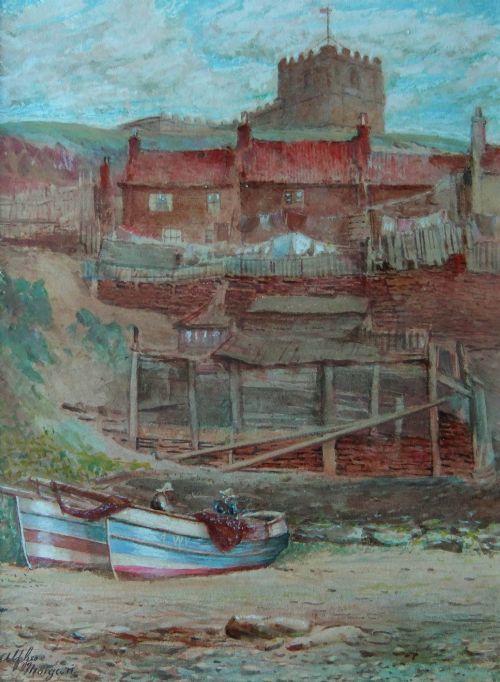
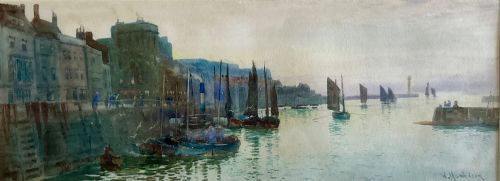
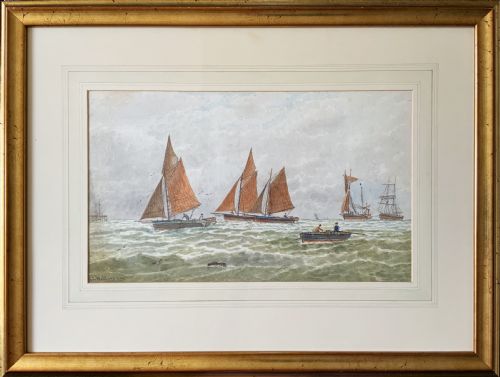
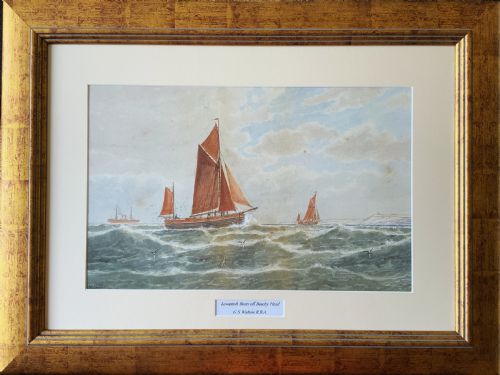
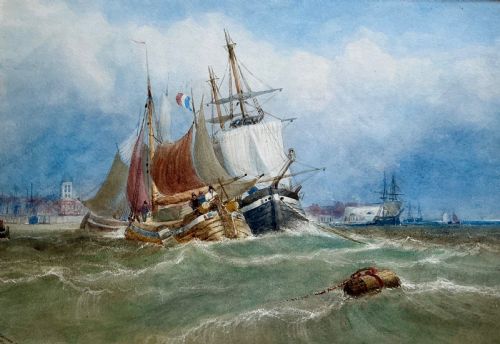
These works focus primarily on maritime subjects, ranging from bustling fishing ports and coastal inlets to open sea vistas populated by sailing vessels and junks. The selection spans the nineteenth century through the early decades of the twentieth century, capturing distinct eras of maritime activity and coastal development.
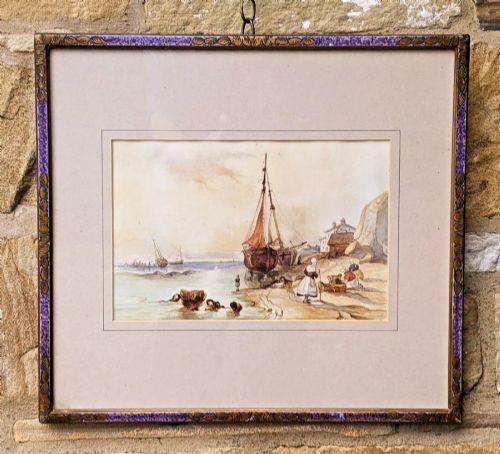
Buyers will encounter works executed in traditional British and European styles, often reflecting Victorian marine art and early impressionist tendencies. Common formats include framed watercolours and gouache paintings on paper, preserved behind glass within wooden or ebonised frames.
Materials and Technique
Artists applied watercolour pigment and sometimes opaque gouache onto prepared paper surfaces, utilising the white of the unpainted paper to create highlights of light on water and sails. Washed pigments allowed for subtle atmospheric effects, capturing shifting weather and coastal mists.
Framing typically involved wood and gilt wood surrounds combined with protective glass layers, which preserved the delicate water-soluble pigments from atmospheric degradation and moisture over the decades.
Listings feature works spanning the nineteenth century through the 1940s, executed in watercolour, gouache, and gilt wood framing.
Factors of Distinction
Quality rests heavily on the artist's ability to command the medium with confident brushwork and accurate perspective, particularly when rendering complex rigging and hull structures. Strong composition and atmospheric depth separate accomplished marine artists from amateur recorders.
The preservation of the paper and the vibrancy of the pigments dictate overall visual success. Works that retain their original colour intensity without excessive fading or foxing represent the upper tier of surviving examples.
James Orrock·William Cannon·James Smetham·James E. Aitken·Frank William Scarbrough·Hector Caffieri·Alfred G. Morgan·William Matthison·George Stanfield Walters·Henry Barlow Carter·Paul Delvaux·William Lee Hankey·Thomas Bush Hardy·Tom Clough·William Tuck·Fred Waugh·Frank H. Mason·Frederick William Hattersley·Clara Montalba·Ernest F. Hill·Walter Duncan·Frank Wasley·Fred Mayor·Thomas Clavering Alder·Walter Sweet
The Antique Boat Watercolours Glossary
- Gouache
- An opaque watercolour paint consisting of pigment, water, and a binding agent such as gum arabic, often mixed with white filler to create solid, light-reflecting passages.
- Foxing
- Brown spots or patches that appear on older paper due to chemical reactions involving iron impurities or fungal growth.
- Gilt Wood
- Wood treated with a thin layer of gold leaf or gold-coloured metallic finish, commonly used for traditional picture frames.
- Seascape
- A work of art depicting the sea, coastal views, ships, or marine activities.
- Works on Paper
- A collective term for art created on paper supports, including watercolours, drawings, and gouaches.
Antique Boat Watercolours: Frequently Asked Questions
How should I hang antique watercolours safely?
Keep watercolours away from direct sunlight and damp environments, as ultraviolet light fades pigments and moisture encourages mould growth on paper.
Use professional framing services with acid-free backing boards and UV-filtering glass to protect the artwork for long-term display.
Were these watercolours intended as preliminary sketches?
Many nineteenth and early twentieth-century marine watercolours were created as finished independent artworks designed for framing and domestic display.
Some examples also served as field sketches or studies for larger oil paintings, though artists often signed and exhibited them as complete pieces.
How can I identify the period of a watercolour?
Dating relies heavily on the paper type, framing style, artist signatures, and the specific attire or vessel designs depicted in the composition.
Comparative study of recorded exhibition dates and stylistic evolution during the Victorian and Edwardian eras provides further chronological clarity.
Why do some marine watercolours use gouache?
Gouache was often added to watercolour paintings to introduce opaque highlights and dense areas of colour that standard transparent washes could not achieve.
This technique helped artists render bright sunlight glinting on water or the stark white of ship sails with greater visual impact.