



Antique Blue White Pearlware
Antique blue white pearlware pieces are historic earthenware vessels bearing cobalt decoration under a distinctive bluish glaze, prized for their rich transfer-printed transfer scenes.
Antique Blue White Pearlware
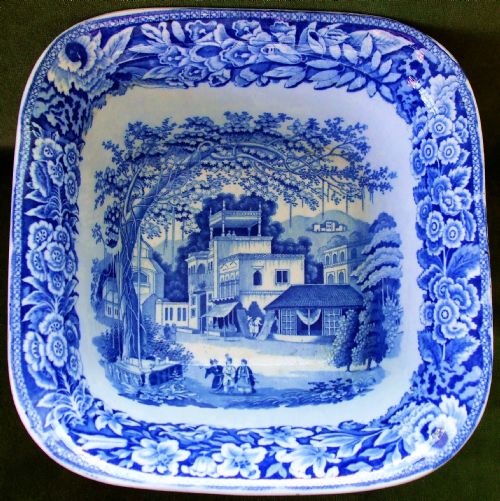
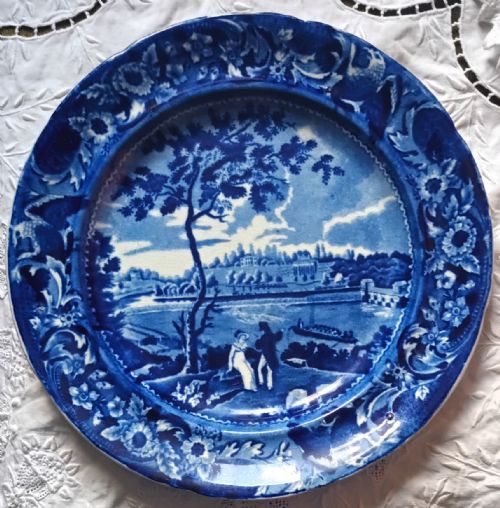
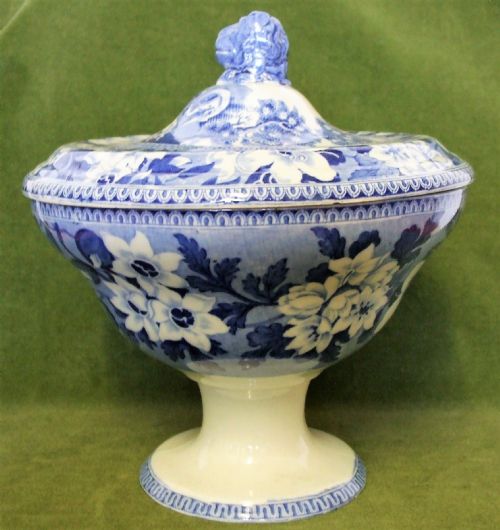
Antique blue white pearlware encompasses domestic pottery vessels produced primarily during the Georgian and Regency periods, spanning the late eighteenth and early nineteenth centuries. The objects found here range from functional tableware such as plates, dishes, platters, and soup plates to decorative baskets, tureens, bread stands, and spoon trays.
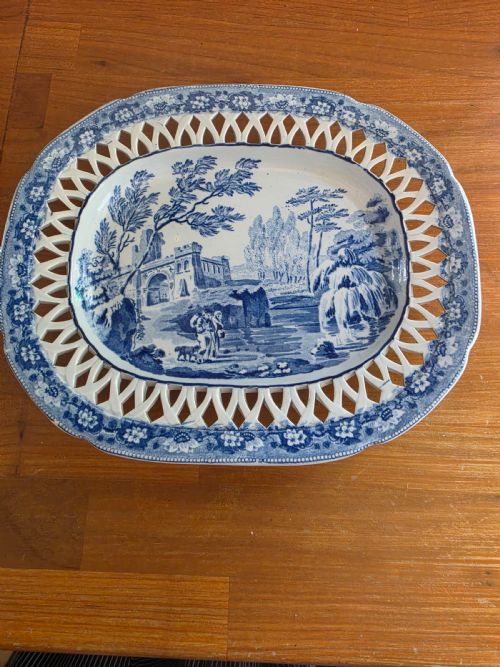
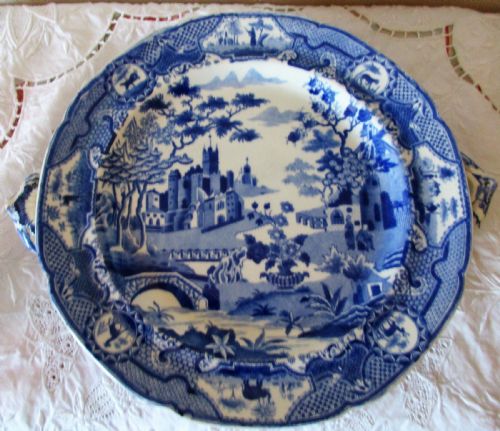
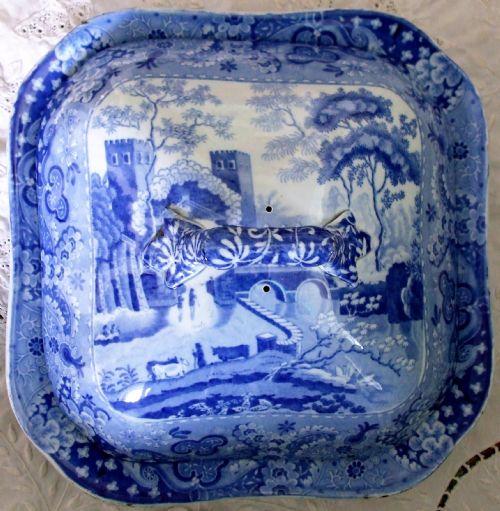
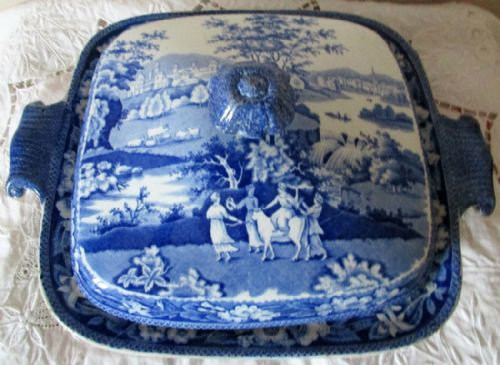
Buyers will most frequently encounter plates, serving dishes, and tureens decorated with transfer-printed pictorial scenes rather than hollowware. These items reflect the domestic dining habits of the period, often displaying scenic landscapes, classical ruins, or Chinese pagoda motifs rendered in cobalt pigment.
The material originates from Staffordshire potteries and other English regional works dating from around 1780 through to the early Victorian era. Examples merge utilitarian function with decorative ambition, showing the high skill of early industrial ceramic production.
Materials and technique
Potters constructed these items from refined earthenware bodies, applying a slightly bluish-tinted lead glaze to mask the natural cream colour of the clay and mimic the appearance of Chinese porcelain. Cobalt pigment provided the deep blue colour for the decoration.
Designers applied the intricate patterns using the copperplate transfer printing technique, transferring ink from an engraved copper sheet onto tissue paper and then onto the ceramic surface before glazing and firing.
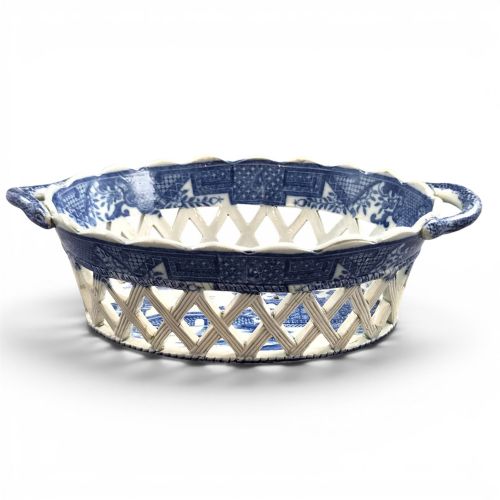
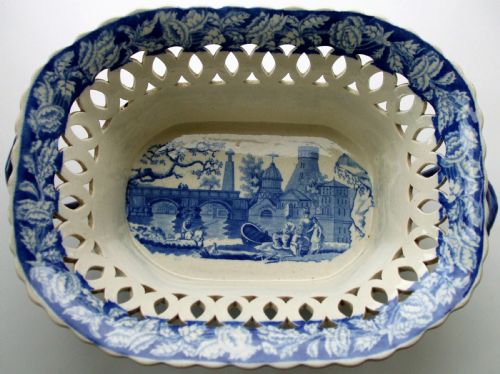
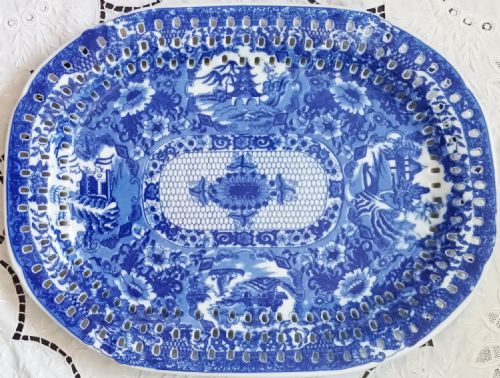
Common object forms include decorative plates, chestnut baskets, vegetable tureens, serving platters, and spoon trays.
Quality variations
The clarity of the transfer-printed design separates standard utilitarian items from finer examples, with crisp lines and deep, even cobalt pigment showing superior execution. Smudged prints or pooling glaze indicate less precise workshop control during production.
Form complexity also distinguishes pieces, as reticulated baskets, pierced serving dishes, and moulded tureen handles demand higher modelling skill than flat plates.
Davenport·Spode·J. & R. Clews·J. & R. Riley·Stubbs·John Rogers & Son·John and Richard Riley·Enoch Wood & Sons·Pettys & Co. Leeds·William Adams·Thomas Lakin·Brameld & Co.·John Davenport of Longport·Thomas and John Carey
The Antique Blue White Pearlware Glossary
- Pearlware
- A refined earthenware body developed by Josiah Wedgwood and adopted widely across Staffordshire, featuring a glaze with a subtle bluish tint designed to emulate Chinese porcelain.
- Transfer printing
- A manufacturing method where an engraved copper plate applies ink to tissue paper, which is subsequently pressed onto the unglazed ceramic body to transfer complex pictorial designs.
- Cobalt pigment
- A metallic oxide colourant utilised by potters to achieve deep blue tones that remain stable under high-temperature kiln firings.
- Reticulated
- Pierced or openwork ceramic decoration formed by cutting patterns into wet clay before firing, commonly seen on chestnut baskets and dessert plates.
- Tureen
- A deep covered serving vessel designed for holding soups, sauces, or vegetables at the dining table during the Georgian and Regency periods.
Antique Blue White Pearlware: Frequently Asked Questions
How do I care for antique pearlware?
Wash these ceramic items by hand in warm water using a mild detergent, avoiding modern dishwashers entirely.
Keep them away from rapid temperature changes and harsh abrasives to protect the historic lead glaze.
Were these pieces used daily?
Many of these vessels served actual dining and food preparation roles in Georgian households, handling everyday meals and large feasts alike.
Their sturdy earthenware bodies made them practical for regular domestic service before becoming collector items.
How can I date these items?
Examine the shade of the glaze and the style of the printed transfer scenes, as late eighteenth-century pieces often display deeper blue tones and Chinese-inspired motifs.
Consulting recorded potters' marks on the underside also helps narrow the production window.
What is the difference between pearlware and creamware?
Pearlware incorporates a bluish lead glaze specifically formulated to mask the yellowish hue of the underlying earthenware body.
Creamware retains a warm, buttery yellow tone without the blue-tinted additives used in later pearlware.