


Antique Blue Fauteuil Chairs
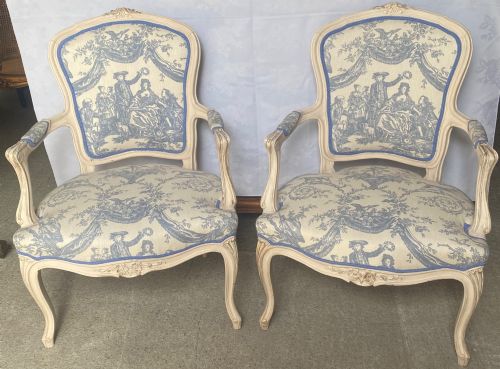
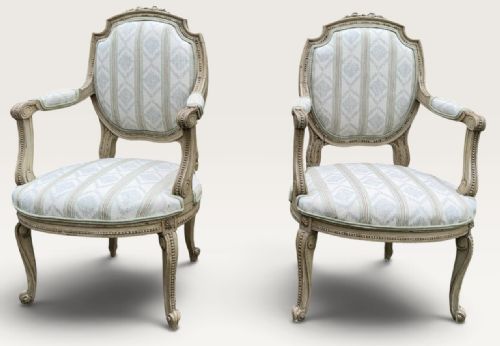
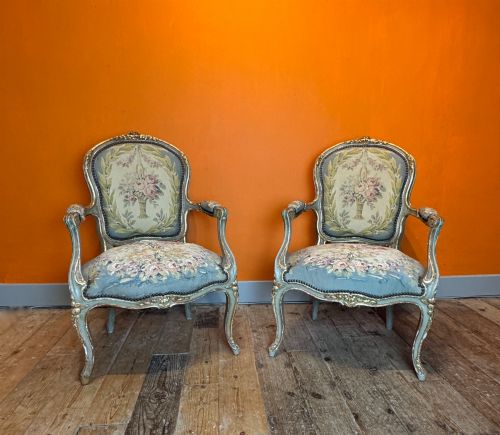
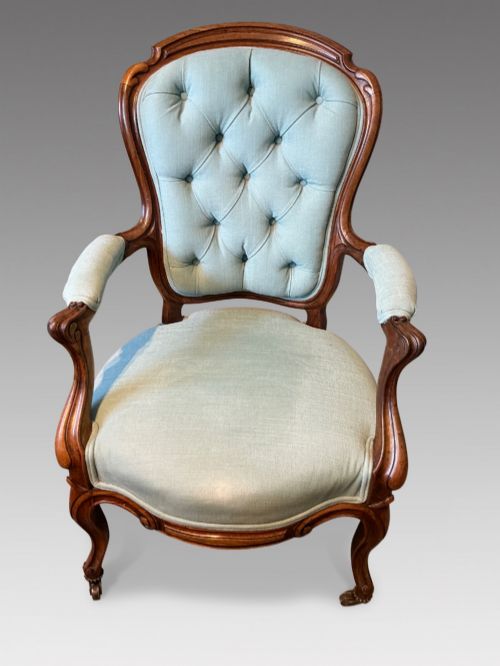
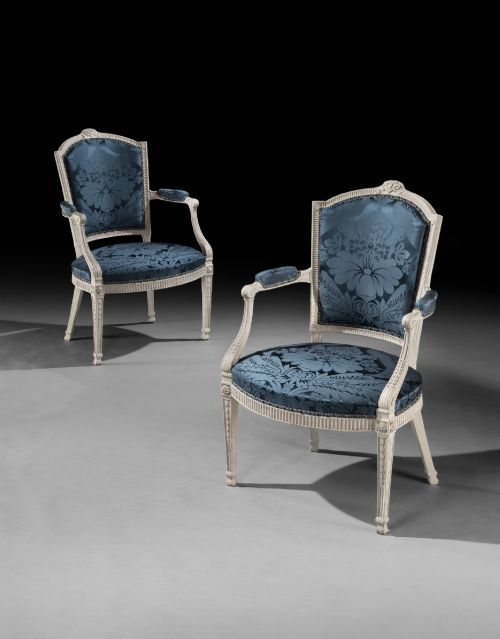
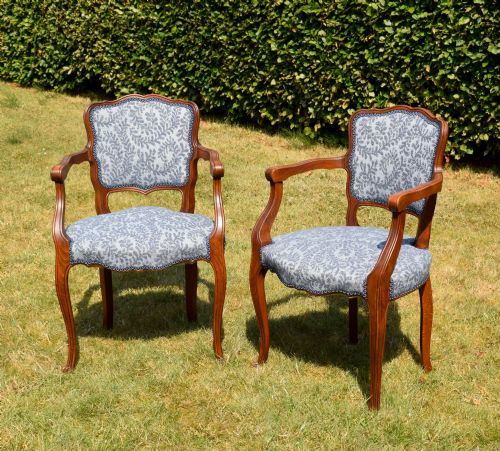
These antique blue fauteuil chairs bring French and Italian elegance to a room through carved woodwork and rich upholstery.
Antique Blue Fauteuil Chairs
When searching for antique blue fauteuil chairs, buyers encounter open-armed seating primarily shaped by French and Italian design traditions. The selection spans the eighteenth century through to the early twentieth century, incorporating revival movements that emulate earlier court furniture.
The pieces appearing here include pairs and sets rendered in styles such as Louis XVI, Louis XV, and Neoclassical. Frames take the form of armchairs and small settees, often upholstered in velvet, tapestry, or complementary fabric.
Eighty percent of the material seen on this page originates from the nineteenth and early twentieth centuries, reflecting later revivals of earlier court aesthetics. Walnut, beech, and painted wood provide the structural support for these blue upholstered seats.
How they were made
Carpenters shaped structural frames from hardwoods such as walnut and beech, frequently applying layers of gesso before painting or gilding the timber. Woodworkers carved floral motifs, fluted legs, and scrollwork directly into the solid frame.
Upholsterers secured fabric or velvet over padded seats and tall backs, often using tapestry or silk variants. Giltwood finishes required the careful application of gold leaf over prepared surfaces to achieve a lustrous appearance.
Listings incorporate walnut, beech, and giltwood frames finished with paint or gesso.
What varies in quality
The refinement of the hand-carved wood ornamentation distinguishes finer examples from simpler production. Crisp lines in the gesso and balanced proportions across the arms and legs indicate skilled cabinetmaking.
The preservation of original painted or gilt surfaces alters the character of each piece. Surviving historic upholstery and tapestry add distinct historical weight compared to later replacement fabrics.
The Antique Blue Fauteuil Chairs Glossary
- Giltwood
- Wood coated with a thin layer of gold leaf. This finish appears frequently on formal salon seating from the eighteenth and nineteenth centuries.
- Gesso
- A plaster-like mixture applied to wood frames to create a smooth surface for gilding or painting. It allows intricate relief details to be carved before finishing.
- Louis XVI style
- A neoclassical design movement characterised by straight lines, fluted legs, and symmetrical geometric forms. Chairs in this style contrast with the curved asymmetry of earlier rococo pieces.
- Barocchetto
- An Italian variant of baroque and rococo decorative styles. Pieces from this tradition display dynamic carved curves and ornamented wooden frames.
Antique Blue Fauteuil Chairs: Frequently Asked Questions
What is a fauteuil chair?
A fauteuil is an upholstered armchair featuring an exposed wooden frame and open sides. The design originated in France during the seventeenth century for formal salon use.
Unlike fully upholstered armchairs, fauteuils showcase the carved woodwork of the frame. Padded armrests are included for comfort.
How do I date an antique fauteuil?
Dating relies on examining the timber species, construction techniques, and stylistic details of the carved frame. Eighteenth-century pieces display hand-carved joinery specific to their period.
Later nineteenth-century examples often emulate these earlier court styles through revival movements. Paint and gilding analysis also assists in determining age.
Where should I place these chairs?
These decorative armchairs function effectively in drawing rooms, bedrooms, or entrance halls as accent seating. Their open frames maintain visual space in a room.
Pairing them with low tables creates a balanced conversation area. Direct sunlight should be avoided to protect the blue velvet or tapestry upholstery.