



Antique Bloodstone Pendant
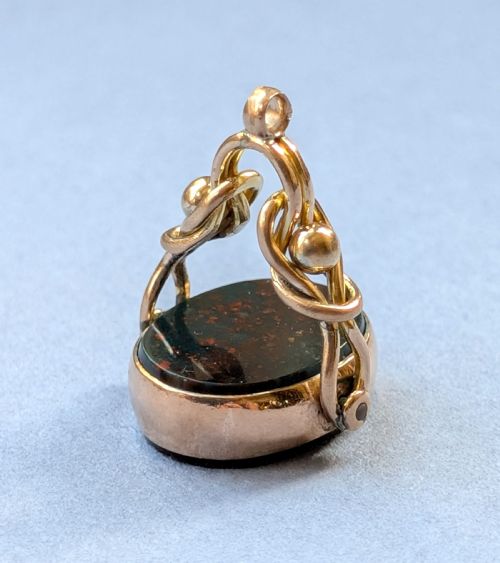
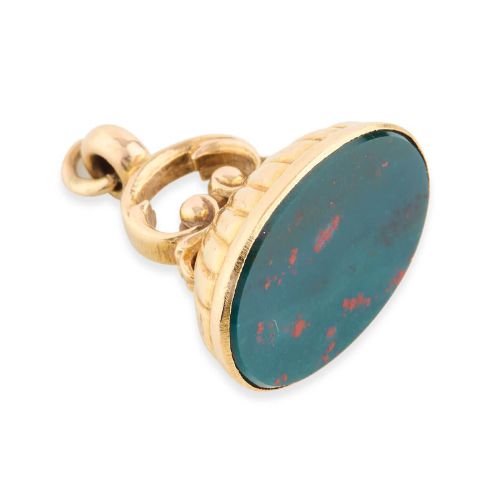
These antique bloodstone pendant pieces are dense, dark heliotrope stones set in gold and silver, worn as fobs or charms.
Antique Bloodstone Pendant
An antique bloodstone pendant is most commonly found as a swivel fob or watch key, reflecting its original utility on a gentleman's watch chain. The listings show a heavy concentration of Victorian and Edwardian examples alongside pieces from the early twentieth century.
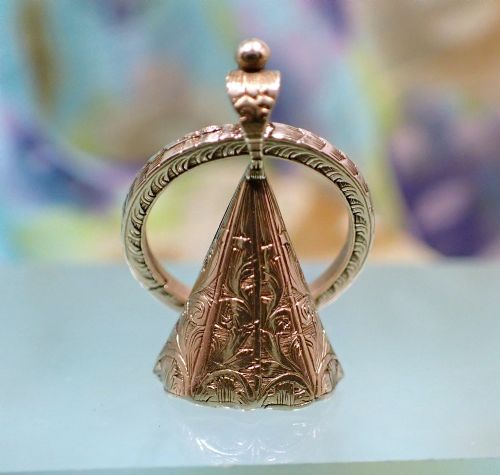
The form typically combines the dark green and red-flecked quartz with precious metal mounts, predominantly nine carat and fifteen carat gold, or silver. Many incorporate mechanisms that allow the stone to spin, often revealing a carnelian or agate reverse.
Buyers also encounter related charm and pendant variants, including shield-shaped fobs and engraved seals. These objects transition easily from waistcoats to modern neck chains while retaining their original desk-seal functionality.
How they were made
Lapidaries shaped the bloodstone by hand, grinding the quartz to fit precise bezels in fob frames or swivel mounts. The stones exhibit a smooth, high-polish finish that enhances the contrast between the deep green body and the red jasper inclusions.
Goldsmiths fabricated the mounts using tubular joints, swivel pivots, and decorative wirework in nine, fifteen, and eighteen carat gold, as well as silver and gold gilt. Engraved seals required skilled hand-carving into the stone or metal matrix to leave a crisp impression in wax.
The archive shows frequent pairings of bloodstone with carnelian and agate within the same swivel pendant frame.
What varies in quality
Quality rests upon the stone's colour saturation and the clarity of the red inclusions against the green ground. Superior bloodstone displays a vivid, balanced contrast without dull patches or unsightly fractures across the face.
The precision of the metalwork also defines the tier of a piece, from solid gold swivel mechanisms with crisp hallmarks down to lighter cased mounts. Engraved seals with deeply carved ciphers or heraldic details command greater attention than blank or worn faces.
The Antique Bloodstone Pendant Glossary
- Bloodstone
- A dark green chalcedony quartz flecked with red spots of iron oxide, also known as heliotrope. It remains the defining material for this category.
- Fob pendant
- A small ornament attached to a pocket watch ribbon or chain that frequently doubles as a desk seal. These form the majority of the current selection.
- Spinning fob
- A pendant mounted on a swivel axis that allows the wearer to rotate the stone and reveal a different face, such as carnelian or agate.
- Watch key
- A small winding key for a pocket watch, often combined with a decorative hardstone seal. They appear regularly alongside standard fobs.
- Intaglio
- A design carved into the flat surface of a stone so that it leaves a raised impression when pressed into sealing wax. Many bloodstone fobs feature this technique.
Antique Bloodstone Pendant: Frequently Asked Questions
How do I wear a fob pendant today?
These pieces hang comfortably from a sturdy chain around the neck, using the existing jump ring or split ring. Their compact weight keeps them centred.
Alternatively, you can attach them to a traditional waistcoat chain or bracelet loop just as original owners did.
How can I date my bloodstone pendant?
Dating relies on hallmarks stamped into the metal mounts, style markers like Victorian scrolling, and specific mechanisms used in the swivel frames. Birmingham and other assay offices often recorded exact years.
When hallmarks are absent, the construction techniques, such as early split rings and hand-cut bezels, provide a reliable chronological window.
Are these stones durable for daily wear?
Bloodstone is a variety of quartz with a reasonable hardness on the Mohs scale, making it resilient for occasional or daily pendant wear. It resists standard surface scratching well.
However, you should avoid exposing the mounted stones to harsh chemicals or ultrasonic cleaners that might weaken the gold or silver bezels.