



18ct Gold Fob
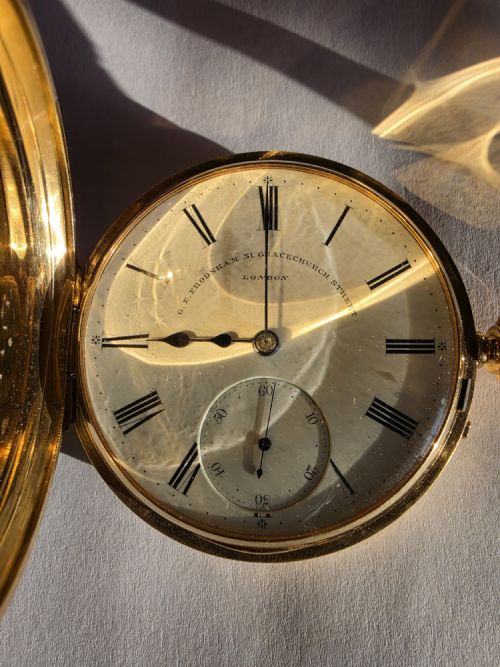
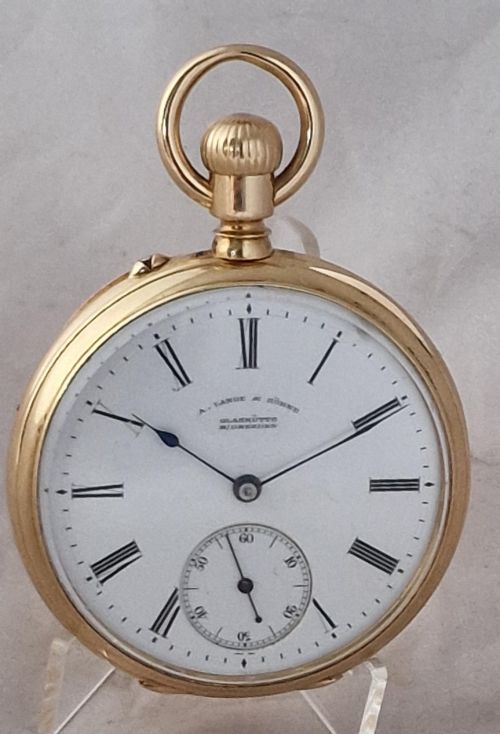
These 18ct gold fob pieces are pocket timepieces and pendants that bring mechanical weight and period detail to a modern chain.
18ct Gold Fob
When you search for an 18ct gold fob, you encounter pocket watches, watch chains, and spinning pendants originating from the nineteenth and early twentieth centuries.
Victorian and Edwardian examples dominate the selection, appearing as hunter or half hunter pocket watches alongside bloodstone and agate spinning fob keys.
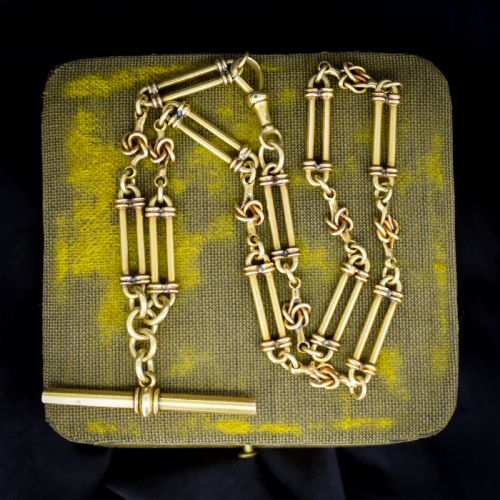
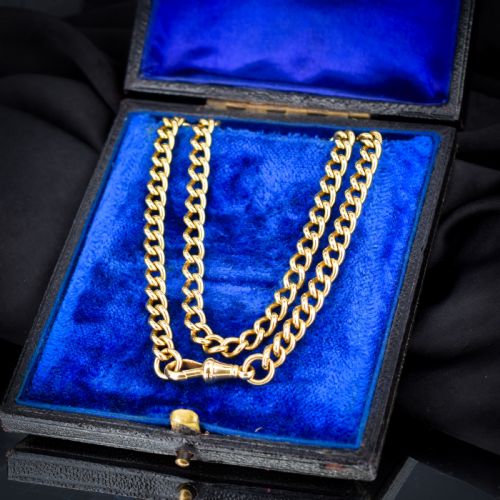
Longer watch chains and Albert chains with dog clips frequently accompany these items, reflecting their original purpose of securing a timepiece to a waistcoat.
How they were made
The primary material is 18ct gold and 18ct yellow gold, paired with hardstones such as bloodstone and agate for spinning seals and key pendants.
Goldsmiths utilised hand engraving, incorporating intricate floral motifs across watch cases, dials, and fob mounts.
Enamelwork and glass elements also appear on select dial faces and case backs, alongside steel components within the mechanical movements.
Listings feature 18ct gold alongside materials like bloodstone, agate, enamel, and glass across Victorian and Edwardian periods.
What varies in quality
Quality rests in the crispness of the hand engraving and the structural integrity of links on chains like trombone and curb patterns.
The weight of the gold and the precision of mechanical movements, especially in signed watch pieces, separate standard production from finer examples.
George Edward Frodsham·Lange & Sohne·J W Benson·Stauffer Cx. de Fond·Patek Philippe·Cuendet Freres
The 18ct Gold Fob Glossary
- Fob
- A short chain or ornament attached to a pocket watch, designed to hang from a waist or pocket. Fobs often took the form of seals or carved stone pendants.
- Half Hunter
- A pocket watch featuring a case with a glass or open centre in the front cover, allowing the wearer to read the time without opening the case.
- Albert Chain
- A type of watch chain named after Prince Albert, worn across the waistcoat and secured with a T-bar and dog clip.
- Bloodstone
- A dark green chalcedony flecked with red jasper spots, frequently set into spinning fob pendants for use as a wax seal.
- Key wind
- A mechanical winding system requiring a separate small key to wind the mainspring and set the time, common in nineteenth-century pocket watches.
18ct Gold Fob: Frequently Asked Questions
How were watch chains used?
Watch chains were worn across the front of a waistcoat, securing a pocket watch in one pocket and a decorative fob or key in another. The T-bar slotted through a buttonhole to anchor the entire assembly.
Links such as curb and trombone patterns provided the necessary strength and flexibility for daily wear.
What are spinning fobs?
Spinning fobs feature a central rotating element, often mounted on a swivel frame, displaying two different stones or a stone on one side and an engraved seal on the other. Bloodstone and agate are typical materials used for these revolving inserts.
Owners used the smooth stone side for display and the engraved face for pressing into hot sealing wax on correspondence.
How do I tell Victorian pieces apart?
Victorian pieces often display heavier cast links, deeper hand engraving, and traditional forms like key-wind movements and bloodstone seals. Edwardian items tend to show slightly lighter proportions or different stylistic refinements on the dial.
Examining the hallmarks and engraving style helps establish the correct period context for each item.