



Antique Blackamoor Figure
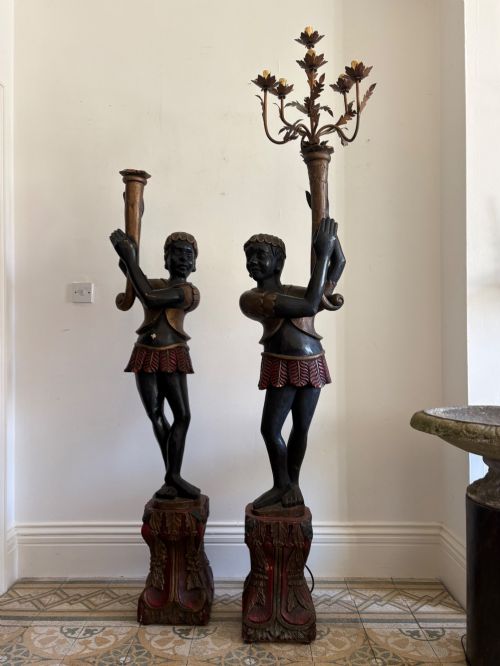
An antique blackamoor figure brings dramatic Venetian theatre and carved craftsmanship into a room, usually appearing as a torchere, stand or decorative candelabra.
Antique Blackamoor Figure
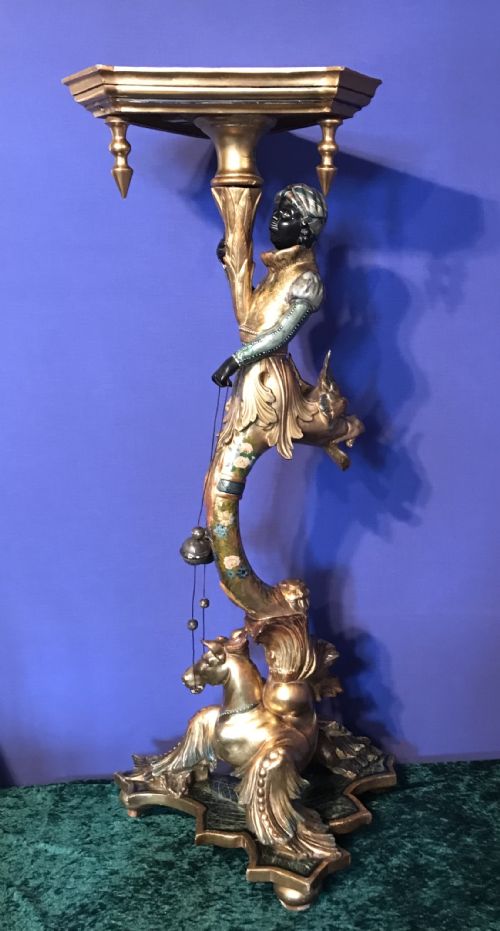
An antique blackamoor figure embodies the ornate decorative arts of Venice, taking forms such as carved stands, torcheres, pedestals, and functional candlesticks. Most examples date from the nineteenth century into the early twentieth century, reflecting Venetian Baroque and Revival styles.
Buyers most frequently encounter carved wood and polychrome-painted figures performing utilitarian or decorative roles, including holding baskets, serving as waiters, or supporting plant stands. These sculptural pieces range from single figures to balanced pairs designed for mantelpieces or hall entrances.
How they were made
Carved wood forms the structural core of these pieces, often shaped from walnut or ebonised wood to create the complex postures of figures such as gondoliers. Artisans applied gesso over the timber base to prepare a smooth surface for subsequent decoration.
Polychrome paint and gold leaf complete the surface finish, creating rich colour contrasts and parcel-gilt highlights characteristic of Venetian workshop production. Some twentieth-century variants introduce cast brass elements, particularly in candlestick forms.
Antique Blackamoor Figure Retail Price Guide 2026
Typical asking prices for blackamoor figure among the pieces listed under this phrase on Sellingantiques today, from the lower quarter to the upper quarter. They describe what is for sale here now, not the wider market.
Listings span from the Victorian era into the 1920s, dominated by Venetian styles executed in carved wood, polychrome paint, and gold leaf.
What varies in quality
The integrity of the original paint and gilding alters the visual power of an antique blackamoor figure. Works retaining undisturbed polychrome decoration and rich gold leaf demonstrate greater artistic fidelity to their Venetian origins than later repainted surfaces.
The Antique Blackamoor Figure Glossary
- Torchere
- A tall ornamental stand or candlestick designed to hold a light source. These floor-standing pieces often take the form of carved figures holding platforms.
- Gesso
- A plaster-like mixture applied to wood as a base for paint and gold leaf. It allows artisans to crisp fine details before final decoration.
- Parcel-gilt
- Partly gilded with gold leaf, leaving areas of painted wood or exposed timber visible. This finish accentuates carved details on Venetian decorative objects.
Antique Blackamoor Figure: Frequently Asked Questions
What rooms suit an antique blackamoor figure?
These sculptural pieces suit large entrance halls, drawing rooms, or dining spaces where their height and rich colour contribute a dramatic focal point. Torcheres and plant stands function well in corners or flanking doorways.
Smaller items like candlesticks or waiters find a natural home on sideboards, mantelpieces, or dedicated display tables where the carved detail remains visible at close range.
How do I date a blackamoor stand?
Dating relies on examining the timber type, carving depth, and the formulation of the gesso and paint layers. Nineteenth-century examples typically utilise solid carved walnut or heavily built-up polychrome surfaces.
Early twentieth-century pieces often show shifts towards lighter construction or modified brass components, reflecting changing decorative tastes in Venetian workshops.
How should I care for painted wood?
Maintain painted and gilded wooden surfaces by dusting gently with a soft, dry cloth and avoiding all liquid cleaners or chemical polishes that might lift the delicate gesso.
Keep the pieces away from direct sunlight and steady heat sources to protect the aged polychrome pigments and prevent the underlying timber from drying and splitting.