

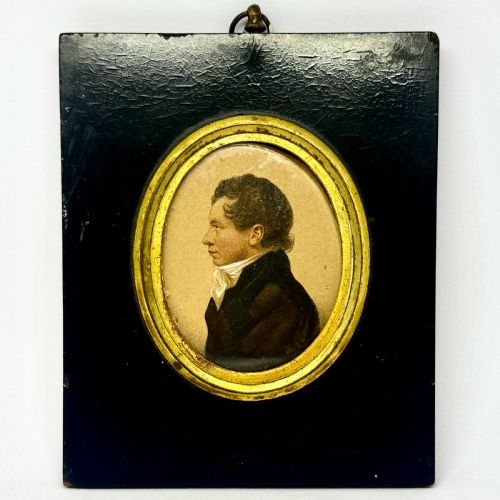


Antique Black Profile
An antique black profile offers a direct, striking encounter with a sitter from the Georgian, Regency, or Victorian eras.
Antique Black Profile
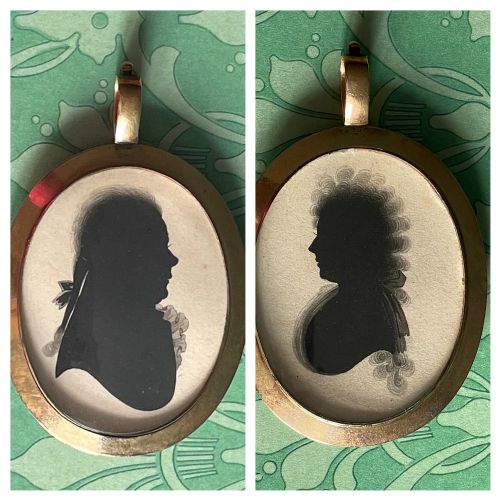
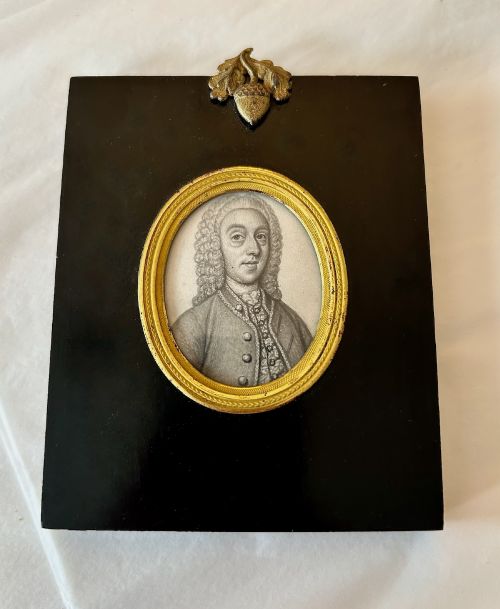
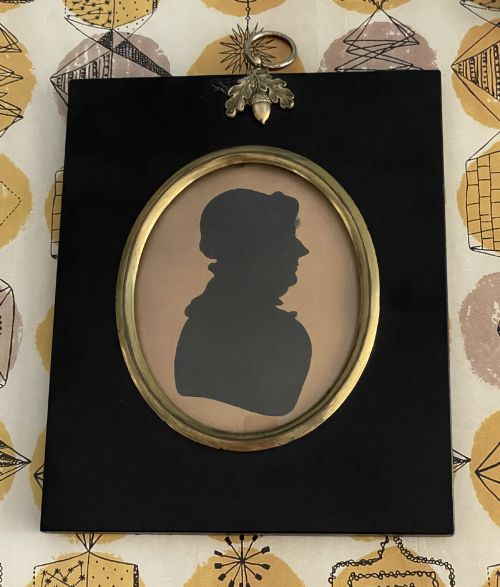
An antique black profile generally takes the form of a framed silhouette portrait, miniature, or drawing originating across the eighteenth and nineteenth centuries. These works present the head and shoulders or full length of a sitter in sharp monochrome, frequently framed in wood, ebonised wood, or rosewood.
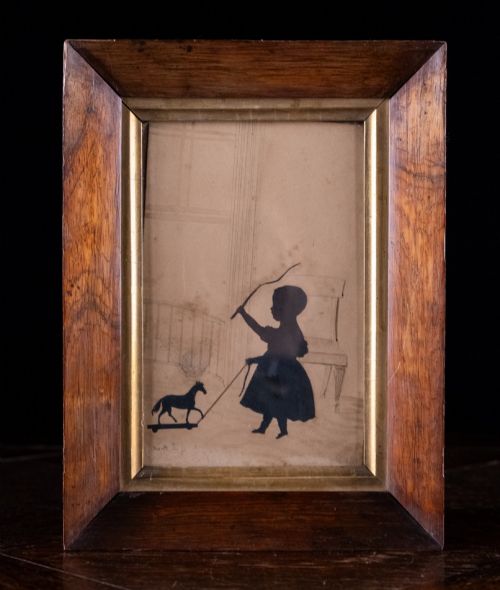
The versions most commonly met on this page span the Georgian and Regency periods, encompassing cut-paper silhouettes, painted works on glass or plaster, and plumbago portraits. Makers record sitters ranging from gentlemen and ladies to children and animals, executed with varying degrees of studio or folk art detail.
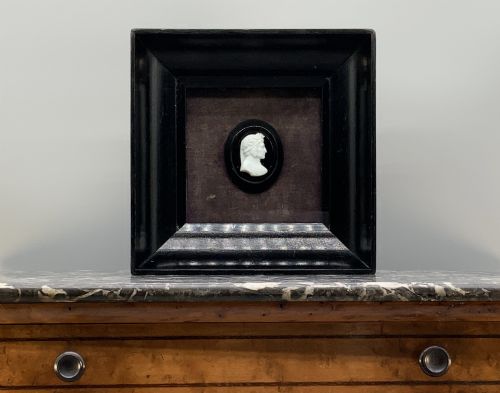
Alongside wall art, the selections include rings, cameos, and portrait plaques in carved ivory and gold, expanding the definition of the profile beyond simple paper cutouts. Each piece relies on the stark contrast of the dark image against a pale background to capture the likeness of the subject.
Materials and technique
Frames play an integral structural role, employing ebonised wood, rosewood, or brass surrounds to protect the fragile paper and glass surfaces within. Additions like gold leaf highlights and gilded accents elevated simple black profiles into finished works of portraiture suitable for domestic display.
Antique Black Profile Retail Price Guide 2026
Typical asking prices for black profile among the pieces listed under this phrase on Sellingantiques today, from the lower quarter to the upper quarter. They describe what is for sale here now, not the wider market.
Artists occasionally cut profiles of family pets and horses alongside human sitters.
Assessing quality and execution
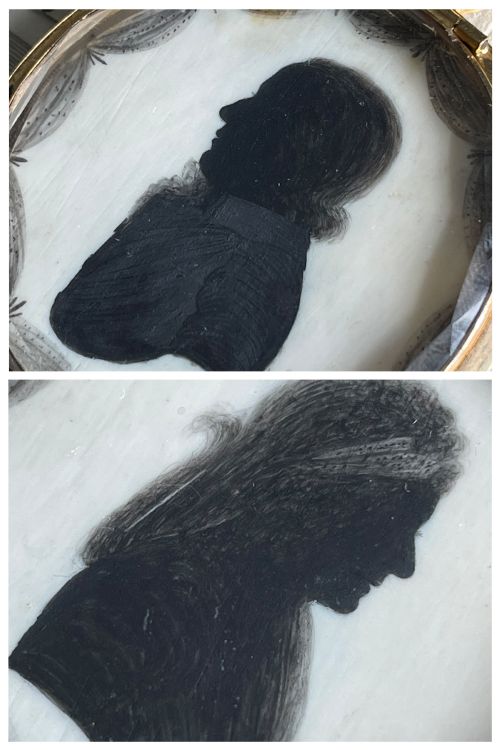
Quality rests primarily on the crispness of the cutting and the confidence of the brushwork, distinguishing skilled professional practitioners from naive folk art pieces. A sharper silhouette captures subtle anatomical nuances, eyelashes, and clothing folds with precision rather than broad approximation.
The preservation of the original backing, frame, and any handwritten artist signatures or sitter identifications heavily influences the integrity of the piece. Works retaining documented provenance or attribution to known profileists demonstrate superior historical value.
John Miers·Augustin Edouart·Frederick Frith·James Smith
The Antique Black Profile Glossary
- Silhouette
- A portrait represented as a solid shape of a single colour, usually black, matching the sitter's profile. The form gained popularity in the eighteenth century as an affordable alternative to painted miniatures.
- Plumbago
- A drawing executed in graphite or black lead, capable of producing remarkably fine illustrative detail. The technique was favoured by portraitists before the widespread adoption of photography.
- Reverse painting on glass
- An artwork applied to the rear side of a glass panel so the image is viewed through the transparent front. This method protects the delicate pigments from dust and fading.
- Ebonised wood
- Timber treated with a finish to imitate expensive ebony wood. It appears frequently in nineteenth-century picture frames.
- Cameo
- A method of carving an object such as a gemstone or shell to create a raised profile image. The technique creates a contrasting background colour.
Antique Black Profile: Frequently Asked Questions
What is an antique black profile?
An antique black profile is a historic portrait showing a subject's outline in shadow, typically created between the eighteenth and nineteenth centuries.
These works capture individual likenesses through cut paper, ink, or paint on materials such as glass, plaster, and card.
How were silhouettes displayed?
Original owners typically hung these framed portraits in domestic parlours, often grouping several pieces together on a wall.
Smaller profiles and rings were worn or kept as personal tokens to remember family members and associates.
How do I date a silhouette?
Dating relies on the style of the sitter's clothing, hair, and headdress, such as Regency turban caps or Georgian high collars.
Frame construction, backing papers, and handwritten notes on the reverse also provide reliable chronological clues.