
Antique Black Lacquer
Antique black lacquer pieces bring deep gloss and intricate golden detail into a room, spanning cabinets, screens, and tables from the seventeenth century onward.
Antique Black Lacquer
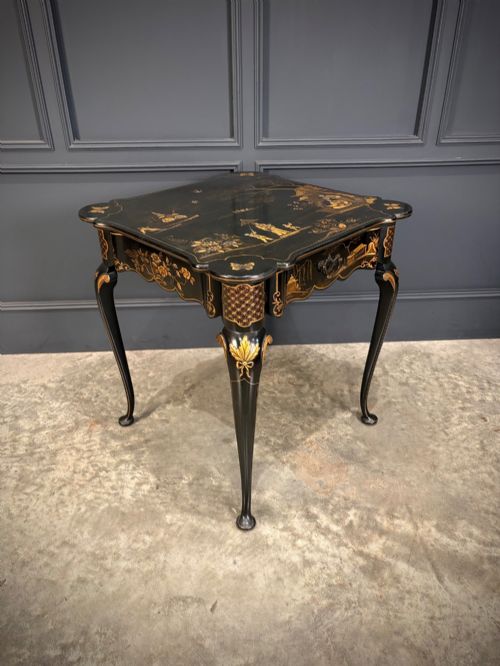
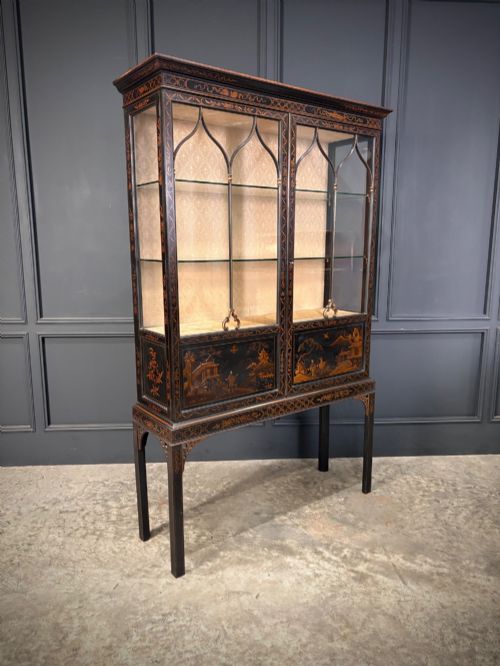
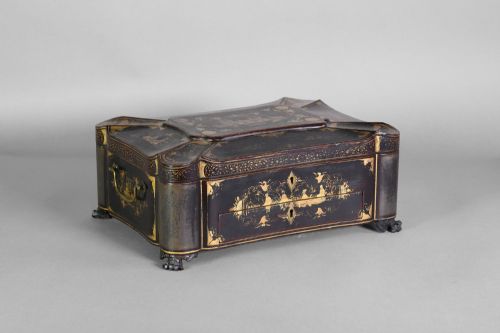
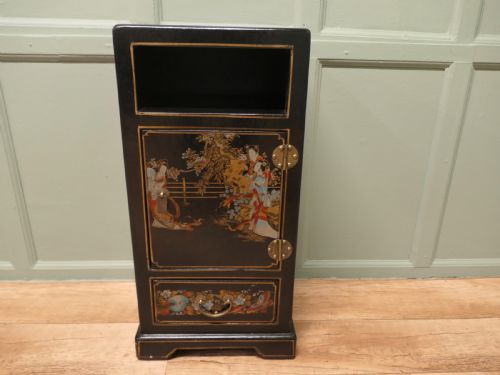
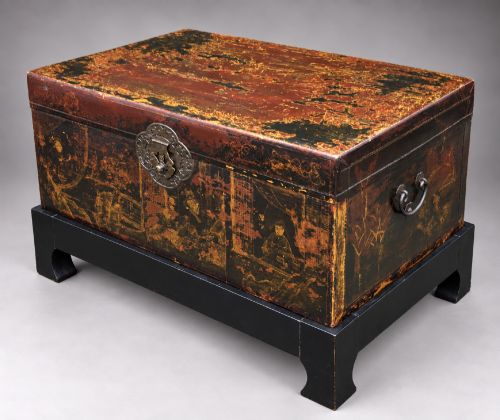
When you search for antique black lacquer, you encounter a diverse range of furniture and decorative objects spanning multiple centuries, from seventeenth-century cabinets on stands to early twentieth-century occasional tables and display cabinets.
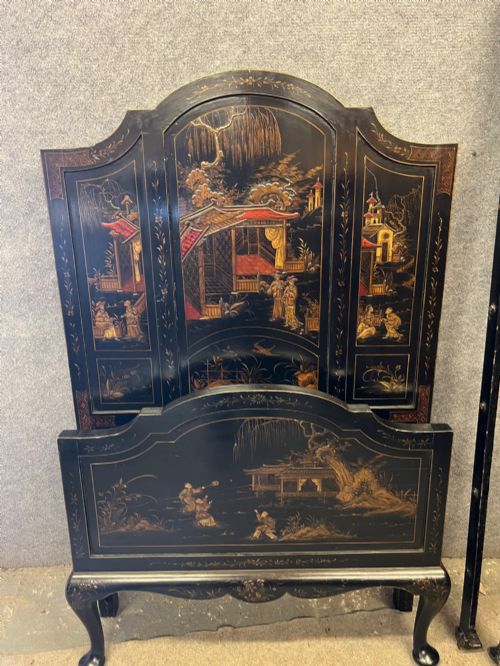
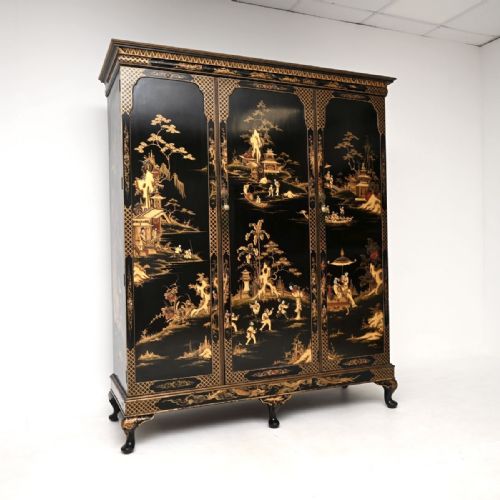
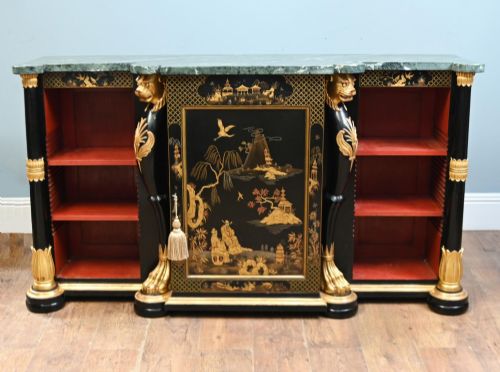
The pieces on this page draw heavily on Chinoiserie aesthetics, Regency designs, and Japanese Meiji craftsmanship, reflecting both European imitation and direct imports.
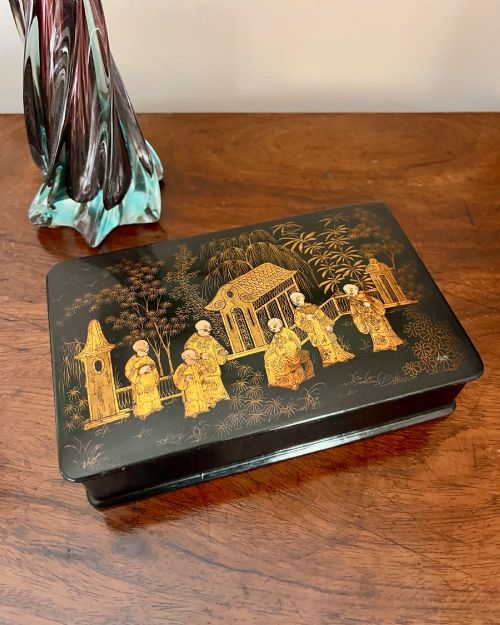
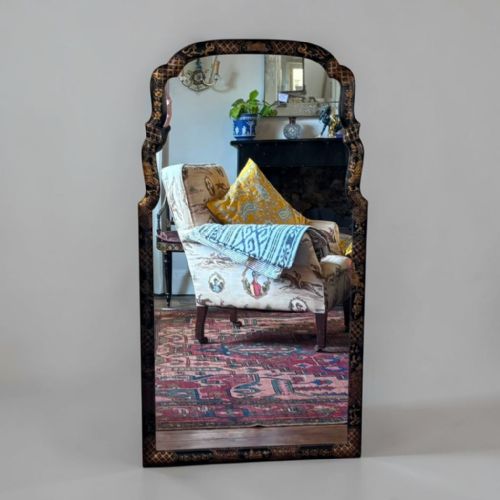
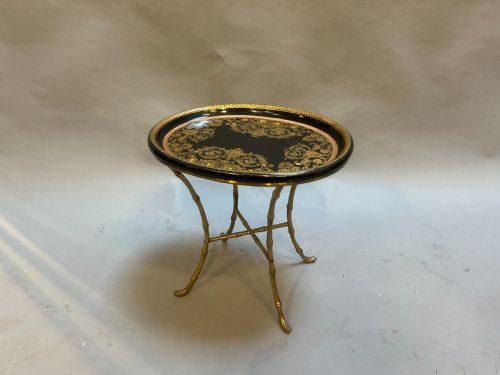
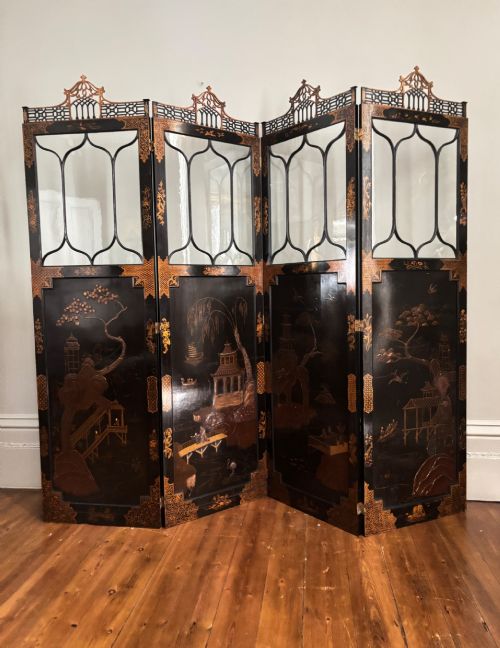
Side tables, wall mirrors, and folding screens dominate the forms you are most likely to meet, alongside smaller decorative items such as boxes, trays, and mantel clocks.
Materials and Technique
The construction of these items relies on timber carcases, papier-mâché, or solid wood substrates coated in layers of dark lacquer to achieve a durable, glossy foundation.
Artisans applied gold leaf, hand-painted pigments, and sometimes mother-of-pearl inlay to build up the intricate decorative scenes characteristic of Chinoiserie and Japanese work.
Brass hardware, glass panels, and giltwood stands frequently complement the lacquered surfaces on larger case pieces and seating.
Listings feature items spanning the 17th century through the 1930s, utilising wood, papier-mâché, brass, and gold leaf.
Assessing Quality
The refinement of the hand-painted detailing and the depth of the lacquer finish distinguish the finer examples from simpler commercial output.
The integration of decorative elements, such as precise mother-of-pearl inlay or deeply carved bone figures, separates the exceptional pieces from standard production.
Hille for Harrods·Mallets
The Antique Black Lacquer Glossary
- Chinoiserie
- European artistic style reflecting Chinese motifs. Artisans applied these whimsical landscapes and figures to furniture and screens.
- Papier-mâché
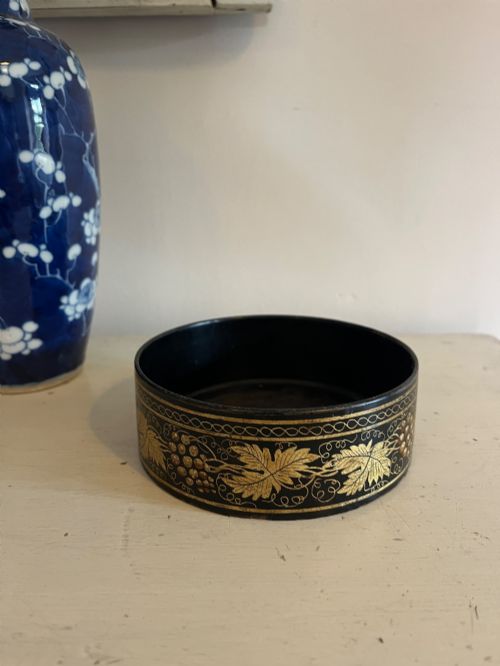
- Masticated paper pulp pressed and varnished. Regency makers utilised this lightweight material for trays, coasters, and small tables.
- Meiji
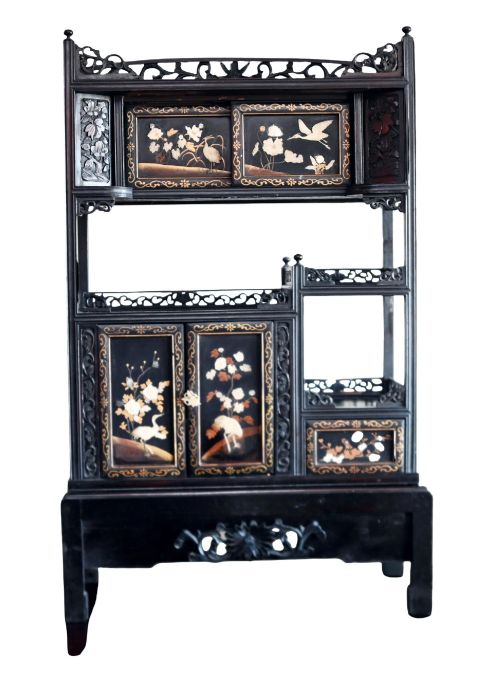
- Japanese historical period spanning the late nineteenth and early twentieth centuries. Pieces from this era often feature meticulous hand-painted lacquerwork.
- Gilt
- Application of gold leaf or powder to a surface. This technique highlights carved details and frames on cabinets and mirrors.
- Coffer
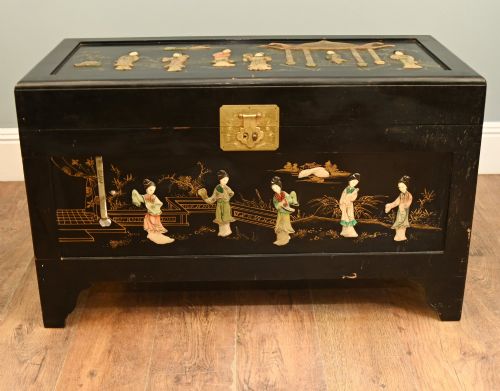
- A large chest used for storage. These sturdy wooden boxes often display elaborate lacquer decoration.
Antique Black Lacquer: Frequently Asked Questions
How do I clean antique black lacquer?
Dust gently with a soft, dry microfibre cloth to protect the delicate surface layers.
Avoid using water, chemical sprays, or modern polishes that can permanently damage the historic finish.
Where should I place a lacquer screen?
Position folding screens away from direct sunlight and radiators to prevent warping or lacquer cracking.
Allow enough space for the panels to stand stable without straining the hinges.
How do I date a lacquer cabinet?
Examine the underlying timber construction, joinery methods, and hardware style to determine the manufacturing era.
Compare the decorative motifs and lacquer formulation against known examples from periods like the seventeenth century or the Edwardian revival.