

Antique Black Chair
An antique black chair brings strong dark tone and distinct period character to a room, offering both seating utility and decorative presence.
Antique Black Chair
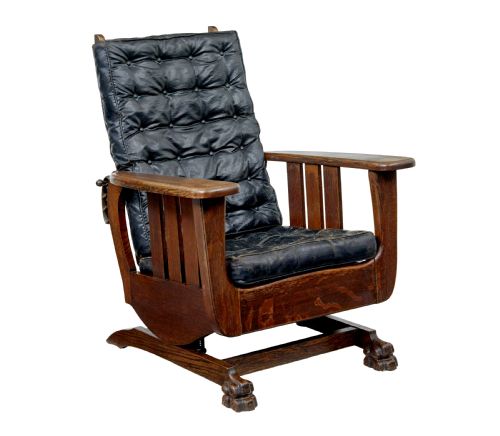
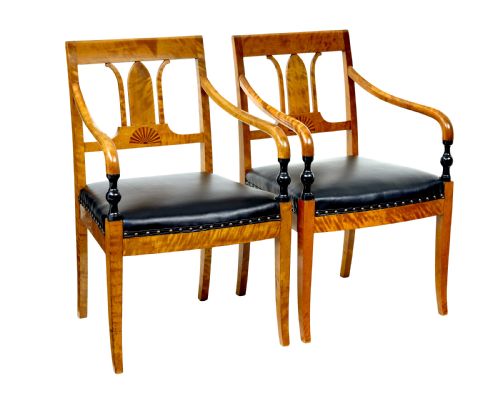
An antique black chair encompasses various dark-finished or naturally dark timber seats found across the nineteenth and early twentieth centuries. These pieces range from simple side chairs and rocking chairs to elaborate library armchairs and salon seats.
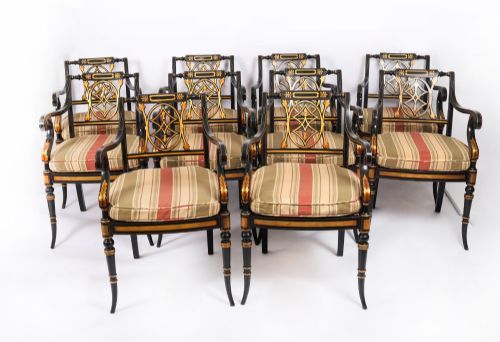
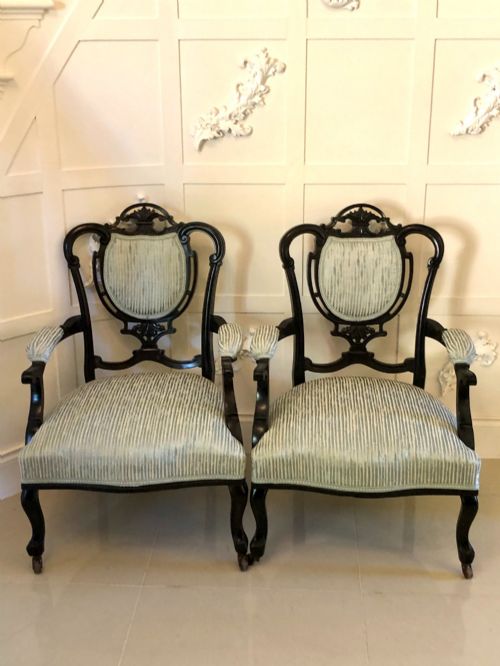
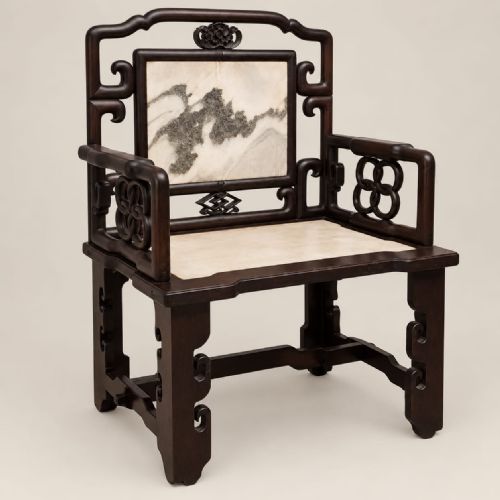
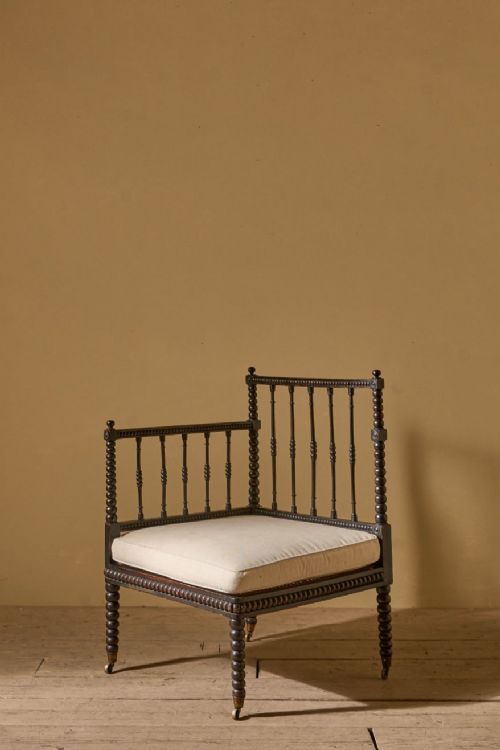
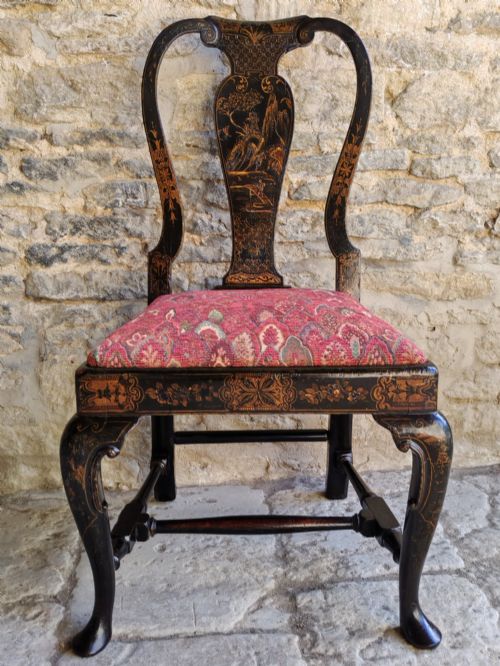
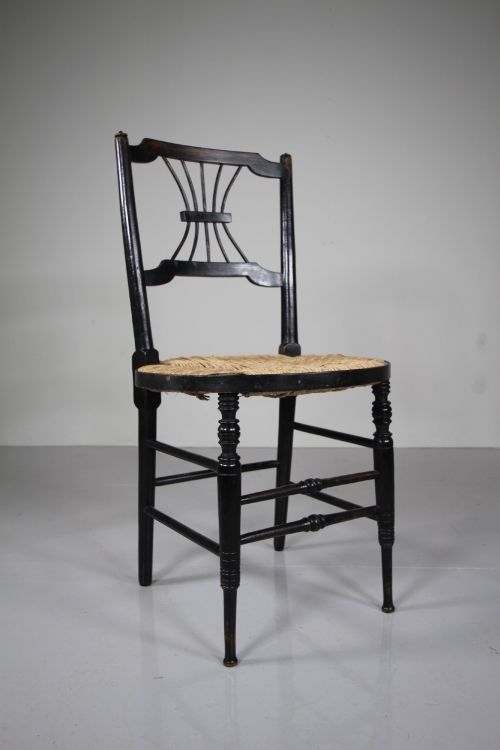
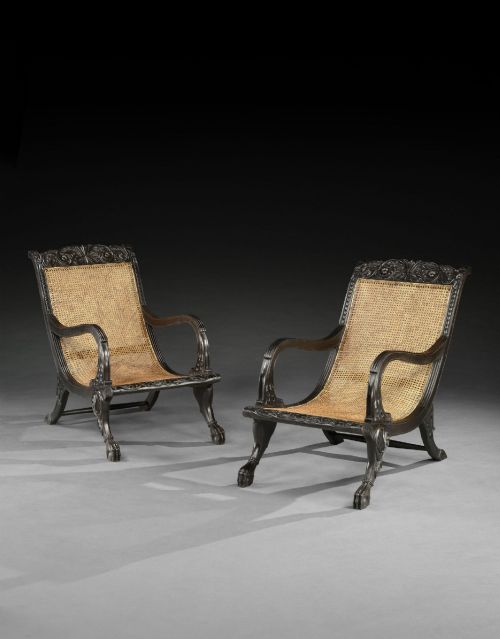
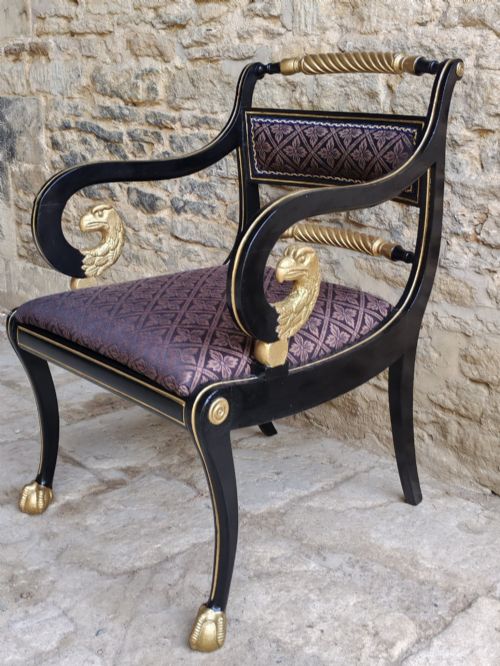
The version most commonly met on this page is the Victorian ebonised timber chair, often embellished with gilt highlights, cane seats, or upholstered pads. Regency painted examples and Anglo-Indian carved hardwood designs also appear frequently.
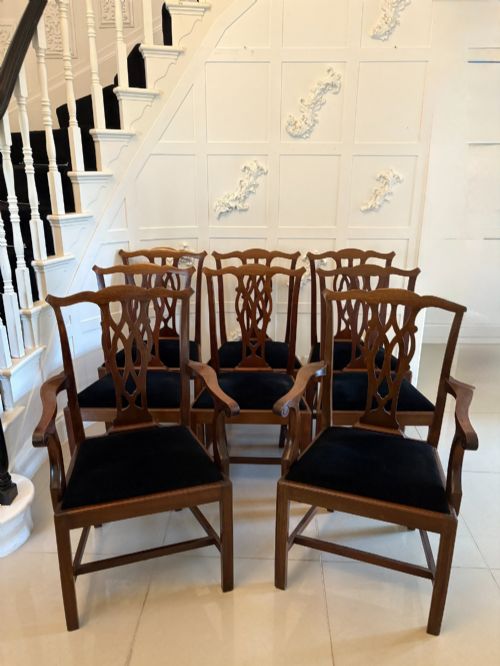
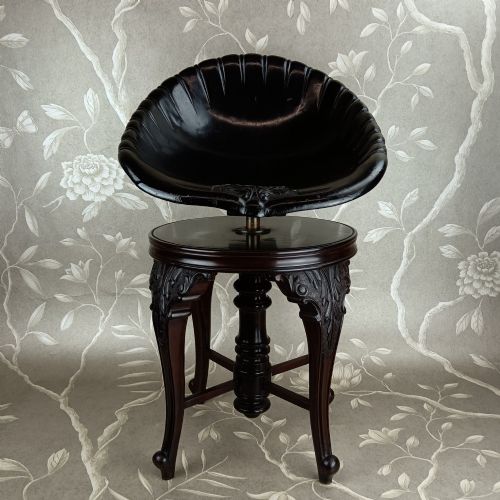
Makers utilised dark finishes to imitate costly exotic woods like ebony or to align with specific decorative movements such as the Aesthetic Movement and Arts and Crafts. Buyers encounter these forms functioning as desk chairs, music stools, and dining suites.
Materials and construction methods
Makers relied on ebonised wood, beech, mahogany, and naturally dark timbers like solid ebony or blackwood as the primary structural foundations. Workshops frequently applied black paint or lacquer over fruitwood and beech to achieve a dense, dark surface.
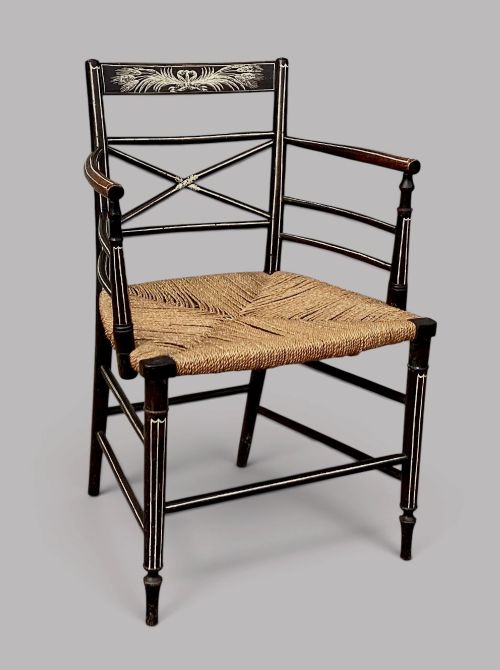
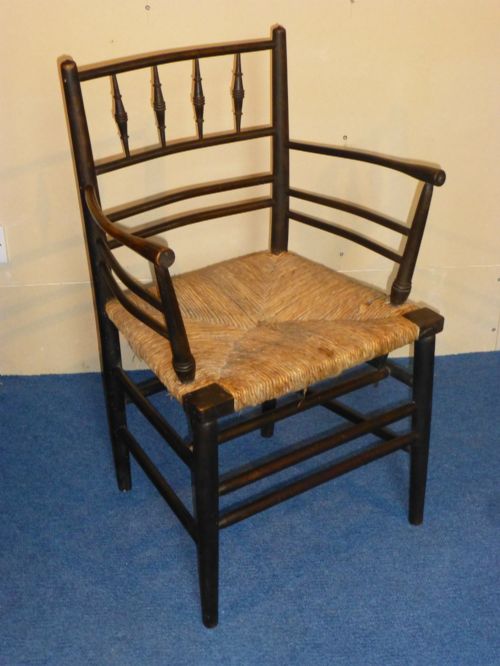
Seating areas incorporated cane, rush, leather, velvet, and woven fabric inserts fixed into the wooden frames. Decorative touches included brass inlays, mother of pearl inlay, and hand-painted chinoiserie motifs applied directly to the lacquered surfaces.
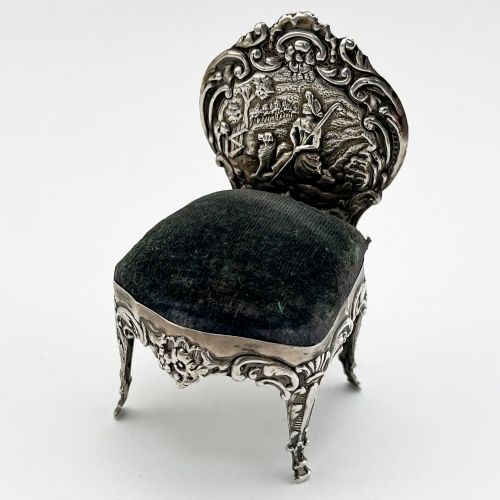
A tiny sterling silver pin cushion shaped like an armchair provides miniature seating for stray pins.
Distinctions in construction and design
The fidelity of the ebonising or paint finish dictates much of the visual success, where smoothly applied depth contrasts against flat, opaque modern repainting. Original surface patination on nineteenth-century pieces preserves the subtle wear accumulated over decades.
Structural integrity depends on the tightness of the joinery in high-stress points like chair legs and arm supports. Carved details on Aesthetic Movement or Anglo-Indian pieces show varying degrees of hand-chiseled crispness that elevate finer examples above standard production.
William Morris·Jennens & Bettridge·Philip Webb·Hindley & Sons
The Antique Black Chair Glossary
- Ebonised wood
- Timber treated with stain, paint, or chemical processes to resemble solid ebony. This finish gained immense popularity during the Victorian and Aesthetic Movement periods.
- Cane
- Woven rattan material utilised for lightweight, breathable seat panels. Regency and Victorian side chairs frequently employ this technique.
- Chinoiserie
- European interpretation of Chinese artistic motifs, rendered in gold paint on black lacquered wood. This style appears on various nineteenth-century salon and side chairs.
- Aesthetic Movement
- Design style of the late nineteenth century emphasising simplicity, art for art's sake, and Japanese-inspired motifs. Pieces from this era often utilise ebonised finishes and bamboo-turned turnery.
- Sabre leg
- Concave, outwardly curved leg shape characteristic of Regency seating design. This profile provides stability while maintaining a slender silhouette.
Antique Black Chair: Frequently Asked Questions
What periods do these chairs cover?
The selection spans from the Regency era through the Victorian period and into the early twentieth century. Pieces reflect prevailing design shifts of each decade.
Ebonised and painted surfaces appear across nineteenth-century styles, while later items incorporate Arts and Crafts and early twentieth-century vernacular forms.
How do I care for ebonised wood?
Maintain the dark surface by dusting regularly with a soft, dry cloth. Avoid placing timber seats near direct heat sources or strong sunlight.
Apply occasional mild wax suitable for dark polished wood to preserve the sheen without building up heavy residue on the finish.
Were all black chairs painted?
Many examples utilise painted or stained finishes applied to beech, mahogany, or fruitwoods. Other pieces utilise naturally dark solid timbers like ebony or blackwood.
Inspect the grain and wear points under good light to distinguish between surface paint, ebonising stain, and natural dark heartwood.
How are cane seats maintained?
Keep woven cane panels clean by wiping gently with a damp sponge and allowing them to dry thoroughly. Avoid pressing heavy weight onto the centre of fragile old mesh.
Apply a light application of warm water to the underside occasionally to maintain the elasticity of the natural rattan fibres.