



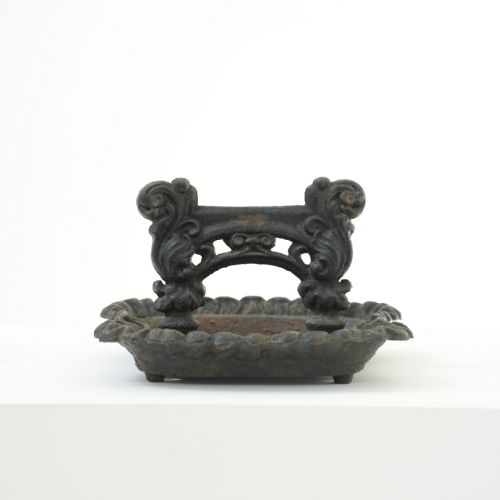


Antique Black Boots
These antique black boots and related ironwork preserve the functional grime of domestic history.
Antique Black Boots
When you search for antique black boots, you encounter a varied selection of footwear, boot scrapers, and novelty items spanning the Georgian, Victorian, and early twentieth-century periods.
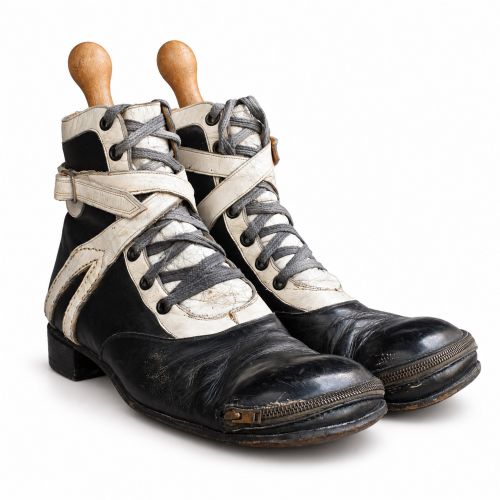
The objects on this page range from utilitarian cast iron boot scrapers and leather stretchers to theatrical clown shoes, advertising signs, and carved wooden inkwells.
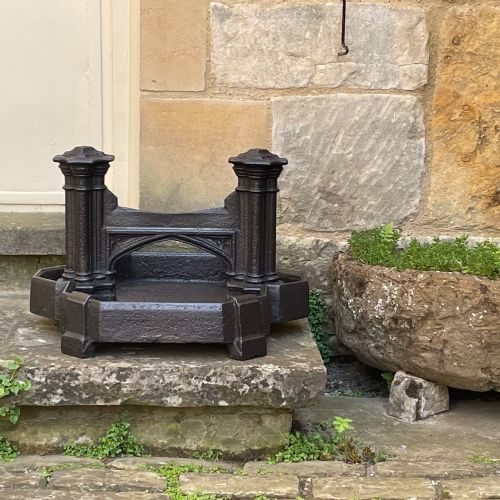
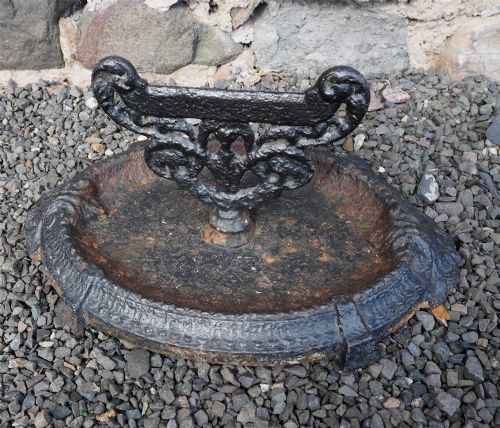
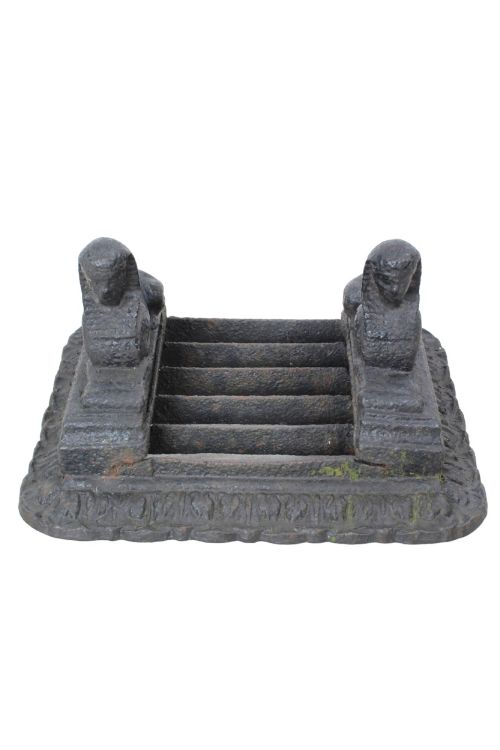
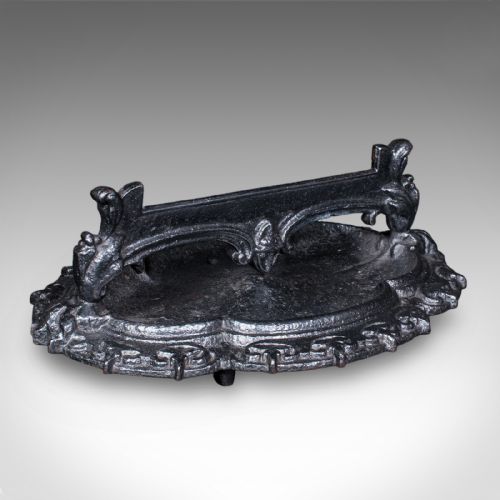
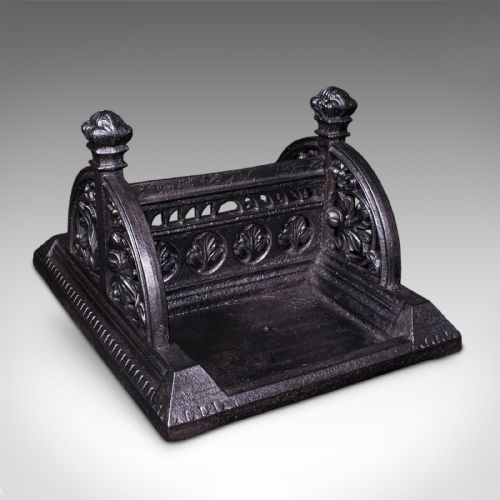
Victorian and Georgian cast iron boot scrapers with integrated shoe pulls dominate the selection, reflecting the practical domestic requirements of British townhouses and country houses.
How they were made
Makers utilised durable cast iron for heavy outdoor boot scrapers, shaping the metal into lions and architectural revival forms intended to withstand daily doorstep use.
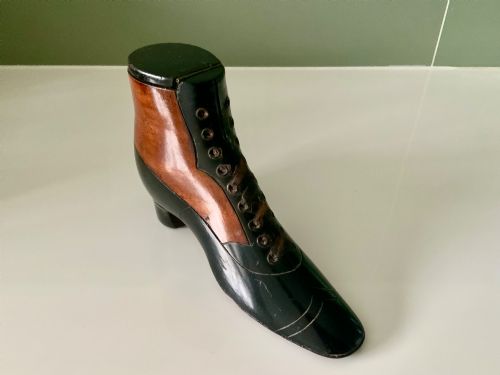
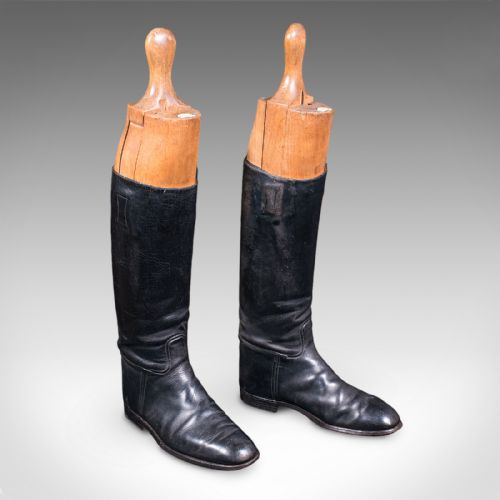
Leather, beech wood, and carved timber appear in indoor items like bootmakers' lasts and Black Forest inkwells, demonstrating traditional carpentry and tanning techniques.
Vitreous enamel provides the bright surface of the advertising signs, fusing powdered glass onto sheet metal at high temperatures for outdoor resilience.
Antique Black Boots Retail Price Guide 2026
Typical asking prices for black boots among the pieces listed under this phrase on Sellingantiques today, from the lower quarter to the upper quarter. They describe what is for sale here now, not the wider market.
The listings combine heavy cast iron outdoor boot scrapers with interior wooden objects like beech lasts and carved cat inkwells.
What varies in quality
The distinction between standard items and superior pieces lies in the crispness of the iron casting and the complexity of the design, such as Egyptian Revival motifs or detailed animal carvings.
Wear and surface preservation dictate the character of each piece, where untouched original painted finishes or aged patination on leather and wood elevate the object's presence.
Maxwell London
The Antique Black Boots Glossary
- Boot scraper
- An iron blade or architectural fitting anchored near a doorway to remove mud from footwear before entering the house.
- Boot pull
- A horizontal iron loop attached to a scraper, allowing the user to steady the boot while withdrawing the foot.
- Bootmaker's last
- A wooden or metal form shaped like a foot, utilised by cobblers to stretch and shape boots during manufacture or repair.
- Black Forest
- A style of wood carving originating in Germany, typically depicting animals and natural subjects with deep relief work.
- Vitreous enamel
- A material made by fusing powdered glass to a metallic substrate through firing, creating a glossy and durable coating.
Antique Black Boots: Frequently Asked Questions
What is a boot scraper?
A boot scraper is a heavy metal fixture traditionally placed by a doorway to scrape mud and dirt from footwear.
These devices often included integrated loops to help pull muddy boots off the feet without soiling hands.
How do I date cast iron scrapers?
Dating cast iron involves examining the style of the casting, such as Victorian Gothic or Egyptian Revival motifs.
Earlier Georgian examples tend to display simpler architectural lines compared to the ornate Victorian iterations.
What are boot lasts used for?
Boot lasts are solid wooden forms shaped to mimic the human foot, used by cordwainers to build and stretch footwear.
Examples made from beech and leather record the specific dimensions and techniques of historical shoemaking.
Where were door scrapers placed?
Door scrapers were installed directly outside townhouses and country houses near the main entrance or servants' doorway.
Their primary purpose was keeping the heavy mud of unpaved nineteenth-century streets outside the domestic interior.